
Dagger moth
Acronicta
Description
How to identify
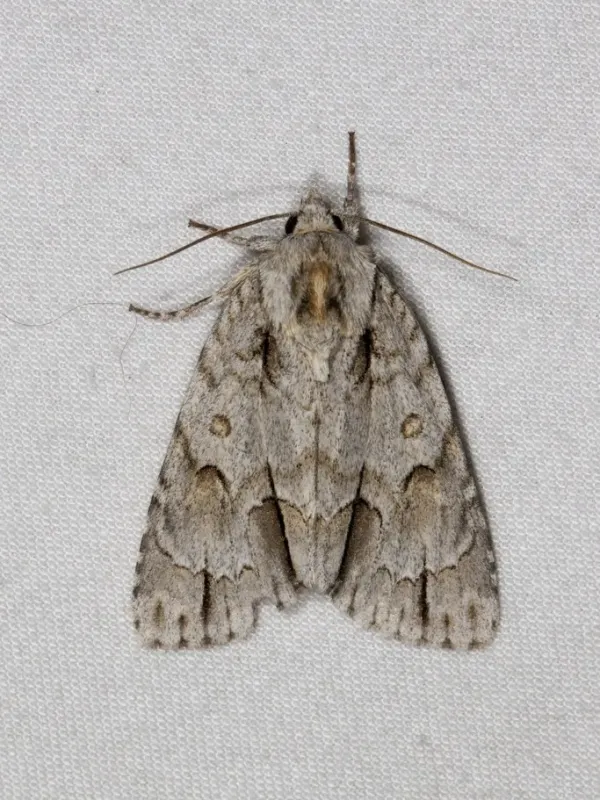
The dagger moth belongs to the family Noctuidae. The genus Acronicta encompasses several species that are recognized by the characteristic patterns on their forewings, which resemble small daggers.
Adult moths are typically nocturnal, featuring grayish or mottled brownish color patterns that provide excellent camouflage against tree bark during the day.
The caterpillars are highly variable in appearance. Many species are adorned with dense tufts of hair, spines, or vibrant color patterns that serve as a warning to predators.
Larvae growth stages are marked by significant changes in body size and color, with mature caterpillars often reaching lengths of 40 to 50 millimeters.
The pupal stage is spent within a sturdy silk cocoon, which is frequently constructed in bark crevices or among debris, ensuring protection throughout the winter months.
What it damages
Dagger moth caterpillars are polyphagous feeders, meaning they consume the foliage of a wide variety of deciduous trees, shrubs, and even some herbaceous plants.
Common hosts include apple, pear, plum, and cherry trees, as well as various forest trees such as oak, willow, and birch, which provide abundant food sources.
Damage is characterized by irregular feeding patterns where the larvae consume leaf tissue, often leaving only the midrib and larger veins untouched.
Severe infestations can lead to significant defoliation, which stresses the tree, reduces its ability to produce fruit, and weakens its overall health for the next season.
While mature trees can often withstand occasional attacks, young saplings are at high risk of stunted growth or even death due to the loss of photosynthetic capacity.
When it appears
The life cycle of the dagger moth generally involves one or two generations per year, depending largely on the geographic region and local climatic conditions.
Hibernation occurs during the pupal stage, with the insects remaining inside their cocoons until the warmer temperatures of spring trigger the emergence of adults.
The flight period of adult moths typically begins in late spring, coinciding with the development of fresh foliage and the flowering phase of many host trees.
Larvae activity is most pronounced during the summer months, with peaks occurring as the caterpillars feed voraciously before preparing for their next transformation.
As the season draws to a close, late-stage larvae pupate to enter the diapause phase, effectively surviving the winter to complete the cycle the following year.
Signs of infestation
The most visible sign of an infestation is the presence of chewed foliage, often appearing in the mid-to-late summer months as caterpillars reach full size.
The caterpillars themselves are frequently observed resting on the underside of leaves or along the branches, especially during the early morning hours.
Frass (caterpillar droppings) accumulating on the leaves below the feeding sites is a reliable indicator that the larvae are currently active in the tree canopy.
In cases of heavy infestation, partial skeletonization of leaves and visible thinning of the tree crown become apparent to even the casual observer.
Evidence of silken webbing may also be present, as some species utilize silk to create protective shelters or anchor points while they feed on the surrounding tissue.
Control measures
Cultural control measures include removing loose bark and debris from around the base of trees, which reduces the number of suitable sites for pupation.
For small infestations, manual removal of caterpillars is highly effective and recommended, particularly in home gardens to avoid the use of chemical sprays.
Biological control through the use of Bacillus thuringiensis (Bt) is a popular and environmentally safe method for managing larval populations.
If economic thresholds are exceeded, the application of selective insecticides can provide rapid relief and protect the crop from further significant leaf loss.
Monitoring using pheromone traps helps growers detect the arrival of adult moths early, allowing for timely intervention before the next generation of larvae hatches.
Taxonomy
- Latin name
- Acronicta
- Order
- Lepidoptera (butterflies)
- Family
- Noctuidae
- EPPO code
- ACRNSP
Discussion
No discussions yet — be the first.