
Acontia opalinoides
Acontia opalinoides
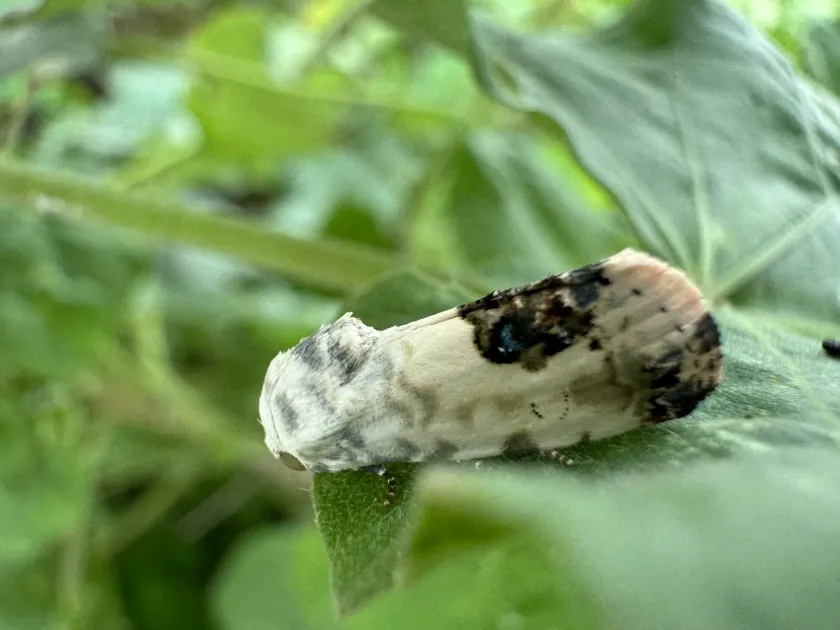
Description
How to identify
Acontia opalinoides is a moth species belonging to the Erebidae family, subfamily Acontiinae. It is a relatively small insect that shares morphological characteristics with other noctuid-like moths.
The adult moths have a specific coloration that serves as camouflage against leaves. Their forewings are often characterized by an opal-like shimmer, which gave the species its specific name.
The insect undergoes complete metamorphosis, including egg, larva (caterpillar), pupa, and adult stages. Each life stage is adapted to specific environmental conditions.
The larvae are the primary feeding stage and undergo several molts as they consume significant amounts of plant biomass for their development.
Identification often involves observing the underside of leaves, where larvae frequently hide during daylight hours to avoid predators and desiccation.
What it damages
This pest primarily attacks plants within the Malvaceae family, with cotton being the most significant host crop for its development.
Beyond cultivated fields, the moth can thrive on various weed species that act as reservoir hosts during the early stages of the growing season.
Older larvae are highly destructive, consuming leaf tissue and leaving only the larger vascular veins, which significantly reduces the photosynthetic area.
Under high population density, the larvae shift their feeding to reproductive structures, damaging buds, flowers, and developing fruit.
Damaged plants exhibit reduced vigor and are often more susceptible to opportunistic secondary infections caused by bacteria or fungi entering through feeding wounds.
When it appears
The population dynamics of Acontia opalinoides are strongly tied to temperature and the availability of host plants throughout the season.
Adult moths typically emerge in late spring or early summer, coinciding with the rapid vegetative growth of cotton crops.
Higher summer temperatures accelerate the reproductive cycle, allowing for multiple overlapping generations within a single growing season.
Peak infestation levels are usually observed mid-to-late summer, when the favorable climate allows for rapid larval development.
As temperatures drop, the final generation of pupae enters diapause in the soil, surviving the winter period until the next favorable season.
Signs of infestation
The most visible sign of infestation is the presence of irregular, ragged holes in the leaves, which expand as larvae continue to feed.
The presence of frass (larval excrement) appearing as small, dark pellets on the leaves and soil surface confirms the presence of the larvae.
Damaged flower buds may exhibit visible bite marks, frequently leading to premature abscission and yield loss.
In cases of heavy infestation, plants may show signs of wilting or stunted growth as the larvae consume essential plant parts.
- Ragged holes in leaf tissue
- Visible damage to flower buds and developing bolls
- Accumulation of dark larval frass on foliage
- Discovery of larvae on the underside of leaves
- Reduced plant health and stunted development
Control measures
Cultural control practices, such as deep plowing after harvest, are effective in burying and killing pupae overwintering in the soil.
Sanitation measures, including the systematic removal of weeds from fields and field margins, are critical to reducing early-season larval populations.
Chemical control involving the targeted application of insecticides is recommended once economic injury levels are exceeded.
Biological control methods, such as the release of egg parasitoids (like Trichogramma) or encouraging native predators, help maintain population stability.
Using pheromone or light traps provides a reliable way to monitor adult activity, ensuring that management actions are timed for maximum efficacy.
Taxonomy
- Latin name
- Acontia opalinoides
- Order
- Lepidoptera (butterflies)
- Family
- Noctuidae
- EPPO code
- ACONOP
Discussion
No discussions yet — be the first.