
Chalky moth
Acontia cretata
Description
How to identify
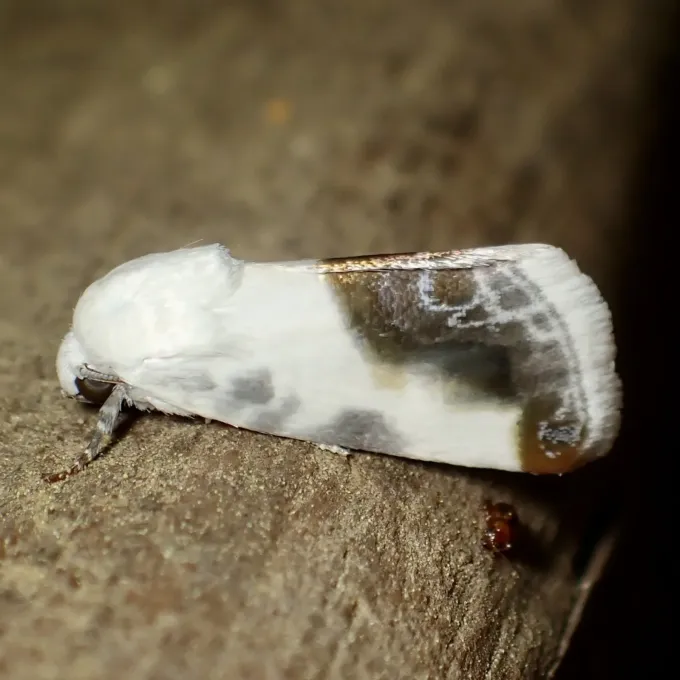
The chalky moth (scientific name Acontia cretata) is a member of the Erebidae family. The adult moth features a distinct color pattern, with forewings that appear chalky or white, accented by dark markings. This unique coloration provides excellent camouflage against various natural substrates.
Typically, the adult moth has a wingspan ranging from 20 to 25 mm. They are primarily nocturnal or crepuscular, meaning they are most active during the twilight hours, which makes observing them in the field quite challenging without specialized tools like light traps.
The larval stage, or caterpillar, possesses a cylindrical body and is equipped with chewing mouthparts. Their coloration is often highly variable, allowing them to blend in with the leaves or stems of the plants they feed on, which is a key survival strategy against natural predators.
The pupal stage is spent in a cocoon, usually located in the upper layer of the soil or nestled among decaying plant matter. This stage is crucial for overwintering, as the pupa is capable of surviving colder temperatures until conditions become favorable for emergence in the spring.
The lifecycle of Acontia cretata is heavily influenced by environmental factors such as temperature and humidity. Depending on the geographical region, the species may undergo multiple generations within a single season, leading to potential population explosions if unchecked.
What it damages
Chalky moth larvae are known to feed on a variety of plant species, with a particular affinity for plants in the Malvaceae family. Both cultivated crops and surrounding weeds can serve as hosts, meaning that field margins must be monitored carefully.
The primary form of damage is the defoliation of plants. Larvae consume the leaf tissue, leaving behind ragged, irregular holes. This reduction in foliage significantly impairs the plant's photosynthetic ability, leading to stunted growth and reduced vigor.
Beyond leaf consumption, the larvae often feed on developing buds and flowers. This damage to reproductive organs is particularly destructive as it directly impacts the final yield, often resulting in deformed fruit or complete loss of seed production.
High infestations can lead to substantial economic losses, especially if the damage occurs during sensitive phenological stages of the plant. Weakened plants also become significantly more susceptible to secondary infections by bacteria and fungi that enter through the feeding sites.
Because these pests often thrive on weeds, they can rapidly migrate from field borders into the main crop area once the preferred host plants become depleted. Early detection in these edge zones is essential for preventing a large-scale invasion of the interior fields.
Signs of infestation
Early identification of a chalky moth infestation relies on spotting specific signs of feeding. The presence of irregular, notched holes on the leaf margins is often the first visible indicator that larvae are present in the canopy.
Another reliable sign is the presence of frass, which appears as small, dark granular deposits on the foliage or at the base of the plant. This waste material is often easier to spot than the well-camouflaged larvae themselves during the daylight hours.
In addition to physical feeding damage, signs of infestation include wilted buds or distorted leaves. These symptoms occur when larvae feed on the tender, growing tips of the plants, causing structural damage that inhibits normal development.
The presence of adults, usually spotted near light sources at night, is a clear warning sign that egg-laying is occurring. Monitoring these populations with light or pheromone traps provides a crucial window of opportunity to intervene before the next generation hatches.
- Irregularly notched or ragged leaf margins.
- Dark granular frass deposits on leaves.
- Damaged or hollowed-out flower buds.
- Adult moth activity during evening hours.
Control measures
Managing the chalky moth requires a multi-faceted approach. Cultural practices, such as deep plowing in the autumn, are highly effective because they disrupt the soil, exposing overwintering pupae to the elements and predators, thereby reducing the carry-over population.
Field sanitation is critical. Removing host weeds from around the field prevents the buildup of larval populations in the early season. Keeping the field clean reduces the moth's ability to successfully complete its lifecycle before transitioning to the primary crop.
When monitoring data indicates that the population has crossed the economic injury threshold, chemical intervention may be necessary. Using insecticides with systemic or contact action during the early larval stages provides the highest level of control.
Rotation of insecticide classes is vital to prevent the development of resistance. By using different modes of action, growers ensure the longevity of their chemical control options while minimizing the risk of a resurgence of the pest population within the same season.
Integrating biological controls, such as encouraging natural predators or utilizing specific entomopathogenic bacteria, can provide sustainable suppression of the moth population. This integrated strategy supports long-term ecological balance while protecting the crop investment.
Taxonomy
- Latin name
- Acontia cretata
- Order
- Lepidoptera (butterflies)
- Family
- Noctuidae
- EPPO code
- ACONCR
Discussion
No discussions yet — be the first.