
Acontia candefacta
Acontia candefacta
Description
How to identify
Acontia candefacta is a moth species belonging to the family Erebidae. It is widely recognized for its role in the biological suppression of invasive plant species.
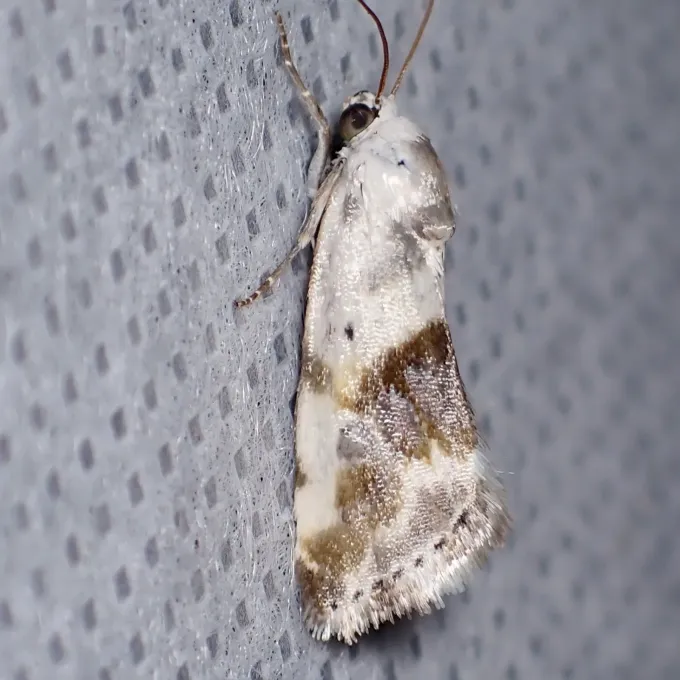
The adult moth has a wingspan of approximately 22–26 mm. The forewings are characterized by a whitish-cream base color with diffuse dark patterns and a greyish margin.
The larvae, or caterpillars, undergo several developmental instars. They start with a light green coloration, darkening to brown or brownish-grey as they mature.
The pupae are dark brown, shiny, and typically overwinter in the soil or within protective cocoons attached to plant debris.
This species is considered a specialist herbivore, making it an excellent candidate for the biological control of its host plant, ragweed.
What it damages
The primary host plant of Acontia candefacta is the common ragweed (Ambrosia artemisiifolia), a highly invasive and allergenic weed.
The larvae feed exclusively on the leaves of the host plant. They skeletonize the leaves, which significantly reduces the photosynthetic capacity of the weed.
Extensive larval feeding stunts the growth of the ragweed, prevents it from flowering properly, and reduces overall seed production.
As the moth does not target essential crops, it is classified as a beneficial insect in agricultural settings rather than a pest.
By suppressing ragweed populations, this insect helps farmers reduce their reliance on chemical herbicides in non-crop areas.
When it appears
The life cycle of Acontia candefacta is closely synchronized with the phenology of ragweed, typically producing two or three generations annually.
The first generation of adults emerges in late spring, aligning with the early growth stages of the weed host.
Larval activity is at its peak during the mid-summer months, particularly in June and July, when feeding pressure on ragweed is most intense.
A second generation of adults appears later in the summer, ensuring the continuation of the population throughout the ragweed growing season.
The insects overwinter as pupae in the soil, emerging the following spring to restart the biological cycle.
Signs of infestation
The most visible sign of Acontia candefacta presence is the characteristic leaf damage on ragweed plants, often resembling a lace-like texture due to skeletonization.
Caterpillars can be found by inspecting the undersides of leaves or near the base of the plant stem where they hide during the day.
Adult moths are nocturnal and are strongly attracted to light, which can be monitored using light traps in areas where ragweed control is needed.
The accumulation of frass (larval excrement) on the leaves or the ground surrounding the plant is a clear indicator of active feeding.
Clusters of stunted, weakened ragweed plants often indicate that the local population of the moth has been actively suppressing the weed development.
Control measures
No control measures are necessary for Acontia candefacta, as it is a beneficial insect that provides free ecosystem services by controlling weeds.
Agricultural managers should avoid the use of broad-spectrum insecticides on field margins and waste areas where this species is present.
Preserving natural habitats and minimizing mechanical soil disturbance can help protect overwintering pupae and boost local moth populations.
Integrating Acontia candefacta into a long-term weed management strategy can provide sustainable, low-cost control of ragweed infestations.
Education on recognizing this species is crucial to ensure that farmers do not accidentally target it during routine pest control programs.
Taxonomy
- Latin name
- Acontia candefacta
- Order
- Lepidoptera (butterflies)
- Family
- Noctuidae
- EPPO code
- ACONCA
Discussion
No discussions yet — be the first.