
Yellow Horned
Achlya flavicornis
Description
How to identify
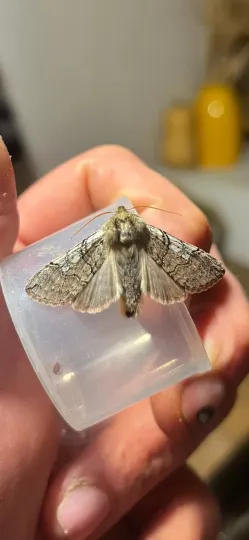
The Yellow Horned (Achlya flavicornis) is a moth belonging to the family Drepanidae. Adult moths have a wingspan ranging from 35 to 45 mm, with forewings typically colored in shades of grey to brown, featuring distinct darker markings and yellow-tinted antennae.
The larvae are smooth-bodied caterpillars reaching up to 40 mm in length. Their coloration is usually a shade of light green, marked with lighter longitudinal stripes, while their head remains brownish, aiding in camouflage against twigs.
The insect completes its life cycle in a single generation per year. Pupation occurs within a tough, silk-lined cocoon spun in the soil or among leaf litter, where the moth overwinters, ensuring protection from cold weather.
Adults emerge in early spring, often before the full foliage of host trees has developed. They are nocturnal and are frequently attracted to artificial light sources during the night.
Eggs are laid individually on twigs of host trees, primarily birch, which allows neonate larvae to access food as soon as they hatch in the spring.
What it damages
The primary host for the Yellow Horned larvae is the birch tree (Betula). While birch is the main food source, they are also occasionally observed on alder species (Alnus).
Feeding damage is caused by the caterpillars consuming the leaves. During periods of high population density, they can cause significant defoliation of host trees, particularly affecting young specimens.
While often considered a forest dweller with minor economic impact, their feeding habits can diminish the aesthetic value of ornamental birch trees in parks and landscape designs.
In forest nurseries, high infestations can retard the growth rate of young saplings, potentially impacting the overall health and vigor of the planting stock.
The intensity of the damage fluctuates annually depending on the timing of spring emergence and weather conditions that influence larval development and survival.
Signs of infestation
The most visible sign of an infestation is the presence of irregular holes or eaten margins on leaves throughout the upper canopy of birch trees in late spring.
The accumulation of frass (caterpillar droppings) on lower leaves or branches is a clear indicator of active feeding occurring higher up in the tree's canopy.
Small, silk-bound cocoons may be located in the soil or at the base of the tree trunk during late summer and autumn, although these are rarely seen by non-experts.
During spring evenings, adults flying around exterior building lights are a reliable sign that the species is present and breeding in the immediate vicinity.
- Defoliated leaf margins.
- Visible frass deposits on the foliage.
- Green larvae residing on the underside of birch leaves.
Control measures
Natural biological control, particularly through predatory birds and parasitic wasps, plays a vital role in keeping populations of the Yellow Horned moth in balance within healthy forest ecosystems.
In ornamental settings, where intervention is necessary, the application of biological insecticides or selective chemical sprays targeting the larval stage can effectively reduce population numbers.
Cultural practices that improve tree vigor, such as mulching and providing adequate water during dry spells, help trees withstand damage and recover faster from defoliation events.
Manual removal of caterpillars is feasible for small-scale infestations on young or dwarf trees, providing an immediate and chemical-free method of protection.
Monitoring programs using light traps can assist arborists and forest managers in tracking population trends and timing interventions if the risk of significant defoliation arises.
Discussion
No discussions yet — be the first.