
Elder shoot borer
Achatodes zeae
Description
How to identify
The Elder shoot borer (Achatodes zeae) belongs to the Noctuidae family, order Lepidoptera. It is a moth species primarily nocturnal in its habits.
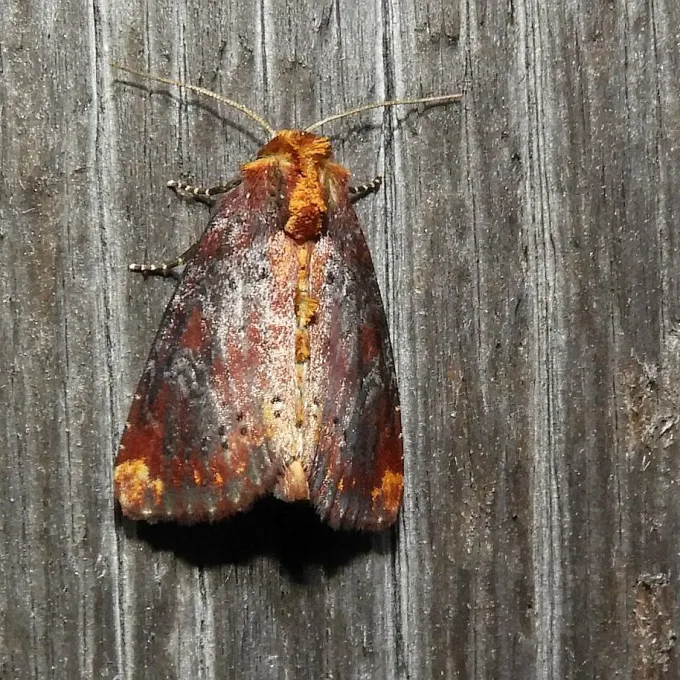
The adult moth has a wingspan of approximately 30–35 mm, with coloration ranging from yellowish-brown to dark brown, allowing for excellent camouflage.
The larvae, or caterpillars, are the most recognizable life stage, characterized by a creamy or pale body with distinctive dark spots (pinacula) along the segments.
The head of the caterpillar is hard and dark, specifically adapted for boring into the fibrous or succulent stems of host plants like elderberry and corn.
Pupation occurs within a silken cocoon formed by the larva inside the damaged stem, protecting the pupa from external environmental factors and predators.
What it damages
The primary hosts of this pest include corn (maize) and various species of elderberry (Sambucus), where larvae feed by boring into the stems.
The boring activity disrupts the vascular tissue of the plant, cutting off the supply of nutrients and water to the upper parts of the stem.
In corn crops, this damage often leads to severe wilting of the tassels and can cause the entire stalk to break under moderate wind pressure.
In elderberry plants, the infestation results in the wilting and eventual death of individual branches, significantly affecting the plant's structural health.
Large populations of this borer can cause substantial economic losses for farmers due to reduced yield quality and plant mortality in corn fields.
When it appears
The Elder shoot borer overwinters in the egg stage, with eggs laid in cracks of bark or near the base of stems in late summer and autumn.
Larval emergence typically occurs in the spring, coinciding with the initial growth stages of corn or the development of new shoots on elderberry shrubs.
The larvae spend late spring and early summer feeding aggressively inside the stems, where they undergo multiple molts as they increase in size.
Pupation takes place mid-to-late summer inside the bored-out plant stems, marking the end of the larval feeding period.
Adult moths emerge in late summer, mate, and deposit eggs on suitable host plants to ensure the survival of the next generation through the winter.
Signs of infestation
The first indication of an infestation is often a sudden wilting of the top leaves or the entire top portion of the plant, which may seem wilted even in wet soil.
A closer inspection of the stem base usually reveals a small entry hole, often accompanied by piles of sawdust-like frass (excrement) ejected by the larva.
Cutting open an infested stem during the active feeding season will typically reveal the cream-colored larva inside a tunnel carved through the center of the stem.
Infested stalks often exhibit discoloration at the site of the entry hole and may show signs of secondary decay due to opportunistic fungi or bacteria.
- Sudden wilting of the plant's terminal growth.
- Small, round entry holes near the base of the stalk.
- Presence of powdery frass deposits on the soil surface near the host.
Control measures
Effective management begins with strict field sanitation, including the removal and destruction of crop residues where overwintering eggs or pupae may remain.
Crop rotation is a highly recommended practice to disrupt the life cycle of the borer and prevent the buildup of pest populations in corn fields.
Chemical control is generally only effective if applied before the larvae burrow deep into the stems, as they become protected once inside.
Monitoring for egg-laying adults and early-stage larvae is crucial, as early intervention with systemic insecticides can provide the best protection.
Maintaining healthy, vigorously growing plants can sometimes help them withstand minor infestations, though active scouting remains the primary defense strategy.
Taxonomy
- Latin name
- Achatodes zeae
- Order
- Lepidoptera (butterflies)
- Family
- Noctuidae
- EPPO code
- ACHOZE
Discussion
No discussions yet — be the first.