
Achatodes
Achatodes
Description
How to identify
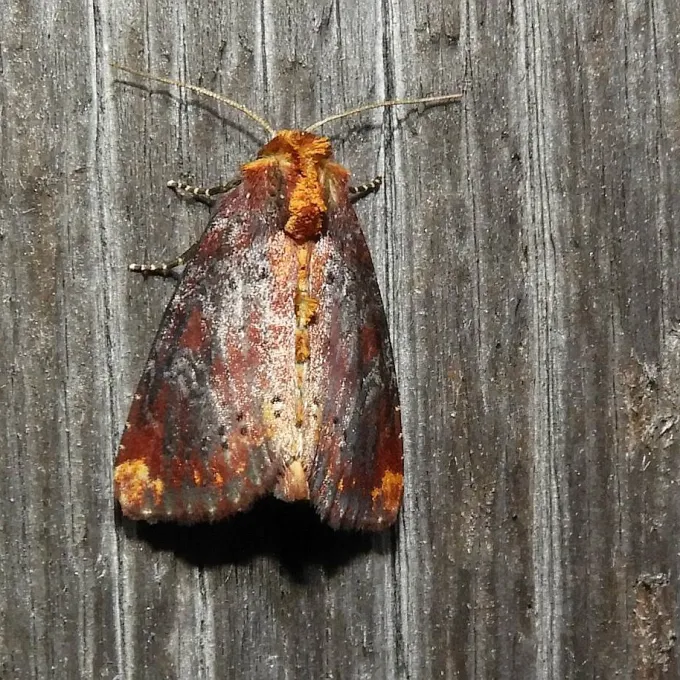
Achatodes (Latin Achatodes zeae) is a species of moth belonging to the Noctuidae family. Adult moths have a wingspan of approximately 30–35 mm, with wing coloration ranging from grayish-brown to reddish, marked by characteristic transverse lines.
The larva of the Achatodes is an elongated caterpillar reaching 30–40 mm in length. Its body color is typically yellowish-white with dark spots (pinacula) on each segment, making it fairly visible when examining affected areas of the stem closely.
The life cycle of this insect involves complete metamorphosis: egg, larva (caterpillar), pupa, and imago. In most regions, this species completes one generation per year, which dictates the timing of necessary protective measures.
Systematically, this pest belongs to the order Lepidoptera. Its biological adaptation allows larvae to develop successfully inside plant tissues, providing them with reliable protection from various environmental factors and predators.
The insects overwinter primarily in the egg stage, which are laid by females on plant debris or the lower parts of stems. As spring approaches, the larvae hatch and immediately begin searching for a suitable host plant for feeding.
What it damages
The primary host plant for Achatodes is corn (maize), as indicated by the species name zeae. However, the pest is not limited to corn and can also infest other cereal crops and certain types of vegetable plants.
The most significant damage occurs in young plants during their active growth phase. Larvae bore into the center of the stem and feed on the soft pith tissue, which disrupts the normal growth and development of the entire plant.
Secondary host plants can include various grasses and weeds, which act as reservoirs for the pest. This is why the presence of weeds like couch grass around agricultural fields significantly increases the risk of Achatodes infestation.
The damage caused is not only due to direct tissue destruction but also because it creates entry points for various pathogenic fungi and bacteria. This often leads to secondary rot, which can completely destroy the harvest on the affected area.
Plants damaged by Achatodes often exhibit stunted growth and a sickly appearance. If the main stem is compromised before the tasseling stage, the plant loses productivity and becomes prone to lodging during wind events.
When it appears
The pest's activity is closely linked to spring temperatures. Larval hatching usually coincides with the development of the first few leaves in corn, making the crop highly susceptible to early infestation.
Throughout the summer months, larvae continue feeding inside the stems, passing through several larval stages. During this time, it is extremely difficult to detect them visually since there are almost no external signs of damage on the leaves.
Pupation typically occurs in late summer or early autumn, either inside the plant stem or in the soil near the host. The pupa remains protected within plant tissues until the moth emerges.
The adult flight occurs in the second half of summer, when mating and egg-laying take place. This process is spread out over time, which requires consistent field monitoring for several weeks to ensure effective control.
By autumn, the life cycle closes with eggs remaining on stalks or field stubble for the winter. Consequently, autumn and winter temperatures directly influence the survival rate of the population for the next season.
Signs of infestation
The first sign of infestation is the wilting or yellowing of the central leaf (the "flag leaf") despite adequate soil moisture. This is a clear indicator that the stem's nutrient flow has been interrupted by internal boring.
On the surface of the stem near the larval entry point, one can often spot a small hole surrounded by frass (a crumbly, brownish waste product). Upon close inspection, these entry points are easily distinguishable from other insect damage.
If the damaged stem is opened, a winding tunnel filled with brown frass and plant tissue remnants will be found inside. The larva is typically located at the lower end of the tunnel or near the base of the stem.
Under heavy infestation, the crop may appear distorted or crooked. In areas where the larva has been feeding, the stem becomes brittle and prone to snapping even under minimal wind pressure.
In fields where this pest is endemic, farmers often observe patches of missing or dead plants. These spots serve as clear indicators of where the Achatodes population was concentrated in the previous cycle.
Control measures
Agrotechnical control methods include thorough incorporation of crop residues and deep autumn plowing. This effectively destroys overwintering sites for eggs and significantly reduces the pest population for the following year.
Crop rotation is a highly effective strategy, specifically excluding susceptible crops from the infested area for at least two years. This breaks the pest's food chain and forces it to migrate outside the management zone.
Chemical control involves the use of systemic insecticides during the critical window when larvae are vulnerable — immediately before they bore into the stems. Timing is essential, as once the larva is inside the stem, protection becomes difficult.
Biological control involves the use of entomophages, such as the Trichogramma wasp, which parasitizes the pest's eggs. Implementing this method requires precise timing based on the peak egg-laying period.
Regular monitoring using pheromone traps helps track moth flight peaks, allowing for the timely planning of protective measures. Additionally, managing weeds around the field edges is crucial, as they often serve as the primary reservoir for Achatodes infestations.
Taxonomy
- Latin name
- Achatodes
- Order
- Lepidoptera (butterflies)
- Family
- Noctuidae
- EPPO code
- ACHOSP
Discussion
No discussions yet — be the first.