
Abagrotis placida
Abagrotis placida
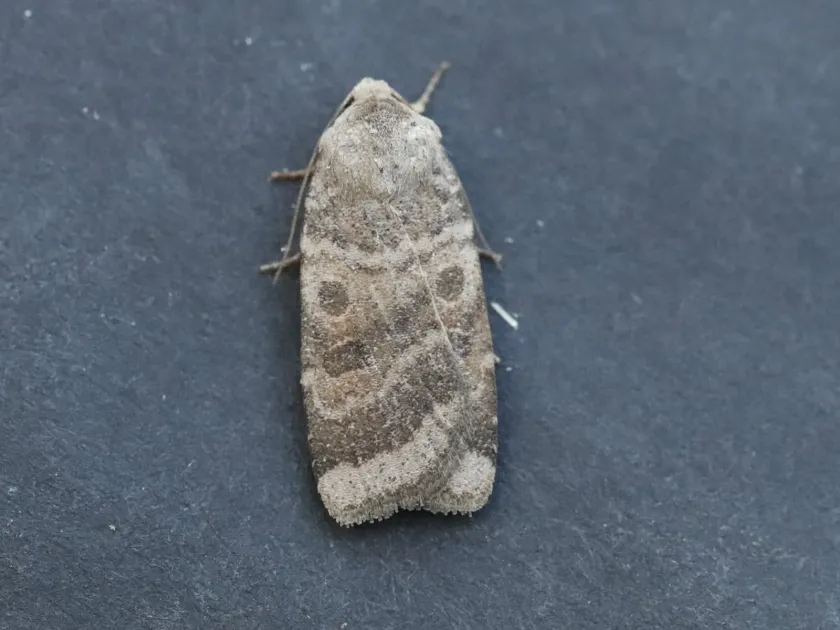
Description
How to identify
Abagrotis placida is a species of noctuid moth belonging to the family Noctuidae. Adult moths have a wingspan of approximately 28–35 mm, with a coloration ranging from grayish-brown to ochre, which provides excellent camouflage against tree bark.
The larvae, known as cutworms, possess a typical noctuid body shape, often displaying greenish or brownish tones with distinct longitudinal stripes. They have a hardened head capsule adapted for feeding on tough foliage.
Identifying this species at the adult stage is challenging without expert genital analysis due to its similarity to other members of the genus Abagrotis. However, larval behavior often reveals their presence in garden environments.
The species is primarily native to North America, where it has adapted to a variety of habitats, including forests, woodlands, and managed agricultural landscapes.
The adults are nocturnal and active during the summer months, focusing on mating and oviposition on host plants to ensure the next generation's survival.
What it damages
The primary hosts for Abagrotis placida larvae include various fruit trees, such as apple, cherry, and other stone fruits. They may also feed on native Rosaceae species found in the vicinity of orchards.
The damage is caused exclusively by the larvae, which are highly active at night. They feed on foliage and are particularly destructive to buds during the early spring flush.
In cases of high infestation, the larvae can defoliate entire branches, which drastically reduces the plant's photosynthetic capacity and weakens its overall physiological state.
Damage to buds in early spring can lead to significant yield losses, as the buds are critical for the formation of flowers and subsequent fruit development.
Furthermore, larval feeding creates wounds on the bark and buds, which serve as entry points for secondary fungal and bacterial pathogens, leading to further decline.
When it appears
The lifecycle of Abagrotis placida is synchronized with the phenology of its host trees. Overwintering typically occurs as either young larvae or pupae nestled within the soil or ground litter.
As temperatures rise in the spring, overwintering larvae emerge to feed voraciously on the developing buds of host trees, coinciding with the beginning of the growing season.
Moth flight typically peaks in mid-summer, when mating and egg-laying occur on the undersides of leaves, ensuring a fresh supply of food for the emerging larvae.
The duration of a single generation takes several months, though regional climatic variations can influence the total number of generations per year.
By late summer, the larvae complete their development, pupate in the soil, and enter diapause, completing their annual cycle until the following spring.
Signs of infestation
A key indicator of Abagrotis placida infestation is the presence of irregular, ragged-edged holes in the leaf blades, often found on the lower or outer canopy.
During the spring, arborists should inspect buds for signs of damage, such as missing parts or failure to open, which strongly suggests nocturnal feeding activity.
The presence of frass (small, granular larval excrement) on leaves or beneath the tree canopy is a clear sign that a larval population is currently active on the host.
Nighttime inspections using a flashlight often reveal the larvae, as they emerge from their hiding spots to feed on the foliage during the darkness.
Tied or webbed leaves can also indicate the presence of larvae, which use silk to create shelters or secure themselves to the plant tissue while feeding.
Control measures
Biological control strategies include the use of pheromone traps to disrupt mating cycles and to monitor population densities effectively throughout the season.
Cultural management, such as tilling or cultivating the soil beneath the canopy in the autumn, can significantly disrupt the pupation cycle and kill overwintering pupae.
When populations exceed economic thresholds, contact and systemic insecticides approved for fruit trees should be applied, with strict adherence to pre-harvest intervals.
Encouraging natural predators, such as insectivorous birds and beneficial insects like predatory bugs or parasitic wasps, can help manage larval numbers naturally.
Regular orchard monitoring and timely interventions during the larval emergence period are the most effective ways to mitigate the impact of this noctuid pest.
Taxonomy
- Latin name
- Abagrotis placida
- Order
- Lepidoptera (butterflies)
- Family
- Noctuidae
- EPPO code
- RHYGPL
Discussion
No discussions yet — be the first.