
Abagrotis cupida
Abagrotis cupida
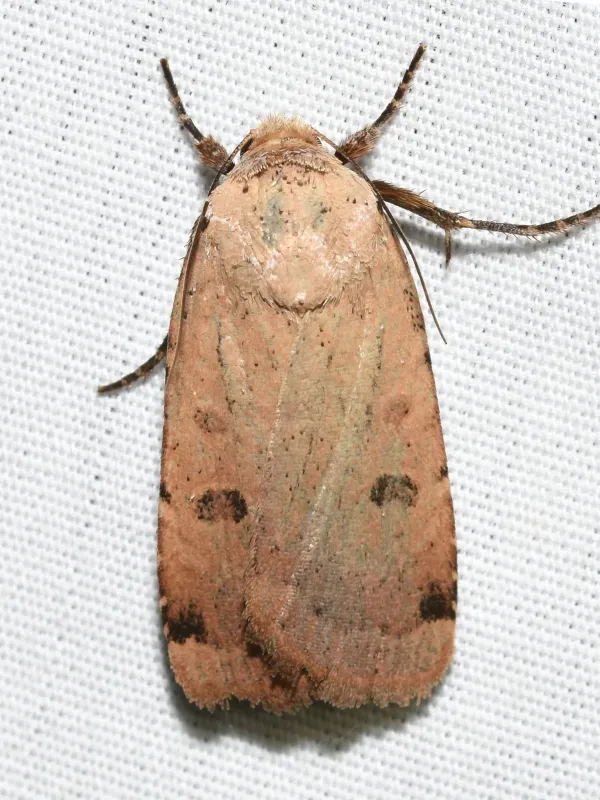
Description
How to identify
Abagrotis cupida is a species of noctuid moth belonging to the family Noctuidae. The adult moths exhibit typical noctuid characteristics, featuring protective coloration on their forewings, which ranges from reddish-brown to dark brown, providing excellent camouflage against tree bark and leaf litter.
The larvae, or caterpillars, of this species share common noctuid features, possessing a cylindrical body. Their coloration varies depending on age and food source, typically presenting in shades of brown, gray, or greenish with longitudinal stripes along the dorsal surface.
Taxonomically, this species is classified within the order Lepidoptera. Accurate identification often requires examining the morphological traits of the adult specimens, as they may resemble other closely related species within the genus Abagrotis.
The insect undergoes a complete metamorphosis, including egg, larval, pupal, and adult stages. Adults are primarily nocturnal, while larvae can be active both during the night and on overcast days, depending on environmental conditions.
This pest is found in temperate regions, preferring habitats with a mix of woody vegetation and nearby agricultural land, which provides both shelter and an abundant food supply for the developing larvae.
What it damages
Larvae of Abagrotis cupida are polyphagous, meaning they feed on a wide variety of plant species. The primary damage occurs during the larval stages, when they consume large quantities of foliage to support their rapid growth.
In agricultural fields, this pest can cause significant damage to both seedlings and mature plants, potentially leading to total crop loss if population levels are high. Its wide host range allows it to persist across different cropping systems.
In orchards and nurseries, the caterpillars frequently target buds, young leaves, and tender shoots, which slows plant development and reduces the overall vigor of young trees or plants.
Extensive defoliation during peak larval activity can lead to a decline in plant health, decreased photosynthetic capacity, and reduced yield, especially if the damage occurs during sensitive phenological stages of the crop.
Furthermore, feeding damage creates entry points for various plant pathogens, such as fungi and bacteria, which can lead to secondary infections, further weakening the plant and complicating recovery.
When it appears
The life cycle of Abagrotis cupida is highly seasonal. Adult moths emerge during the summer months, engaging in mating and oviposition, which ensures that the next generation of larvae will have immediate access to food sources.
Larval activity is most pronounced during the spring and summer seasons. Their developmental stages are synchronized with the host plant growth cycles, ensuring they are well-fed before they enter the pupal stage.
The species typically overwinter as young or medium-instar larvae in the soil or under surface debris, allowing them to survive harsh winter conditions and resume feeding as soon as temperatures increase in the spring.
In the spring, as temperatures rise, overwintering larvae emerge and begin feeding on young foliage, which often coincides with the critical emergence period for many agricultural crops.
Depending on the geographic region and climate, the number of generations per year may vary; in warmer southern areas, two generations may occur, while in cooler northern zones, the species typically produces only one.
Signs of infestation
The first indicator of infestation is irregular damage to leaves, often characterized by notches along the leaf margins or holes in the leaf blades, sometimes referred to as window-feeding or skeletonization.
Finding the larvae during the day can be challenging because they are nocturnal feeders that retreat into the topsoil or shelter at the base of the plant during daylight hours to avoid predation.
The presence of larval frass (excrement) on leaves or on the soil surface is a reliable sign of their activity and can help gauge the severity of the infestation in a specific area.
Young seedlings may exhibit wilting or sudden death if the larvae have consumed the stem or the growth point at the soil level, which is a common damage pattern for many soil-dwelling cutworms.
Severe defoliation, where only the major veins of the leaves remain, is a definitive sign of high population density and long-term larval feeding that requires immediate management action.
Control measures
Control of Abagrotis cupida relies on an integrated approach combining cultural, biological, and chemical methods. Deep fall or spring plowing is effective at disrupting the life cycle by destroying overwintering pupae and larvae in the soil.
Effective weed management is crucial, as weeds serve as alternative hosts and reservoirs for the pest when crops are not yet present or available, preventing the population from building up in the field.
Chemical control with insecticides should be applied based on the economic injury level, preferably in the evening when the larvae are actively foraging on the surface of the plants.
- Utilizing crop rotation to break the pest's life cycle.
- Applying biological pesticides such as Bacillus thuringiensis to manage larval populations.
- Monitoring adult flight activity using light or pheromone traps to time treatments correctly.
Rotating insecticides with different modes of action is essential to prevent the development of resistance, which is a significant concern given the adaptability of many noctuid moth species.
Taxonomy
- Latin name
- Abagrotis cupida
- Order
- Lepidoptera (butterflies)
- Family
- Noctuidae
- EPPO code
- RHYGCU
Discussion
No discussions yet — be the first.