
Abagrotis alternata
Abagrotis alternata
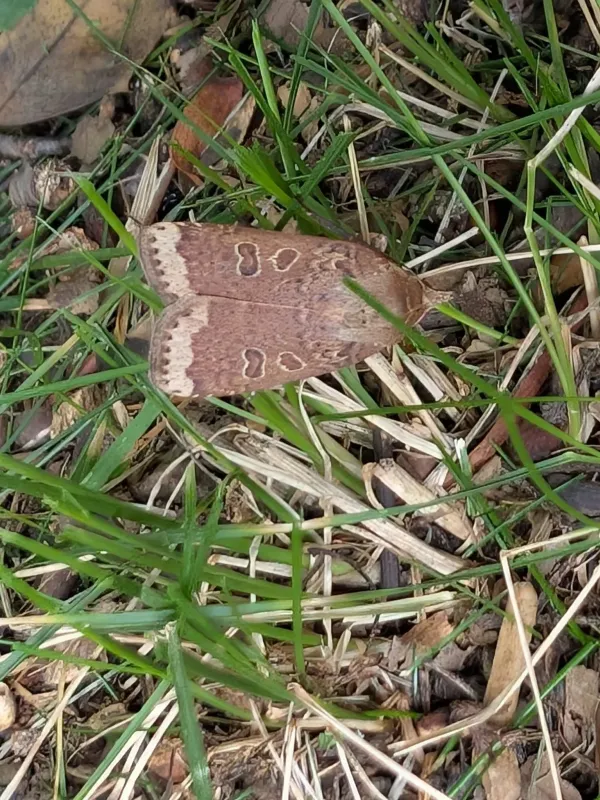
Description
How to identify
Abagrotis alternata belongs to the Noctuidae family within the Lepidoptera order. This nocturnal moth is known for its cryptic coloration, which provides excellent camouflage against tree bark and foliage.
Adult moths typically have a wingspan of 30–35 mm. The forewings usually vary in color from grayish-brown to ochre, often featuring dark spots and lines, which corresponds to the common name "alternata".
The larvae are typical cutworms, characterized by a cylindrical body with eight pairs of legs and a well-developed head capsule. Larval coloration is variable, often marked with longitudinal light stripes.
Development involves complete metamorphosis. Pupation generally occurs in the soil within dense cocoons, which provides protection against environmental stress and predation.
Systematic identification requires careful attention, as it is often part of a complex of species within the Abagrotis genus that share similar morphological characteristics.
What it damages
This pest is a polyphage, meaning it is capable of feeding on a wide range of vegetation, including both forest tree species and various agricultural crops.
In orchards, the larvae frequently damage fruit trees by feeding on buds, young leaves, and occasionally fruit, which significantly reduces crop quality and marketability.
On cropland, Abagrotis alternata can infest vegetable and industrial crops. Feeding typically occurs at night, making it difficult to detect the pest during daylight hours.
Damage symptoms include skeletonized leaves, irregular holes in leaf blades, and the total destruction of reproductive organs during periods of mass infestation.
Outbreaks pose a significant risk, as older-instar larvae are capable of consuming large amounts of foliage and plant tissue in a relatively short period.
When it appears
Adult flight activity typically begins in the summer months, most notably in June and July, when night temperatures remain consistently warm.
In temperate zones, the life cycle is usually limited to one generation per year, although favorable climatic conditions may facilitate a partial second generation.
Larval feeding is most intensive during late summer and early autumn as they accumulate nutrients for successful pupation or overwintering.
The overwintering stage for this species is typically the larval stage, often found in soil litter or the upper layers of the soil profile.
In spring, as temperatures rise, overwintered larvae resume feeding, a period that often coincides with the active growth phase of many host plants.
Signs of infestation
The presence of larval frass on leaves and under the tree canopy is one of the first reliable indicators of an active infestation.
Visual inspection of the plants reveals jagged feeding marks on leaf edges and irregular holes within the leaf tissue, indicative of larval consumption.
Large quantities of silk webbing or the characteristic rolling of leaves may indicate that larvae are creating shelters to protect themselves from predators.
At night, the use of light traps can monitor the flight activity of adult moths, providing a critical signal for scouting and management decisions.
- jagged leaf feeding patterns;
- presence of larvae observed during night scouting;
- bud destruction during spring;
- accumulation of larval frass near the plant base.
Control measures
Cultural control practices, such as deep autumn plowing or soil cultivation, are effective methods to disrupt pupation and reduce larval populations in the soil.
The use of pheromone traps allows for precise monitoring of adult emergence, enabling timely intervention and minimizing the need for broad-spectrum chemical applications.
During the period of active larval feeding, biological control agents such as Bacillus thuringiensis are effective and environmentally friendly options for management.
If economic thresholds are exceeded, targeted systemic or contact insecticides registered for use in the specific crop may be required to protect yield.
Promoting a healthy population of natural enemies, including parasitoids and insectivorous birds, is an essential component of an integrated pest management (IPM) strategy.
Taxonomy
- Latin name
- Abagrotis alternata
- Order
- Lepidoptera (butterflies)
- Family
- Noctuidae
- EPPO code
- ABAGAL
Discussion
No discussions yet — be the first.