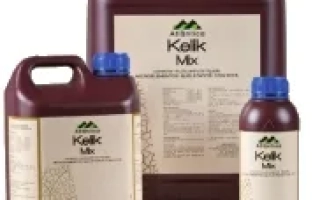
Kalic-K-Si — is an effective corrector of potassium and silicon deficiency in liquid form. It is used in all types of drip irrigation systems or via foliar feeding. It increases plant resistance to fungal diseases. It is applied against sucking pests in late vegetation, when insecticide use is prohibited.
Composition:
Chelated Potassium (K2O) — 15%,
Chelated Silicon (Si2O) — 10%,
Chelating agent EDTA — 2%
Density — 1.34 g/cm3 pH: 12
Characteristics
• 100% solubility
• Stable during use and storage
• Chelated nutrient forms improve absorption through leaf tissue
• Compatible with most fertilizers, Atlante, Aminokat, Rikat products, as well as some fungicides (except copper-, sulfur- and oil-containing, as well as alkaline solutions)
Application of Kalic K-Si promotes:
- Improved hormonal balance
- Nutrient uptake, improved photosynthetic activity
- Increased cell and tissue turgor
- Increased cell wall strength,
reduced risk of plant lodging
- Activation of plant’s self-defense system
- Increased resistance to diseases
and pests
- Improved drought and salt tolerance
of plants
Application guidelines for Kalic K-Si:
To prevent diseases, non-root feedings must be applied as soon as environmental conditions predispose to disease development. The interval between applications should be 10-14 days.
— Fruit trees, citrus, nuts and grapes: 0.25-0.5 % solution
— Vegetables and ornamental crops: 0.25-0.5 %. Some flower species may be sensitive to foliar spraying during flowering
— Cereals (grain, rice): 0.25-0.5 %, 2 times during tillering and 10% heading (panicle) stage.
— Corn
• In the 3-5 leaf stage of the crop, in tank mix with herbicides (0.5 % solution)
• In the 5-7 leaf stage (0.5 % solution)
— Sugar beet
• Seedling leaf stage — 1 pair of true leaves, 0.25 % solution
• 4-6 true leaves — 0.5 % solution
• After row closure — 0.5 % solution
Kalic K-Si not only increases sugar beet yield but also increases sugar content in roots, leading to a significant increase in sugar harvest per hectare (by 20-30%).
• For seed treatment of cereal crops, Kalic K-Si (0.6 % solution or 60 ml/ton, working solution 10L/ton) is recommended to be applied pure or in mixture with insecticide-fungicide combinations, used at reduced rates (by 30-50%).
• Seed treatment ensures earlier, more uniform emergence, reduces plant disease incidence, increases resistance to lodging, and increases yield due to increased productive tillering and grain mass per ear.
— Sunflower
• On sunflower crops, the most rational application of Kalic K-Si is:
• In the 3-5 true leaf stage of the crop, in tank mix with herbicides (0.5 % solution)
• During bud formation - beginning of flowering (0.5 % solution).
• This application of Kalic K-Si allows reducing pesticide usage by 20-40%, increasing their efficacy, reducing flower rot incidence, improving productivity and oil content in seeds.
— Potato
• Treatment of tubers before planting, to reduce tuber infection, at a rate of 0.3 % solution (working solution — 10 L/ton)
• After emergence, all pesticide treatments are recommended to be conducted in tank mixtures with Kalic K-Si (0.25-0.5 % solution).
• This allows reducing pesticide usage by 20-50% depending on penetration method (contact or systemic), and in some cases reduces the number of treatments.
If sorting of potatoes into seed and table varieties is done in autumn, seed potatoes are recommended to be treated with 0.3% Kalic K-Si solution for better storage (less sprouting, slower disease development).
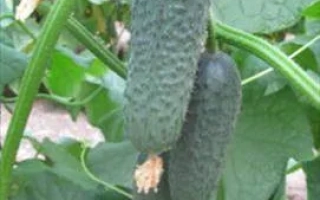
— Cucumber
• Kalic K-Si is applied at seedling stage at 0.05% concentration to activate photosynthesis and leaf growth.
• At flowering stage, 0.1-0.2% solution for increased productivity and reduced disease incidence.
• Later, it is applied at first signs of disease or for prevention. When more than 5% leaf area is affected by powdery mildew and other diseases, Kalic K-Si is applied in tank mix with fungicides.
• This application of Kalic K-Si reduces the number of applied pesticides, including insecticides, increases plant productivity by 15-30%.
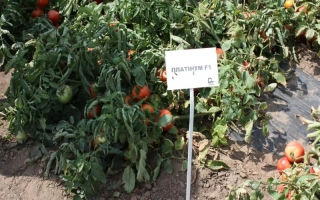
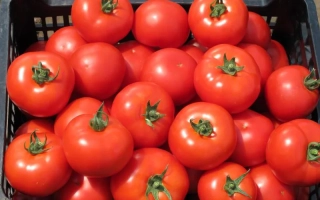
— Tomato
• Kalic K-Si is recommended for use during active plant growth.
• At first flower cluster stage.
• Subsequently, every 15-20 days for disease prevention and increased yield.
• In open ground, treatments are recommended at intervals of 10-15 days.
• Kalic K-Si dosage (0.3-0.5 % solution)
— Cabbage
• First cabbage treatment with Kalic K-Si (0.25 % solution) is applied at seedling stage to stimulate growth processes.
Repeat spraying is conducted during head formation (0.5 % solution) to increase yield and quality, and reduce damage from cabbage white butterfly and other leaf beetles.
— Carrot
• Carrot plants are sprayed during the cluster maturity stage with 0.05% Kalic K-Si solution (0.05 % solution) to stimulate growth processes, increase yield and quality (increase sugar content).
— Fruit and berry crops
• All fruit crops, especially stone fruits, undergo multiple pesticide treatments during vegetation.
• To reduce the number of treatments and pesticide application rates, Kalic K-Si is recommended for use during all pesticide treatments.
Kalic K-Si ensures:
• increased leaf absorption
• good retention of pesticide on plants
• increased mortality of harmful organisms, weakening or elimination of negative effects on crops
It is most appropriate to apply Kalic K-Si during bud formation and active fruit growth. For stone fruit crops — 0.25-0.3 % solution (at higher application frequency, concentration 0.1-0.2), for drupe crops — 0.25-0.3 % solution. Application of Kalic K-Si:
• reduces disease incidence on crops
• improves winter survival (especially with large temperature fluctuations)
• activates photosynthesis
• increases yield by 10-20%
On garden plots, regular application of Kalic K-Si (with 14-day intervals) can significantly reduce disease spread and development.
— Grape
Grapes belong to crops subjected to multiple pesticide treatments, so here it is also very important to reduce pesticide load.
• The less pesticides we apply, the higher the yield and product quality, but under the condition that pest population is below the economic threshold of damage (ETD)
• Therefore, including Kalic K-Si in tank mixes with pesticides is the most appropriate option.
Kalic K-Si treatments are conducted:
• During bud formation to activate flowering and preserve fruit set
• During active fruit growth with intervals of 14-20 days
• With tank mixes, interval between treatments depends on the protective duration of the pesticide.
Kalic K-Si dosage 0.25-0.3 %
— Blackberry, raspberry, blackcurrant
• Spraying bushes is conducted during bud formation to stimulate growth processes, flowering, and fruit set, then with 14-day intervals to prevent disease development and increase yield.
• Kalic K-Si treatment can be combined with other foliar fertilizers. Dosage of the product (0.25-0.5 % solution).
— Strawberry
• If other growth stimulators are not used, the first Kalic K-Si treatment is recommended during the resumption of plant growth, then during bud formation and after harvest.
• Dosage of the product 0.25-0.5 % solution.
• Kalic K-Si inhibits disease development, promotes fruit set and increases yield.
— Ornamental plants
• Perennial ornamental crops begin Kalic K-Si spraying at the beginning of vegetation resumption to activate growth processes and continue treatments with 20-30-day intervals to improve ornamental properties and plant condition.
• Dosage of the product 0.25-0.5 % solution
— Lawns
• Lawn grasses are mostly grasses that require silicon, so Kalic K-Si application stimulates growth processes and helps maintain good lawn condition.
• This is especially important for sports lawns under high mechanical stress. Kalic K-Si application helps deal with lawn damage and bare patches.
• Dosage of the product 0.25-0.5 % solution.
• Kalic K-Si application begins at the resumption of vegetation and continues with 20-30-day intervals.
• Kalic K-Si can be applied in combination with pesticides and fertilizers used on lawns.
SILICON
Two types of self-defense activated by silicon:
1. Physical — strengthening cell walls through silicon deposits makes leaves and stems hard and strong, creating a barrier against pathogens and insects
2. Chemical — silicon dissolved in the plant (not on leaf surface) enhances biosynthesis of secondary metabolites that provide plant self-defense
Kalic K-Si (chelated EDTA) not only coats leaf surfaces but also penetrates deeper into the plant, activating protective mechanisms internally.
Present in soil:
• Monosilicic acid
• Polysilicic acid
• Silicates of minerals
• Can be adsorbed or precipitate as a sediment along with aluminum, iron and manganese oxides
Despite abundant soluble silicon in most mineral soils, there is a deficiency of available silicon — as a result of depletion of this element due to continuous cultivation of crop plants.
Rice can absorb silicon in amounts of approximately 230-470 kg/ha, and due to intensive harvesting, silicon is removed from soil solution faster than it can naturally replenish.
Clay soils contain much quartz sand (SiO2), but little soluble silicon available for plants.
Silicon plays a crucial role in plant life. It determines stem strength, resistance to lodging, flowering strength and energy of fruit set.