
Tomato farmers dump produce on road in Maitighar protest
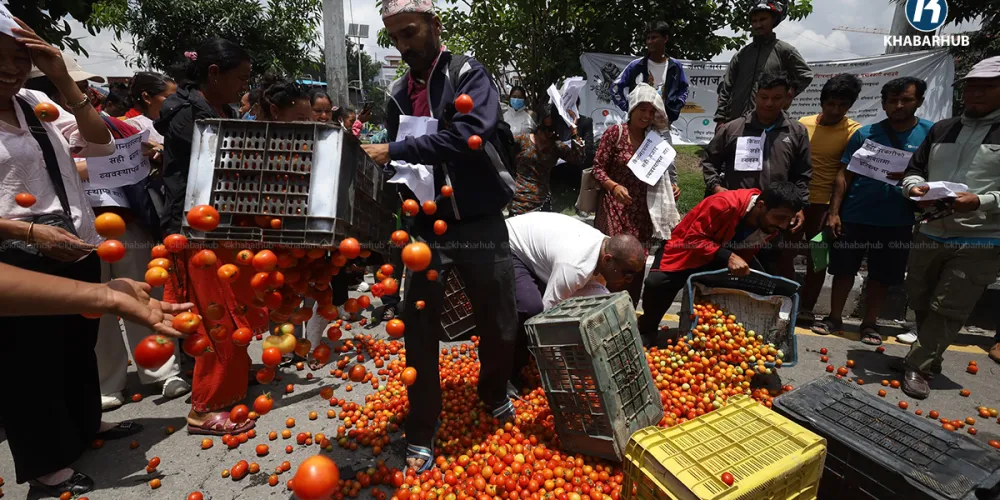
On Wednesday, July 15, 2026, tomato farmers organized a dramatic protest at the Maitighar Mandala in Kathmandu. In a symbolic demonstration of their frustration, the farmers dumped large quantities of their harvest onto the road, highlighting the ongoing crisis within the nation's agricultural sector. This act of protest served as a desperate cry for help, as farmers struggle to manage their livelihoods amidst dwindling returns.
The primary grievances voiced by the protesting farmers concern the government’s agricultural policies, which they claim are heavily skewed in favor of imports. The demonstrators argued that the current administration has failed to provide sufficient subsidies, ensure fair market prices for domestic produce, and create a reliable environment for local agriculture to flourish. As a result, Nepali producers find themselves unable to compete against a flood of cheaper imported vegetables that have saturated the local market.
During the event, farmers expressed significant financial distress, noting that they are currently unable to recover even the basic costs of production for their crops. They criticized the government for ignoring these structural issues, stating that their concerns have gone largely unheard despite repeated appeals for intervention. The dumping of the tomatoes on the public road was intended to bring immediate visibility to the severity of their economic situation.
The farmers’ demands are clear and comprehensive, calling for the immediate implementation of a minimum support price for all major agricultural products. They are also advocating for increased government subsidies, improved availability of essential farming inputs like fertilizers and high-quality seeds, and better overall market management. Furthermore, they are urging the government to prioritize policies that safeguard domestic production over the unhindered importation of foreign vegetables.
As of now, the government has not issued a formal response to the demands raised during the Maitighar protest. The situation remains tense as the agricultural community continues to highlight the systemic failures affecting the sector. Without meaningful policy adjustments and better support for local growers, many farmers fear that their operations may become unsustainable, potentially threatening the long-term food security and economic stability of the rural population in Nepal.
Not yet comments. Be the first!
Comments · 0