
Timber transport funds to upgrade 'fragile rural roads' in Scotland
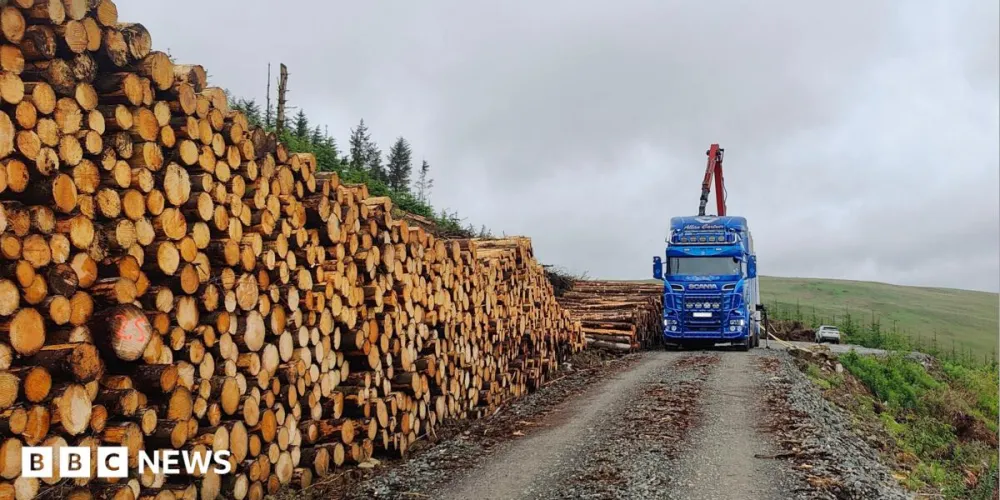
Scottish Forestry has announced a new series of projects aimed at protecting and upgrading "fragile rural roads" used for timber transportation across Scotland. A total of £900,000 in funding has been allocated to schemes spanning Dumfries and Galloway, Argyll and Bute, the Scottish Borders, South Ayrshire, and the Highlands. This initiative is designed to handle the heavy demands placed on rural infrastructure by timber haulage.
Agriculture Minister Jim Fairlie described the strategic timber transport fund as an excellent example of cooperation between the Scottish government, local councils, businesses, and communities. This new funding is in addition to £1.1m already committed earlier this year to support broader logisitics, including the TimberLINK project, which utilizes coastal shipping to move timber from Argyll to processors in Ayrshire, thereby reducing the reliance on road haulage.
Specific infrastructure improvements include the full reconstruction and resurfacing of the A702 road through Penpont village in Dumfries and Galloway, and essential strengthening works on the B734 in South Ayrshire. In the Highlands, significant improvements are slated for the A884 near Lochaline. Over a 17-mile (28.3km) stretch, the work will involve structural reinforcements and the creation of 18 new passing places to accommodate heavy vehicles.
Minister Jim Fairlie emphasized the importance of supporting the forestry sector, which sustainably generates approximately six million tonnes of timber annually. He stated that the investment is crucial for maintaining the economic viability of the industry while ensuring that essential transport corridors remain reliable for all rural users. The collaboration is viewed as a vital step in balancing industrial output with community needs.
Dr. William Clark, Scottish Forestry's forest transport and innovation advisor, added that addressing these transport challenges collaboratively improves the quality of life for residents and enhances local road networks for everyone. By strengthening these routes, Scotland aims to maintain the competitiveness of its essential forestry operations while simultaneously reducing the wear and tear on local infrastructure that impacts other businesses and daily commuters alike.
Not yet comments. Be the first!
Comments · 0