
Tennessee project tests cattle grazing under solar panels as a new farm-land use model
A Tennessee project is trying to show that solar generation and cattle grazing can share the same land without sacrificing agriculture. The developer says the model could preserve pasture use while creating a second income stream for landowners.
A project in central Tennessee is being used to test whether solar power and cattle grazing can work on the same acres without pushing farmland out of production. Silicon Ranch has brought a 40-acre site near Christiana, outside Nashville, into operation and plans to use it over the next year as a demonstration of agrivoltaics with beef cattle. For U.S. agriculture, the site is a practical trial of how energy investment and farm use might coexist on land that would otherwise be forced into a single purpose.
The property already hosts 5 megawatts of solar capacity, and the next phase is to rotate 10 cows and calves beneath the panels. The electricity will go to Middle Tennessee Electric. Silicon Ranch says the point is not to replace farmers with energy infrastructure, but to prove that the same parcel can continue generating agricultural value while also earning from power production.
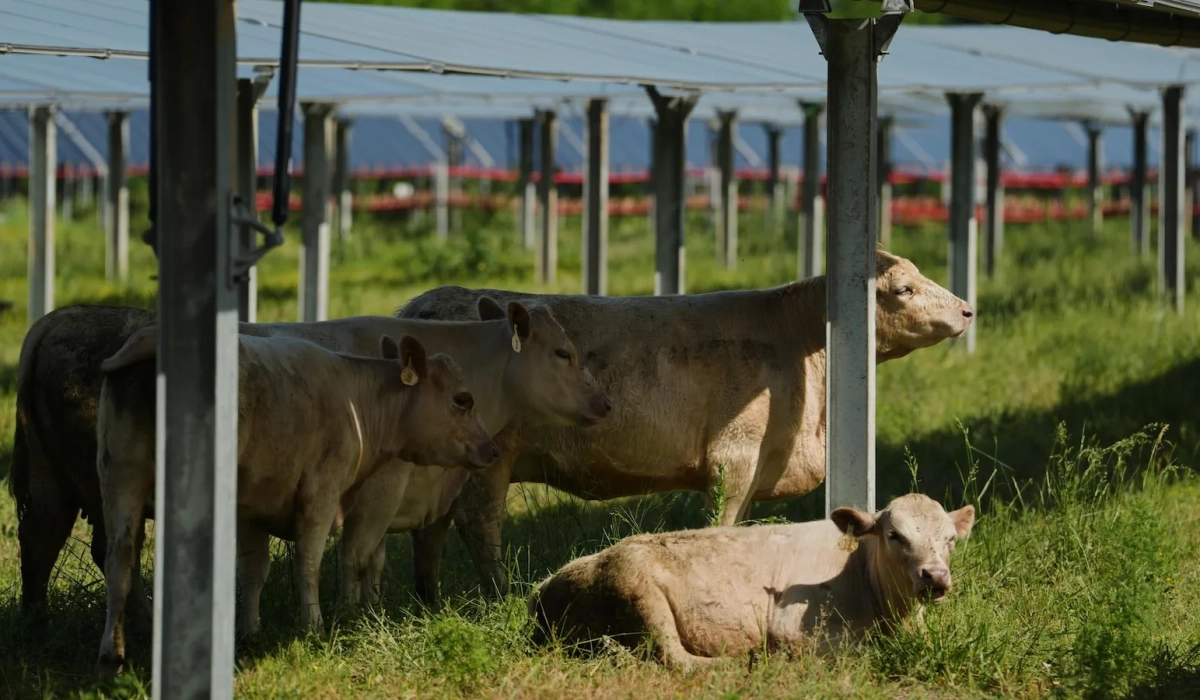
The company argues that earlier observations on its solar sites show the land beneath panels can retain moisture better, while forage remains more resilient in hot and dry conditions. For livestock, the shade may reduce heat stress, cut water consumption and improve weight gain. Those claims matter in farm terms because one of the biggest concerns around large solar development is that it removes productive ground from grazing systems and weakens the long-term agricultural base of rural areas.
Silicon Ranch says it already supports grazing on about 15,000 acres of its solar properties, mostly with sheep. Across the United States, the American Solar Grazing Association estimated in 2024 that about 130,000 acres of solar land were being grazed by sheep. The Tennessee project stands out because it focuses on cattle rather than sheep and is meant to test whether a broader range of livestock operations can fit into the model.
The financial case is also significant. American Farmland Trust has said land leased for solar projects can bring in about $1,000 per acre, roughly 10 times historical farmland lease rates in some areas. If pasture use can be preserved at the same time, landowners may not have to choose between agriculture and energy. Instead, they could stack both income streams on the same property, which is why the outcome of this pilot will be watched closely by farmers, ranchers and rural investors.