
Telangana’s rice boom turns into surplus and diversification challenge
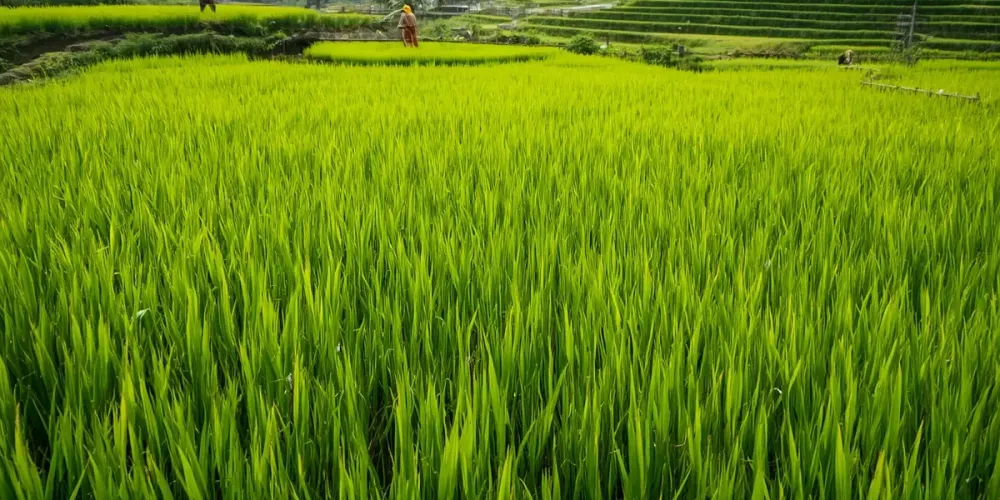
Telangana’s rapid rise as a rice powerhouse is increasingly being seen as a structural problem as well as a success story. BusinessLine reports that the state is finding it difficult to manage repeated rice surpluses, while the cropping pattern is becoming ever more concentrated around paddy, raising concerns about monocropping and long-term sustainability.
Since Telangana was formed in 2014, rice output has nearly tripled, rising from about 6.6 million tonnes in 2013-14 to 17 million tonnes in 2024-25. The state has become one of India’s top three rice-producing regions and now contributes close to 12% of national output. Over the same period, paddy area expanded from 1.995 million hectares to 4.7 million hectares. Nearly all of that area is irrigated thanks to new projects and favourable monsoon rains, although yield growth itself has remained relatively stagnant.
The Centre for Sustainable Agriculture and Development Studies at Professor Jayashankar Telangana Agricultural University has submitted recommendations to the state government in a paper titled Managing Telangana’s Rice Surplus: Opportunities for Export Earnings, Sustainability and Crop Diversification. The study was prepared by Samarendu Mohanty and university vice-chancellor Aldas Janaiah. It sets out short- and long-term measures to move Telangana away from a procurement-driven, surplus-accumulating model toward a more diversified and fiscally resilient farm system.
The authors say the production surge reflects expanded irrigation through groundwater use, tank systems and a long run of favourable monsoons. At the same time, India’s minimum support price procurement framework has created persistent structural surpluses. In 2024-25, Telangana procured 12.8 million tonnes of paddy. After contributing 10.8 million tonnes to the central pool and allocating part of the remainder to local schemes, the state was still left with more than 1.5 million tonnes.
The problem is not easing. In kharif 2025-26, procurement reached a record 7.18 million tonnes, up from 7.08 million tonnes in the previous kharif season. With a central allotment of 5.3 million tonnes, the paper estimates the state will still be left with about 2 million tonnes. It warns that the surplus could worsen further in rabi 2025-26 if current policy settings remain unchanged.
Researchers describe Telangana as caught in a policy trap. Because the minimum support price effectively sets an internal rice price above world market levels, exporting the surplus tends to generate losses. At the same time, global rice prices have fallen by nearly 50% over the past year, although they could stabilise or even rise in coming months depending on monsoon conditions in other rice-producing countries. Against that backdrop, the university is urging stronger crop diversification to reduce pressure on budgets, logistics and water resources.
Not yet comments. Be the first!
Comments · 0