
Single locus separates winter and spring faba beans: improved Hedin/2 v.2 genome and key winter-hardiness marker
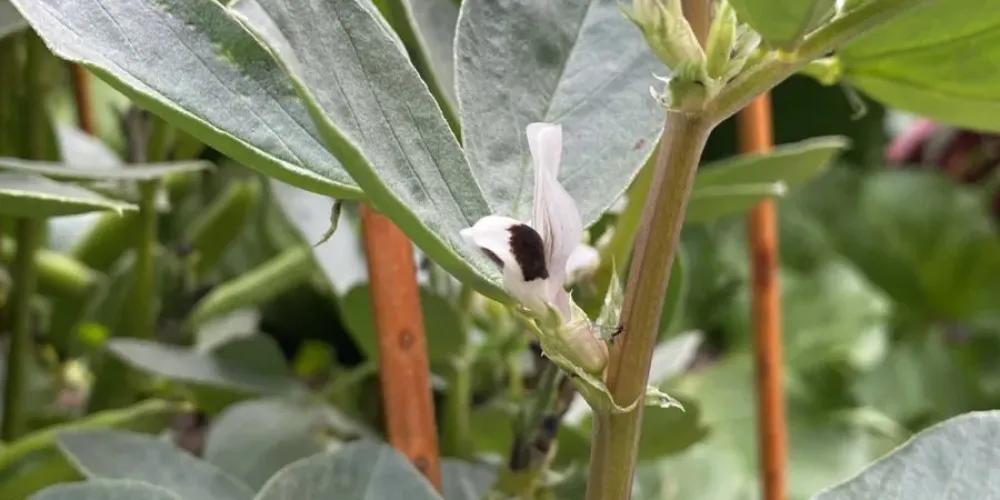
A Nature Genetics paper published 10 March 2026 reports an improved faba bean reference genome (Hedin/2 v.2) and a genome-wide association study that locates a major locus for winter hardiness.
The Hedin/2 v.2 assembly combined Bionano optical maps with PacBio HiFi contigs and Hi-C scaffolding to produce six chromosomal pseudomolecules totaling 11.7 Gb. The hybrid assembly yielded 317 scaffolds with an N50 of 100 Mb and reduced gaps to 335 versus 5,195 in the previous v.1 assembly.
More than 97% of sequence is now anchored to chromosomes, decreasing unanchored sequence from 648 Mb to 295 Mb. Merqury evaluation indicates equal or improved base accuracy and greater gene-space completeness in v.2 compared with v.1.
Gene annotation integrated PacBio Iso-Seq from 11 tissues, existing RNA-seq, and protein evidence, identifying 35,107 protein-coding genes (963 new relative to v.1) and 55,283 transcripts, improving representation of alternative splicing and seed storage protein gene clusters.
Repeat annotation shows roughly 93% of the genome as repetitive, with class I transposons dominating (83%) and Ogre (Ty3/Gypsy) elements representing about 71% of the assembly; Ogre families underwent at least two recent amplification events.
Using the improved reference together with resequencing and phenotyping of spring and winter accessions, GWAS pinpointed a major winter-hardiness locus. The top associated variant explains the majority of phenotypic variation and reliably distinguishes winter from spring types.
Additional association signals within the winter gene pool were detected and may provide further targets to enhance winter hardiness through marker-assisted breeding.
Agricultural relevance: Vicia faba is protein-rich (~29% protein) and fixes nitrogen, providing sustainability benefits. Winter types can yield up to 47% more than spring types but are constrained by winter-kill risk. The new genomic resources and markers should accelerate breeding of winter-hardy cultivars, supporting more stable faba bean production in cooler climates.
Not yet comments. Be the first!
Comments