
Rare earth mining is polluting the Mekong and threatening regional food supplies
Toxic runoff from rare earth mining in Myanmar and Laos is becoming a serious threat to the food systems linked to the Mekong basin. The Associated Press reports that contamination is already affecting tributaries that support fisheries, irrigated farmland and rural communities in Thailand, with broader risks for Cambodia and Vietnam downstream. The case shows how rising global demand for critical minerals used in electronics, electric vehicles and defense systems can spill directly into the agricultural economy.
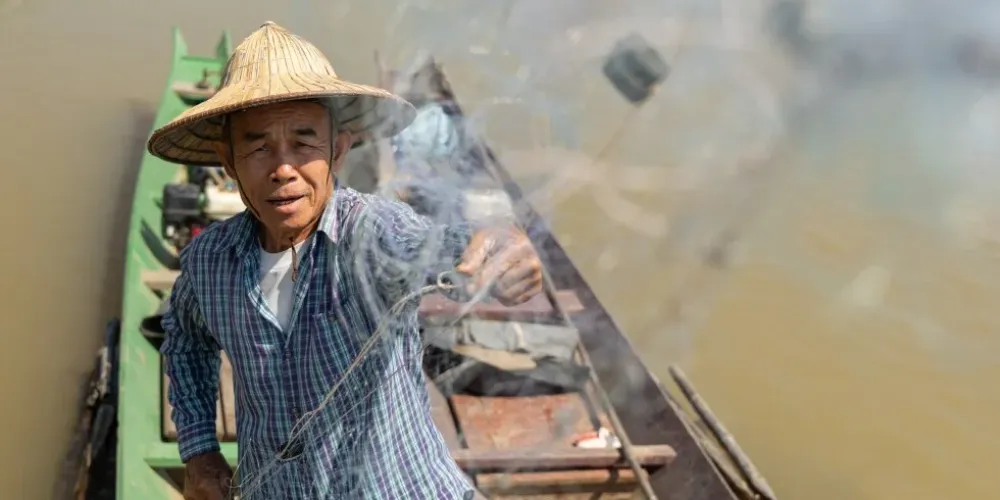
In Chiang Saen, northern Thailand, 75-year-old fisherman Sukjai Yana told AP that on some days he earns nothing because buyers fear the fish may be contaminated. The report says around 70 million people in mainland Southeast Asia depend on the nearly 5,000-kilometer Mekong River. Once confidence in river water and fish weakens, the impact spreads across fishers, farmers and local trading networks at the same time.
Researchers are finding elevated levels of heavy metals in water, fish and sediment. The pollutants identified include arsenic, mercury, lead and cadmium. Thai scientists say those contaminants have already been detected in Mekong tributaries such as the Sai and Ruak rivers. In laboratories, researchers describe tumor-like growths, discolored scales and abnormal eye coloration in fish, all signs of long-term toxic exposure. For people, those metals are linked to organ damage, nervous system harm, kidney problems and impaired cognitive development.
The problem is no longer just ecological. It is beginning to affect food trade. AP notes that Thailand is bearing much of the burden because the contamination threatens exports ranging from rice sold in U.S. supermarkets to edamame snacks in Japan and garlic used in Malaysian kitchens. Agriculture remains a backbone of Southeast Asian economies, and local experts warn that damage to these river systems is undermining what they describe as “the world’s kitchen.”
The policy response remains limited. Thai authorities say they have little leverage over mining activity across the border in conflict-hit Myanmar and weakly controlled areas of Laos. Universities, local governments and the Mekong River Commission are mostly focused on monitoring heavy metals and warning communities. At the same time, the Stimson Center has identified nearly 800 suspected unregulated mining sites along Mekong tributaries in Laos, Myanmar and Cambodia through satellite analysis. As demand for rare earths keeps rising, the risk grows that what began as an environmental problem will become a longer-term crisis for food production, rural livelihoods and agricultural exports.
Not yet comments. Be the first!
Comments · 0