
Nova Scotia growers invest in irrigation after drought slashed yields
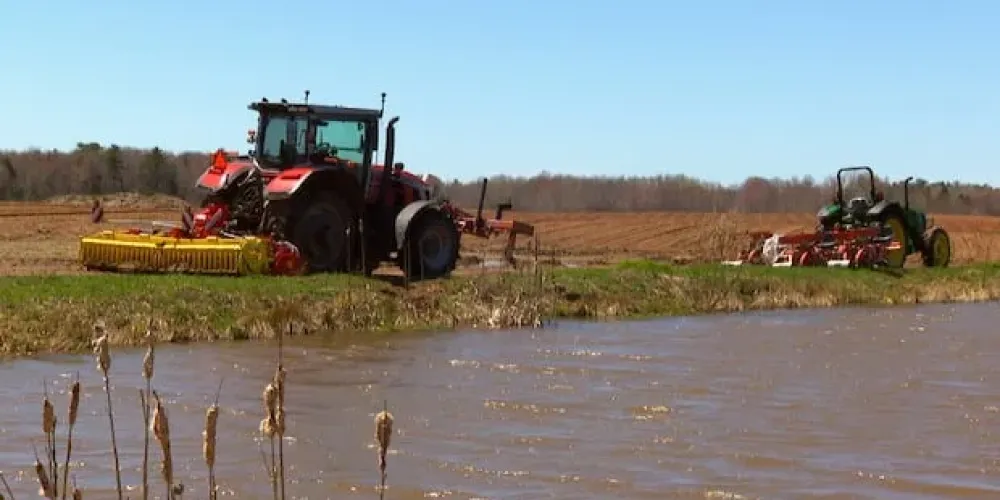
Farmers in Nova Scotia are reshaping their water strategy after a punishing 2025 growing season in which severe drought hit horticulture and vegetable production across the province. CBC reports that producers are putting more money into pumps, ponds, buried pipe and irrigation equipment because relying on rainfall alone now looks increasingly unsafe. For many farms, last year turned climate volatility from a background risk into an immediate operating issue.
Philip Keddy of Lakeville, owner of Charles Keddy Farms and vice-president of Horticulture Nova Scotia, said his farm got through the dry spell only because it had already built up irrigation capacity. He estimated that yields fell by 25 percent last year, but without irrigation the damage could have reached roughly 50 to 75 percent. His operation mainly grows strawberry nursery plants and sweet potatoes, and he has spent as much as C$400,000 over recent years to expand the farm’s water capacity.
Provincial support has expanded alongside that private spending. In June, Nova Scotia raised the budget of its On-Farm Water Management Program to C$1.8 million from C$250,000. The program offers 50 percent cost-shared support for water supply projects such as wells and ponds, up to C$15,000. CBC said the province received 229 applications in 2025, compared with 85 the year before, a sharp sign that drought resilience has become a much wider concern across the farm sector.
The province also added C$7 million to Horticulture Nova Scotia’s Season Extension Enhancement Program, which helps fruit and vegetable growers lengthen the growing season and strengthen production systems. Through that program, Keddy bought additional pumps, more than 900 metres of buried line to move water underground, and an irrigation reel for part of his rhubarb and raspberry acreage. Applications to that program rose to 121, up from 80 when it was previously offered in 2023.
The orchard sector is especially exposed. Emily Lutz, executive director of the Nova Scotia Fruit Growers’ Association, warned that drought stress from last year could still affect the coming season because some trees may fail to bear fruit. Replacing dead fruit trees can take three to five years, and she said planting an acre of orchard can cost more than C$40,000. That makes irrigation less a discretionary upgrade than a way to protect long-term productive assets as growers adapt to a drier and less predictable climate.
Not yet comments. Be the first!
Comments · 0