
Madhya Pradesh extends wheat procurement slot booking deadline to May 23
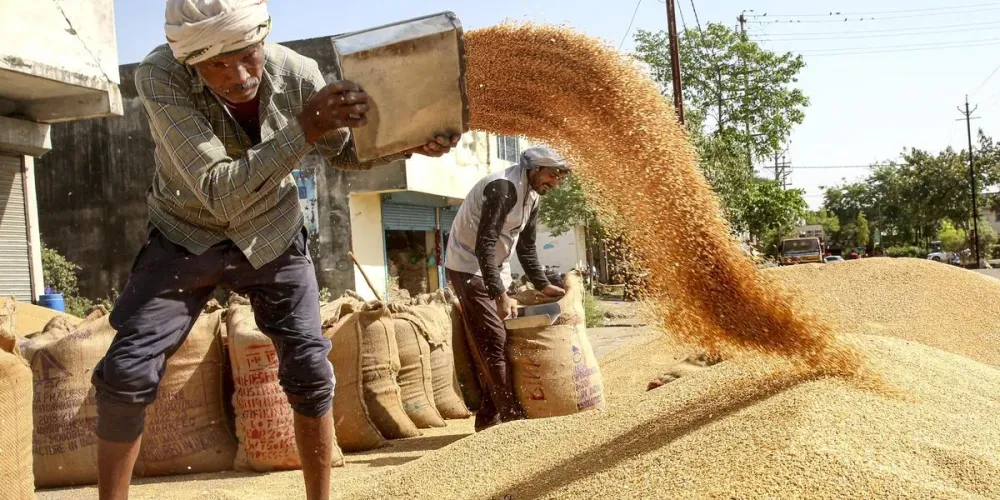
India’s Madhya Pradesh government has extended the deadline for booking slots under its 2026-2027 rabi wheat procurement drive to May 23. The previous cut-off was May 9, but Chief Minister Mohan Yadav announced a two-week extension so that no cultivator would be left out of the support price scheme. In a major grain-producing state, that kind of extension matters directly for harvest intake, transport scheduling, and farm cash flow.
According to the official cited by The Hindu BusinessLine, the state had already procured 34.73 MT of wheat from cultivators as of May 2. The same update said around Rs 600 crore had been approved under the Price Support Scheme for 2026. That means the deadline extension is being paired with budget backing rather than treated as a stand-alone administrative adjustment.
The wheat decision sits alongside a broader pulse procurement programme. State officials said chickpea and lentil procurement was scheduled from March 30 to May 28. Procurement targets were set at 6.49 lakh MT for chickpea and 6.01 lakh MT for lentils, while a proposal covering 1.31 lakh MT of pigeon pea has been sent to the central government. The package shows that the state is trying to keep several crop support channels moving at once.
Storage and payment infrastructure are also part of the plan. The government said payments for procured produce are being transferred directly into farmers’ bank accounts. Around 3.55 lakh MT of storage capacity has been created under the Foodgrain Storage Scheme to protect harvested output. Under the Material Storage Scheme, modern warehouses with total capacity of 1.5 lakh MT are under construction, and registration has already been completed for warehouse capacity of 1.1 lakh MT.
Madhya Pradesh is also expanding digital support systems. Through the e-Vikas and e-Kisan platforms, farmers receive information on government schemes, market prices, weather, and technical advice on their mobile phones. Since April 1, the e-Kisan system has been rolled out in all districts, and every farmer is being assigned a unique ID linked to a full digital record of land and crops. Geo-tagging through the Kisan Registry is intended to support crop insurance, damage assessment, and drone spraying.
The state tied the announcement to its natural farming agenda as well. Mohan Yadav said Madhya Pradesh is a leader in this area nationally and globally, with more than 53 lakh hectares under cultivation through natural farming approaches and over 6,000 clusters created. Taken together, the longer booking window, pulse procurement targets, new storage, and digital systems show the state trying to connect price support with a wider restructuring of farm logistics and service delivery.
Not yet comments. Be the first!
Comments · 0