
India shifts farm policy to state-specific roadmaps as monsoon risks mount
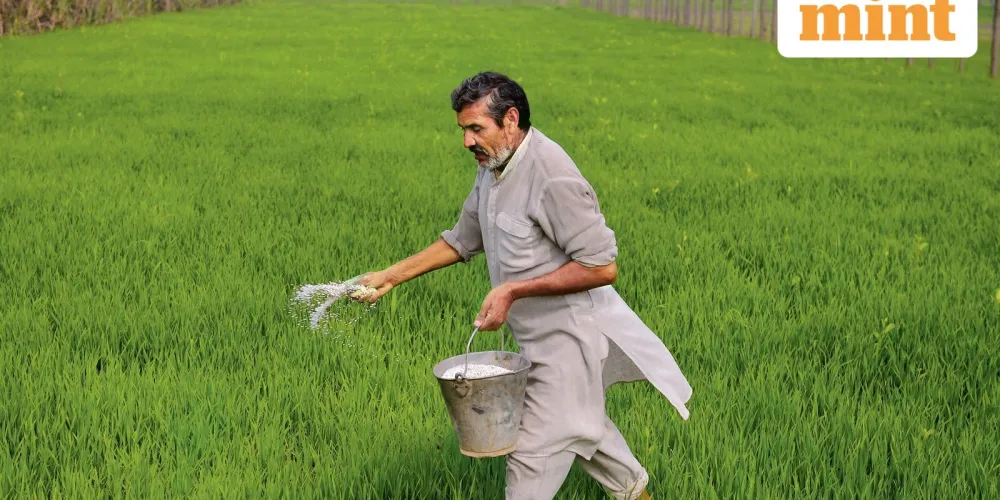
India is moving away from one-size-fits-all farm policy and toward state-specific, and in some cases district-level, agricultural roadmaps. Mint reported that the Centre announced the approach last week, with states including Rajasthan and Madhya Pradesh already working with New Delhi on plans tailored to local conditions. The stated objective is to raise productivity, improve climate resilience and strengthen farm incomes.
The shift comes at a delicate moment for the farm economy. India is facing a forecast of a below-normal monsoon, which increases concern over crop output and food-price pressure. At the same time, the structural imbalance inside the sector remains stark: agriculture and allied activities contribute about 15.6% of national income at current prices in FY26 but employ roughly 46.1% of the workforce. That gap underlines how central productivity per worker and per acre remains to rural prosperity.
Over the last five years, the sector has expanded at an average 4.4% annually at constant prices. Over the FY16-FY25 decade, average growth was 4.45%, but performance differed sharply by segment. Livestock grew about 7.1% and fisheries about 8.8%, while crops grew at a slower 3.5%. For policymakers, that mix suggests future gains will depend less on broad output expansion alone and more on better crop choice, improved seed use, irrigation alignment and location-specific resource management.
That is why the new roadmaps are being framed as data-driven blueprints. They are meant to match crop choices, irrigation practices and input use with local soils, rainfall patterns, water availability and existing cropping systems. Mint cited Madhya Pradesh as an example where district-level plans already focus on efficient water use, crop diversification, climate-resilient practices and stronger market linkages. Groundwater depletion is one of the reasons water conservation and resource optimization have become central to the design.
States are expected to carry much of the practical burden. They will identify priorities, provide granular data on soils, water and cropping patterns, and coordinate implementation through local agencies. For farmers, the expected benefits are more precise crop planning, improved access to suitable inputs, better yields and more stable returns.
The challenge now is execution. Mint noted several risks that could weaken the rollout: insufficient granular data, funding constraints for irrigation and diversification, weak storage and procurement systems, and hesitation from farmers who must weigh new recommendations against market uncertainty. If those bottlenecks are not addressed on the ground, India may find that even well-designed state roadmaps struggle to deliver the productivity and resilience gains the policy is intended to produce.
Not yet comments. Be the first!
Comments · 0