
German fertiliser makers and farmers struggle with Iran war fallout
The closure of the Strait of Hormuz is already tightening Europe’s fertiliser market, pushing a German producer to full capacity and raising costs for farmers.
The fallout from the Iran war is now hitting Europe’s fertiliser chain and farm budgets. In Germany, the SKW Piesteritz plant in Wittenberg has become a symbol of that pressure as it ramps up output to help cover supply gaps created by the closure of the Strait of Hormuz. AFP reports that the company is running at full capacity while markets remain highly unstable.
The site was founded in 1915, when Germany needed domestic nitrogen for explosives and fertilisers during wartime blockades. Christopher Profitlich, a spokesman for SKW, said the latest disruption shows that sea routes can still collapse in ways that quickly affect agriculture. Roughly one third of global fertiliser supplies normally move through the Strait of Hormuz, and the World Trade Organization has already warned that the blockade threatens food security, especially in Africa and South Asia.
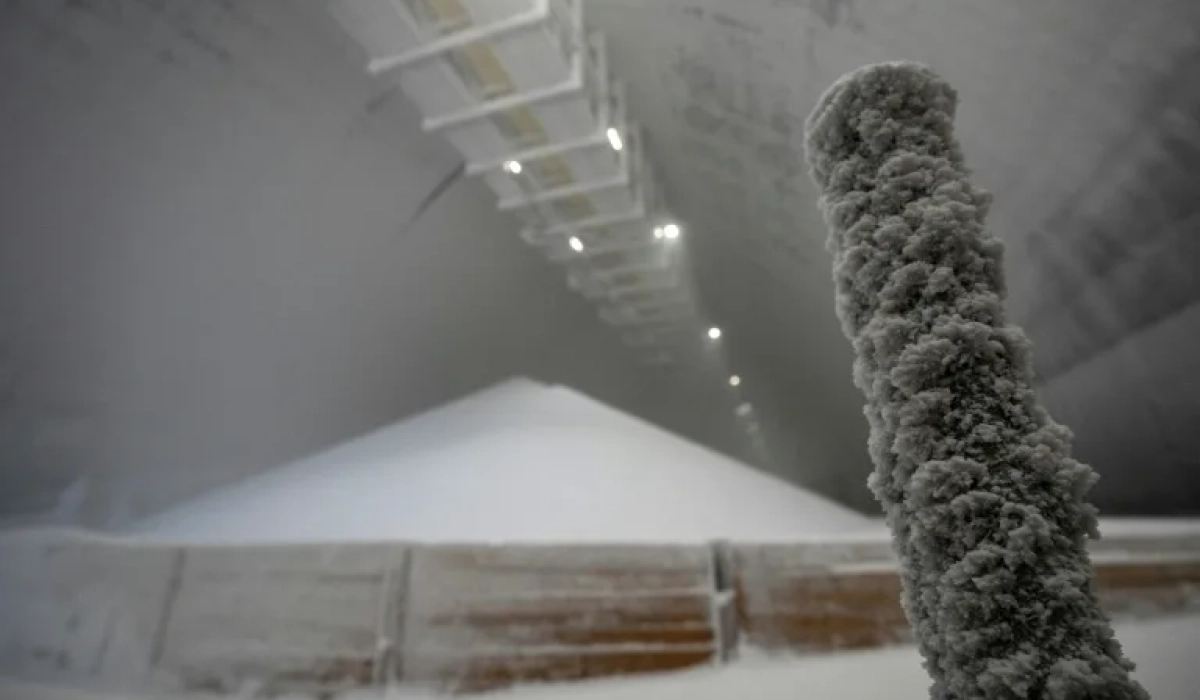
SKW Piesteritz operates on a 220-hectare site with a 23-kilometre internal rail network moving urea, ammonia and finished fertilisers to customers across Germany and wider Europe. The company says it expects revenue to rise by 10 to 20 percent this year, but it also stresses that the forecast remains uncertain because pricing and input costs are moving sharply.
Higher output is not translating into a windfall. Chief executive Carsten Franzke said the company does not see itself as a war profiteer because around 80 percent of production relies on gas, and gas prices have doubled since the conflict began on February 28. The plant had already been weakened by the energy shock that followed the war in Ukraine and Germany’s break with cheap Russian gas, posting losses for three straight years.
Farmers are now absorbing much of the next round of pressure. Gerhard Geywitz, a farmer in Baden-Wuerttemberg, told AFP that fertiliser prices on his farm have jumped by 50 percent since the war began, while cereal prices have stayed broadly flat. That means he cannot pass the extra costs through the grain market, so he has decided to stock up before prices rise further or supplies tighten again next season.
The German Fertiliser Producers’ Association says Europe’s food security is at risk if local plants keep losing competitiveness and dependence on international markets deepens. Industry groups are again calling for a review of EU carbon trading rules to ease the burden on manufacturers. For now, the Hormuz shock has turned a geopolitical crisis into a direct problem for fertiliser supply, farm margins and the resilience of European food production.