
CRM programme helps Punjab and Haryana villages move away from stubble burning
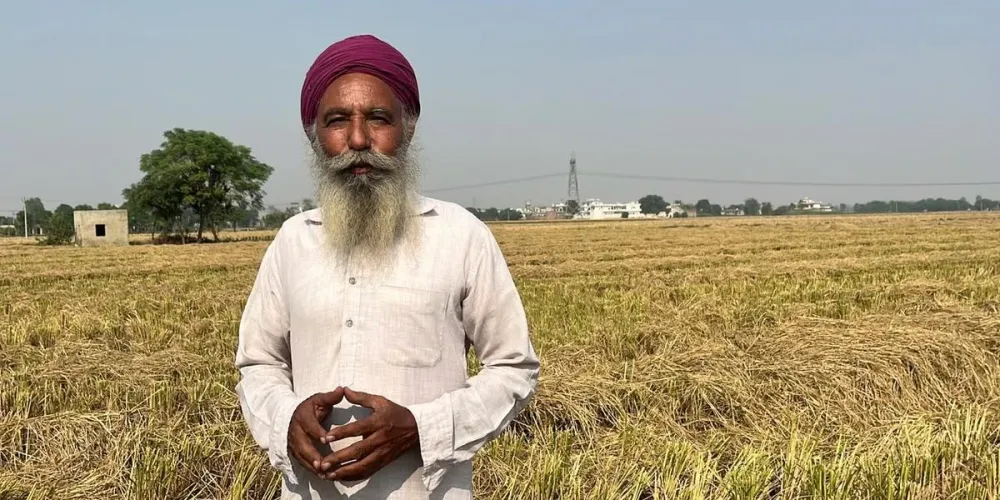
A crop residue management programme in the Indian states of Punjab and Haryana is beginning to show measurable results in villages where farmers have gained access to shared machinery and practical training. The Hindu BusinessLine reports that the initiative is supported by HDFC Bank Parivartan and implemented by the CII Foundation. Its purpose is to replace the routine burning of paddy straw with field practices that let growers prepare land for the next crop without setting residues on fire.
One example in the report is Paramjeet Singh from Lamba village in Haryana's Fatehabad district, who farms about 3.5 acres under paddy, wheat and potato. Before the programme reached his village, burning crop residue remained the most practical option. After his local cooperative improved machinery access, he started using a super seeder across the whole holding, allowing paddy straw to be mulched and incorporated into the soil while wheat is sown in a single pass.
According to the statement cited in the article, the savings are not limited to the residue operation itself. Returning organic matter to the soil lowers fertilizer demand, reduces weedicide use and improves moisture retention, which in turn cuts irrigation cycles. In Kawalgarh village in the Ratia block of Fatehabad, the cooperative model reportedly helped deliver more than 90 per cent compliance with non-burning practices by 2025.
Another farmer highlighted in the story is 29-year-old Gurveer Singh from Chima village in Punjab's Ludhiana district. Before adopting CRM methods, he was burning roughly 22,500 kilograms of paddy residue each kharif season on nine acres. After awareness campaigns and access to local tool banks, he shifted to non-burning field preparation. Wheat sowing that previously required burning followed by several rounds of tillage is now completed in a single operation, while costs have fallen from roughly Rs 2,000-2,500 per acre to about Rs 1,000 per acre.
The report says the programme has operated in Chima since April 2024, and by October 2025 nearly 90 per cent of the village's farmers had adopted non-burning practices. That was enough to save about 887 acres from stubble burning. In northern India, where the gap between paddy harvest and wheat sowing is extremely short, that matters because time pressure is one of the main reasons growers continue to burn residue in the open.
The article also points to the case of Jora Singh from Majhi village in Punjab's Sangrur district, who had spent more than four decades harvesting paddy, burning the straw and racing to sow wheat within a 15-day window on 20 acres. He was dealing with around 50,000 kilograms of straw each season, while private rental of the right equipment cost Rs 1,800-2,300 per acre and was not always available at peak sowing time. After attending an awareness camp in September 2024, he shifted his full holding to CRM, cut costs to Rs 900-1,400 per acre and reported better soil health and crop yields. The story underlines a broader lesson for residue policy: growers change faster when workable machinery and clear on-farm economics are available.
Not yet comments. Be the first!
Comments · 0