
Brazil river study finds antibiotic residues in fish and sediments
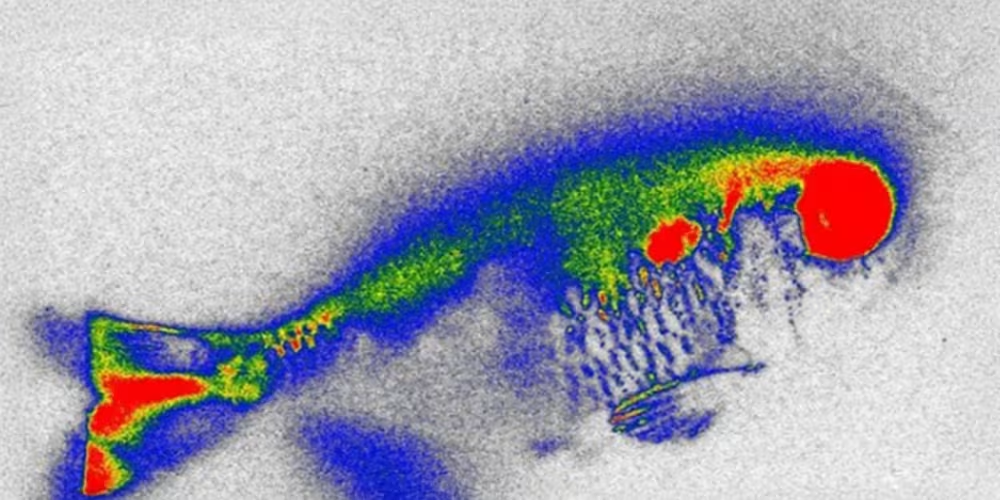
Researchers at the Center for Nuclear Energy in Agriculture, University of Sao Paulo (CENA-USP), reported multi-class antibiotic contamination in the Piracicaba River in Sao Paulo state. The study, published in Environmental Sciences Europe, assessed water, sediments, and fish across rainy and dry seasons and found stronger accumulation signals during low-water periods.
The team tracked 12 widely used antibiotics, including tetracyclines, fluoroquinolones, sulfonamides, and phenolic compounds. Sampling was conducted near the Santa Maria da Serra dam and the Barra Bonita reservoir area, which receives pressure from treated and domestic wastewater, aquaculture, pig farming, and agricultural runoff. Reported concentrations were in nanograms per liter in water and micrograms per kilogram in sediments.
A major finding was chloramphenicol detection in lambari fish (Astyanax sp.) obtained from local fishermen in Barra Bonita. The article notes that chloramphenicol is banned for livestock use in Brazil due to toxicity concerns. It appeared in the dry season at tens of micrograms per kilogram, reinforcing concerns over potential dietary exposure through locally consumed fish.
Researchers also tested Salvinia auriculata, a common floating aquatic plant, as a remediation option. In controlled experiments using carbon-14 radiolabeled compounds, the plant removed more than 95% of enrofloxacin from water within days under higher biomass conditions. Chloramphenicol removal was slower and partial, around 30–45%, with longer persistence.
The study highlighted a non-linear biological effect: lower concentrations in water did not always translate into lower uptake in fish tissues. Enrofloxacin showed relatively faster elimination, while chloramphenicol showed much longer persistence and stronger tissue accumulation. The authors also reported that with chloramphenicol, Salvinia presence was associated with reduced DNA-damage indicators compared with treatments without the plant.
The authors caution that phytoremediation is not a plug-and-play fix. Contaminated plant biomass must be safely removed and treated, otherwise absorbed compounds may re-enter the system. Even so, they describe aquatic-plant remediation as a potentially low-cost tool for regions where advanced treatment technologies are financially difficult, especially when combined with source control and food-safety monitoring.
Not yet comments. Be the first!
Comments · 0