
B.C. farmland watchdog faces staff cuts as workload grows
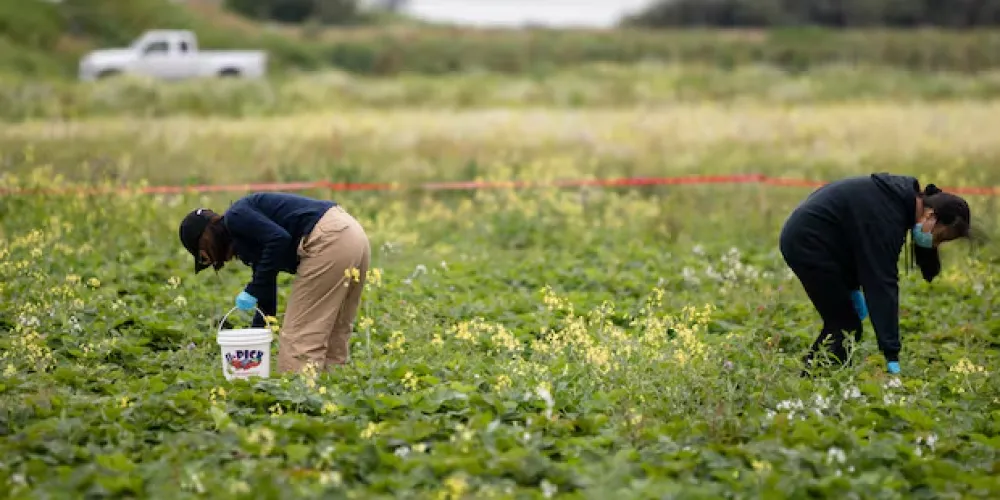
British Columbia’s Agricultural Land Commission is preparing staffing reductions at a time when the workload attached to protecting farmland is still rising. CBC reported that the commission is responsible for more than 4.6 million hectares of land within the province’s Agricultural Land Reserve, yet it now faces new pressure to cut capacity while operating under a flat budget.
Commission chair Jennifer Dyson said ALC funding has remained at C$5.5 million since 2019. She warned that some of the roughly 42 full-time equivalent positions may be cut even though the agency has no slack left in the system. The commission handles everything from routine approvals for greenhouses to permits tied to major infrastructure projects such as the Massey Tunnel replacement, and it also has to investigate illegal dumping and other land-use breaches.
Farmers and academics interviewed by CBC said the staffing cuts could weaken not only the speed of permit processing but also the broader protection of the provincial farmland base. The ALC’s independent role has long been seen as a key safeguard for the Agricultural Land Reserve. Dyson said one of her fears is that the next generation of farmers will face even greater difficulty accessing affordable farmland if oversight capacity is reduced.
Chris Bodnar, an agriculture professor at the University of the Fraser Valley, argued that reduced capacity to process applications or enforce non-compliance would directly erode land dedicated to agriculture. His point is that even if the formal legal framework remains in place, weaker enforcement and slower administration can still shrink the practical protection enjoyed by farmland. That matters especially in regions facing strong development pressure.
The provincial backdrop is also difficult. British Columbia is operating with a forecast budget deficit of C$13.3 billion, and the pressure on ALC staffing appears tied to wider public-sector restraint. But for agriculture, the issue goes beyond headcount: the commission affects land access, project timelines, compliance enforcement and the long-term confidence of farm operators working in high-value land markets.
The story is significant because it shows how land governance can shape farm economics even without a formal policy rewrite. If an agency charged with defending agricultural land loses capacity while applications and enforcement demands become more complex, farmland protection can weaken in practice. That would leave growers facing more uncertainty over land availability, approvals and the future balance between farming and competing land uses.
Not yet comments. Be the first!
Comments · 0