
AI-powered robot improves tomato harvesting by estimating pick success before action
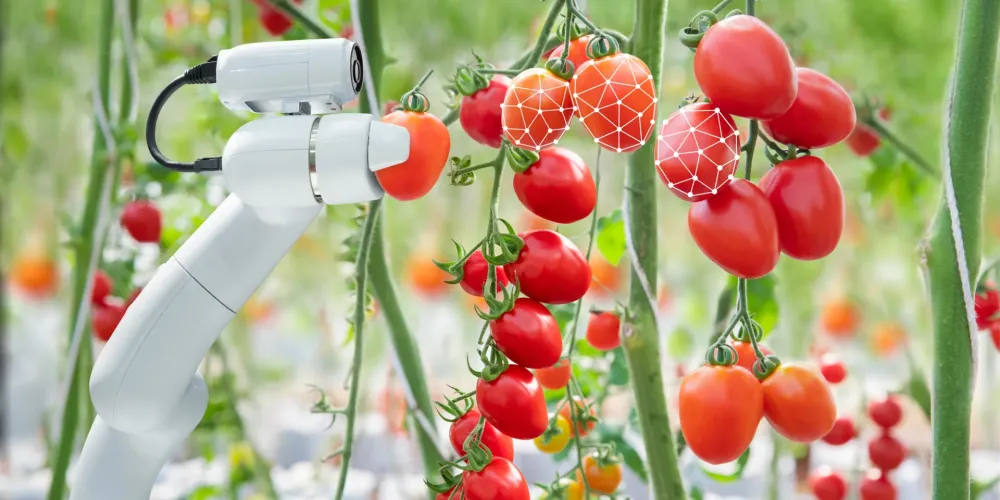
Researchers from Osaka Metropolitan University presented a tomato-harvesting robot that does more than detect ripe fruit. The core idea is to estimate “harvest ease” before each attempt, meaning the system predicts how likely a successful pick is and then chooses the best approach path. This is a practical shift for greenhouse operations, where tomatoes often grow in clusters and are partially hidden by leaves or stems.
Assistant Professor Takuya Fujinaga’s team combined computer-vision inputs with statistical analysis to rank pickability. The robot evaluates fruit position, stem geometry and visual obstruction, then selects an angle that maximizes the chance of a clean detachment. Instead of a single fixed movement, the machine uses decision logic tailored to each fruit’s local geometry.
According to the reported tests, the system reached an 81% success rate. A notable operational result was that about one-quarter of successful picks came after the robot changed its approach from a failed front attempt to a side attempt. That behavior indicates adaptive execution rather than one-shot automation and shows the value of re-planning when first-pass geometry is unfavorable.
The study frames harvest performance as a multi-variable field problem: cluster density, stem placement, surrounding foliage and partial occlusion all influence outcomes. By introducing a measurable “ease of harvesting” metric, the researchers provide a way to benchmark robotic systems under realistic crop conditions, moving beyond simple ripe-fruit detection toward decision-quality assessment.
The team argues this supports a hybrid labor model in which robots handle easier picks autonomously while human workers focus on complex fruit positions. In labor-constrained horticulture, that division could stabilize harvest timing and improve efficiency without forcing fully autonomous operation from day one. The findings were published in Smart Agricultural Technology (2025, volume 12, article 101538), offering a concrete reference point for next-stage commercial deployment in tomato production.
Not yet comments. Be the first!
Comments · 0