
Vuilleminia cystidiata
Vuilleminia cystidiata
Description
Symptoms
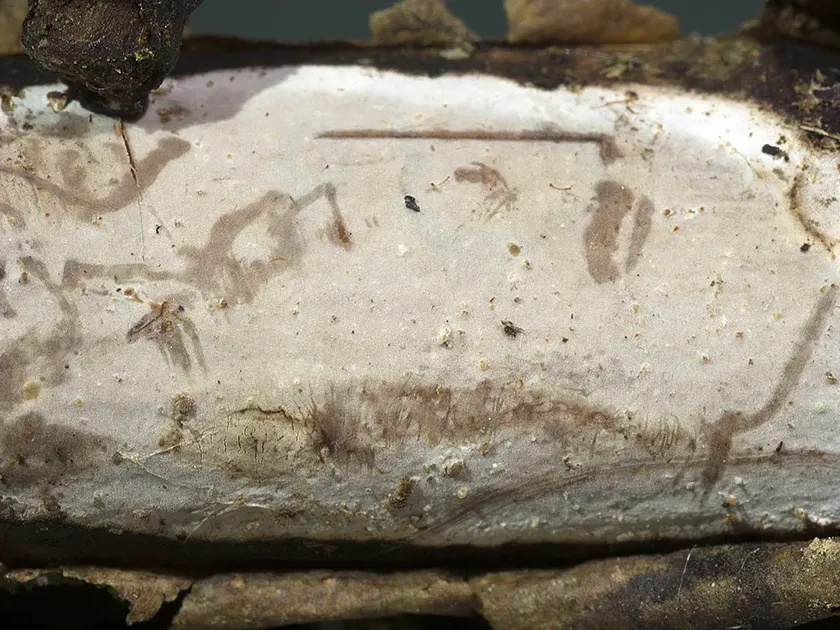
The primary symptom of infection is the presence of flat, leathery, or crust-like fungal fruiting bodies that adhere tightly to the bark of branches and trunks. These can have a grayish or yellowish-brown hue.
The bark in the affected areas often cracks and separates from the wood. Upon careful inspection under the bark layers, one can discover white mycelium, resembling a thin web or cotton-like growth.
Affected sections of branches gradually dry out, and the leaves on them yellow and fall prematurely. In advanced cases, the death of entire skeletal branches is observed, which significantly damages the tree's appearance.
The color of the affected bark often changes to a darker shade, sometimes with a purplish or brownish tint. The bark structure becomes brittle and crumbles easily upon pressure or mechanical impact.
Localization is characteristic: the fungus most often affects lower, shaded branches located deep within the canopy. This is where the microclimate is ideal for spore germination.
Pathogen
The causative agent of the disease is the fungus Vuilleminia cystidiata, which belongs to the basidiomycetes group. This pathogen is a specialized bark parasite most commonly found on deciduous tree species.
Biologically, this fungus is closely associated with bark necrosis, causing a specific type of lesion known as vuilleminiosis. Unlike other wood-decaying fungi, it acts as a facultative parasite that becomes active when the tree's immune system is compromised.
The fungal mycelium actively penetrates the phloem and cambium, destroying the structure of the conductive tissues. This disrupts the normal transport of nutrients from the canopy to the roots, which gradually weakens the affected plant.
Spores of the fungus spread via air currents and precipitation, entering through cracks in the bark. During development, the fungus forms fruiting bodies that typically appear as flat, spreading crusts on the surface of branches.
The development cycle is closely linked to bark condition: for successful spore germination, specific humidity levels and the presence of micro-injuries are required. In dry weather, pathogen activity decreases significantly.
Conditions for development
Disease development is triggered by high air humidity and frequent precipitation. The fungus spreads particularly actively in dense plantations, where poor air circulation contributes to the accumulation of excess moisture.
The temperature optimum for the growth of Vuilleminia cystidiata mycelium is within the moderate range typical for spring and autumn. Summer heat and drought significantly inhibit the development of fruiting bodies.
A key factor for spread is mechanical damage to the bark: frost cracks, sunburns, scars from improper pruning, or damage by insect pests.
Trees experiencing nutritional deficiencies or physiological stress are susceptible to infection much more often than healthy specimens.
The presence of large amounts of plant debris or unremoved dry branches in the orchard creates a favorable background for the accumulation of infectious inoculum near the base of the tree.
Why it matters
The main damage consists of the premature death of individual branches and a decrease in the productivity of fruit trees. Chronic infection can lead to the total loss of the crown and the eventual death of the tree.
The destruction of the cambium prevents normal radial growth, making branches brittle and prone to breaking under the weight of fruit or during strong winds.
Vuilleminiosis significantly weakens the plant, making it vulnerable to secondary pests such as bark beetles, which finalize the destruction of the compromised specimen.
In commercial orchards, the spread of the pathogen necessitates radical pruning, which reduces the total fruiting surface area and the profitability of the plot.
Affected plants show a decline in fruit quality: produce becomes smaller, and the tree prepares poorly for winter, increasing the risk of frost damage in cold seasons.
Protection
The basis of prevention is regular sanitary pruning and the removal of all affected branches. All cuts must be treated with garden varnish or specialized fungicidal pastes.
It is important to monitor bark condition: whitewashing trunks with lime mixed with copper sulfate prevents sunburns and inhibits fungal spore penetration into cracks.
Optimal agrotechnical practices must be maintained: timely irrigation, fertilization, and pest control strengthen the trees' immunity, reducing the likelihood of infection.
When active infection centers are discovered, spraying with copper-based fungicides during the dormant period or in early spring before sap flow is recommended.
- Thinning the crown to improve ventilation.
- Timely cleaning of wounds and bark damage.
- Disinfection of pruning tools after each tree.
- Removal of fallen leaves and cut dry branches.
Discussion
No discussions yet — be the first.