
Volutella blight
Volutella ciliata
Description
Symptoms
Initial symptoms include the yellowing and eventual browning of leaves. These leaves typically dry out and remain attached to the stems for a considerable period of time.
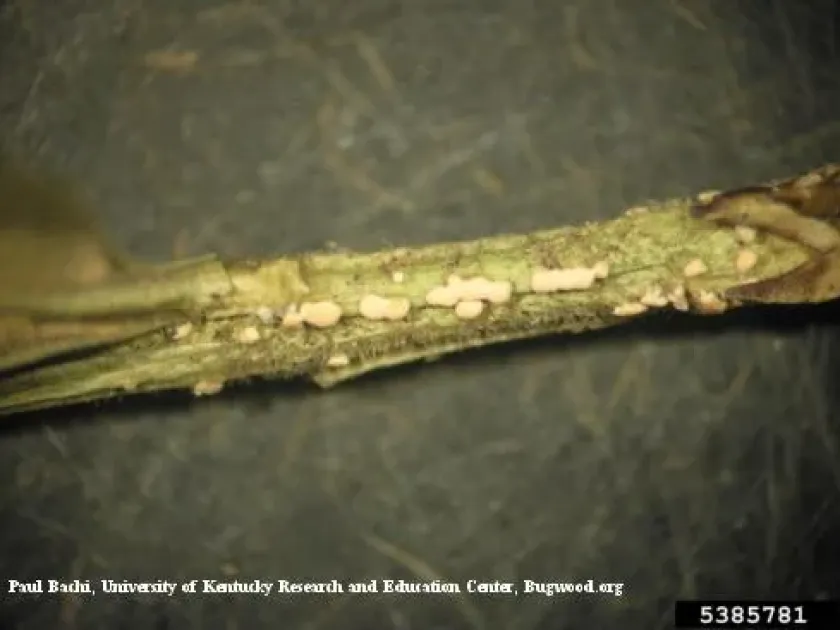
Stems affected by the disease often show localized patches of dead, cracked bark. In moist conditions, the diagnostic pink or orange fungal pustules become clearly visible near these lesions.
Dieback often starts at the tips of the branches and moves inward. In severe cases, the plant may exhibit an uneven, patchy appearance as large sections of the canopy wither simultaneously.
The infected branches become brittle and dry. Shaking the shrub often causes a significant amount of dried, discolored foliage to fall, indicating a heavy fungal load.
Unlike some other blights, the plant does not necessarily show a foul odor; rather, the tissue becomes necrotic and loses its healthy, deep green sheen, resulting in a dull, muted appearance.
Pathogen
The causative agent of this disease is the microscopic fungus Volutella ciliata (syn. Pseudonectria buxi). It is a weak pathogen that primarily exploits plants under stress or with mechanical damage.
The fungus colonizes the plant tissue and produces characteristic sporulating structures, often appearing as small, pink or orange cushion-like pustules on the stems and leaves.
It survives in decaying plant debris and dead branches, acting as a reservoir for spores that can infect surrounding healthy plants during the growing season.
The mycelium develops within the host's vascular tissues, disrupting the flow of water and nutrients. This interference leads to the gradual decline and eventual death of the affected plant parts.
Because the fungus is widespread, its biological cycle is largely dependent on the availability of moisture and the presence of fresh entry wounds on the host plant.
Conditions for development
High humidity and moisture are the primary drivers of Volutella blight. Periods of frequent rainfall, prolonged fog, or heavy morning dew create the perfect environment for spore germination.
Poor air circulation within the shrubbery due to excessive planting density promotes moisture retention. When the foliage remains wet for extended periods, the risk of infection increases drastically.
Mechanical damage is a key factor. Pruning without cleaning tools, winter frost cracks, or damage caused by insect pests provides the necessary entry points for the fungal spores.
Moderate temperatures ranging from +15°C to +25°C are ideal for the rapid proliferation of Volutella ciliata. Within this range, the infection cycle can repeat multiple times during one season.
Over-irrigation, especially using overhead sprinklers that wet the canopy rather than the root zone, is a major contributor to the spread of the disease in residential landscapes.
Why it matters
Volutella blight is particularly devastating for boxwood (Buxus) hedges and topiary specimens. It ruins the uniform appearance of these plants, which are often used for aesthetic landscaping.
If left unmanaged, the blight can lead to significant canopy loss. Persistent infections can weaken the plant so severely that it may die completely if environmental stress increases.
The fungus is easily transmitted by tools, rain splash, and wind, making it a difficult pathogen to contain in gardens with high densities of host plants.
Restoring a plant after an outbreak requires intensive pruning and specialized care, which can be time-consuming and costly for both professional gardeners and homeowners.
Accumulation of inoculum in the soil and leaf litter can impede the success of replanting efforts, necessitating soil treatment or the choice of resistant cultivars for future plantings.
Protection
The primary control measure is rigorous sanitation. All infected stems should be pruned back to healthy wood, and the debris must be removed and destroyed by burning.
To improve air circulation and reduce moisture buildup, thinning the canopy is recommended. This allows light and air to penetrate the center of the plant, hindering fungal development.
Copper-based fungicides are highly effective as a preventive measure. Applications should be timed for early spring and late autumn to protect the plant during periods of high humidity.
For active infections, systemic fungicides (such as those containing thiophanate-methyl or difenoconazole) are necessary. Careful application, ensuring total coverage of the foliage and stems, is crucial.
Always disinfect gardening tools with alcohol or a bleach solution between plants. This simple practice is the most effective way to stop the horizontal spread of spores throughout your garden.
Discussion
No discussions yet — be the first.