
Description
Symptoms
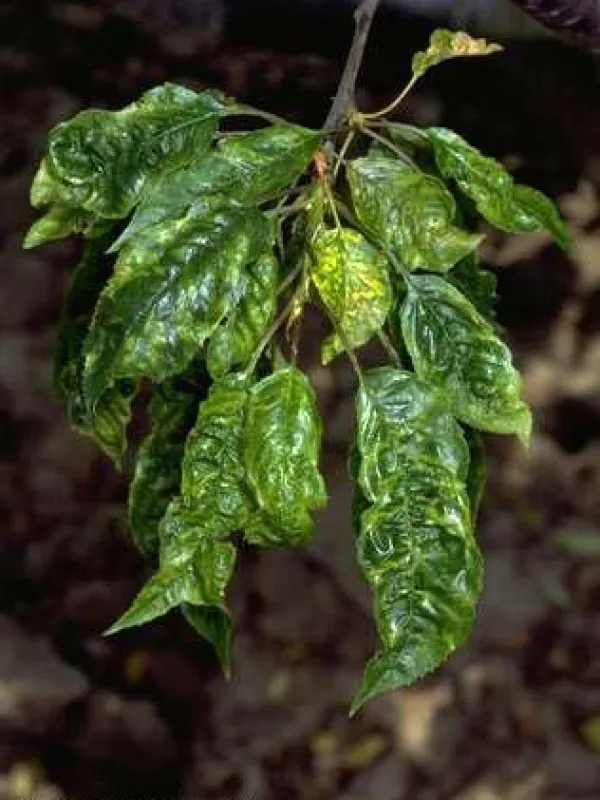
Typical symptoms include leaf malformation, where leaves become narrow, crinkled, and show distinct chlorotic patterns or mosaic designs.
Infected trees exhibit significant growth reduction, characterized by shortened internodes and a sparse, stunted canopy, which justifies the name "dwarf".
Blossoms on infected trees often appear deformed, with distorted petals and poor development of reproductive organs, leading to reduced fruit set.
Fruit development is heavily impacted; the fruit produced is often undersized, misshapen, and lacks the flavor and quality characteristic of the cultivar.
Advanced stages of the disease manifest as branch dieback and an overall lack of tree vigor, leading to a general decline in the tree's physiological state.
Pathogen
The disease is caused by the Prune dwarf virus (PDV), which belongs to the Ilarvirus genus. It is a widespread pathogen affecting various species within the Prunus genus.
The virus is primarily transmitted through infected budwood and rootstocks, making nurseries the critical point for control and prevention.
In mature orchards, the virus can spread naturally through infected pollen, affecting healthy trees during the flowering and pollination process.
Once inside the plant, the virus becomes systemic, spreading through all tissues including leaves, stems, and fruits, and persists throughout the tree's lifespan.
The virus is known for its wide host range, frequently infecting apricots, plums, cherries, and peaches with varying degrees of severity.
Conditions for development
The main factor promoting the spread of Prune dwarf is the propagation of infected nursery stock, which introduces the pathogen into new areas.
Mechanical transmission via pruning tools is a common occurrence if sanitation protocols are not strictly followed, especially in intensive orchards.
Environmental conditions do not directly cause the infection but can influence how quickly an infected tree shows symptoms due to varying stress levels.
High-density planting systems may accelerate the rate of virus spread if the infection is introduced via pollen or contaminated tools.
The absence of regular inspection and testing programs in fruit production sites facilitates the accumulation of the virus in the environment.
Why it matters
The economic impact of the virus is significant, as it leads to progressive declines in tree health and substantial losses in marketable yield.
Infected trees suffer from compromised physiological processes, resulting in weakened resistance to biotic and abiotic stresses, such as winter cold.
Total fruit failure or unmarketable produce quality makes infected trees a net loss for orchard owners, requiring costly removal and replanting.
The long-term nature of the disease means that once a tree is infected, it can no longer be cured, serving as a permanent source of inoculum.
Orchard profitability is severely curtailed because productivity does not return to normal levels once the viral systemic infection is established.
Protection
The primary and most effective management strategy is the use of certified virus-free planting material obtained from reputable nurseries.
Strict sanitation of pruning equipment is essential; tools must be disinfected between trees to prevent the mechanical transfer of the virus.
Continuous monitoring and the removal of infected trees are necessary to reduce the virus reservoir and protect neighboring healthy trees.
Implementing a strict quarantine for imported nursery materials prevents the introduction of new viral strains into the orchard region.
- Use only indexed, virus-tested scion wood and rootstocks.
- Establish isolation zones between young plantings and older, potentially infected orchards.
- Ensure regular pest control for vectors that might participate in virus movement.
Pathogens and affected parts
Affects crops · 1
Discussion
No discussions yet — be the first.