
Vararia
Vararia
Description
Symptoms
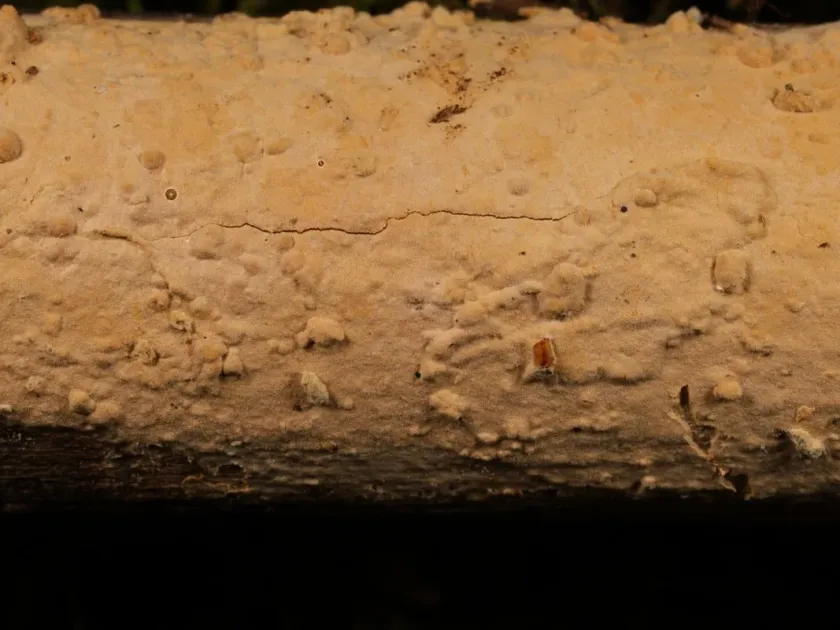
The primary symptom is the appearance of thin, yellowish, cream, or brownish fungal films on the bark of dead or weak branches. These films are typically firmly attached to the substrate.
Affected wood becomes brittle and structurally compromised. Cross-sections of infected branches often reveal internal discoloration and a soft, spongy texture, indicating deep mycelial colonization.
In advanced stages, the bark may peel away, exposing the decaying wood underneath. This creates secondary entry points for insects and other opportunistic pathogens, further weakening the plant.
Canopy thinning is a frequent indicator of the disease. Leaves may turn yellow prematurely, and branches may lose their structural strength, breaking under light winds or stress.
The disease can progress internally while the exterior of the plant appears relatively healthy, making early detection difficult until significant decay has already occurred.
Pathogen
The causative agent of this disease is a fungus from the Vararia genus, classified within the basidiomycetes group. These organisms act as xylotrophic parasites or saprotrophs capable of breaking down lignin in wood tissue.
The fungus produces thin, crust-like or membrane-like fruit bodies on the surface of wood or bark. Depending on the species, it induces white or brown rot, leading to a significant loss of structural integrity.
Biologically, Vararia is a specialized pathogen that thrives by colonizing stressed or wounded woody plants, entering through bark fissures or mechanical injuries caused by pruning or environmental factors.
The fungus spreads via basidiospores that are easily disseminated by wind currents. Under favorable conditions, these spores germinate to form a new mycelial network that penetrates the host's conductive system.
Once established, the mycelium actively decomposes xylem and phloem, disrupting the plant's metabolic processes and eventually leading to localized or systemic necrosis.
Conditions for development
High relative humidity is the most critical factor for Vararia development, particularly when levels exceed 80-90% for extended periods during spring and autumn.
Poorly ventilated stands with dense canopies provide an ideal microclimate for fungal growth. Lack of sunlight keeps the bark moist, which is favorable for spore germination and mycelial spread.
Stressed trees, particularly those weakened by drought, frost, or pest infestations, are significantly more susceptible to infection compared to healthy, vigorous trees.
The accumulation of woody debris and dead branches in orchards or forest plots acts as a reservoir for the pathogen, fueling continuous outbreaks throughout the growing season.
Prolonged rainy periods significantly enhance spore production and dissemination, leading to higher infection rates across nearby plants during peak development windows.
Why it matters
The most severe consequence of the disease is the loss of mechanical strength in wood, posing a safety hazard in residential areas as infected branches can collapse without warning.
The fungus disrupts the transport of water and nutrients, which gradually leads to the decline and death of the infected branches or the entire tree if the infection is systemic.
Economically, Vararia causes significant losses in timber value, making the wood unsuitable for construction or high-quality carpentry due to internal decay.
In ornamental landscaping and orchards, the aesthetic and productive loss requires costly tree removal, pruning, or replacement efforts to manage the spread of the infection.
If the pathogen takes hold in nurseries, it can lead to the total rejection of young saplings, creating direct financial strain and reducing the viability of plant stocks.
Protection
Sanitation is the most effective management strategy: regular pruning and removal of all dead or decaying branches are essential to reduce the local spore load.
Disinfecting pruning tools between cuts with alcohol or appropriate fungicides is mandatory to prevent cross-contamination between infected and healthy plants.
Application of fungicides, particularly copper-based treatments or systemic agents, may help suppress mycelial activity if the infection is identified at an early stage.
- Maintaining optimal plant density to ensure adequate airflow.
- Promoting plant health through balanced fertilization and hydration.
- Isolating infected areas and safely disposing of diseased material via burning or burial.
- Sealing large pruning wounds with specialized antiseptic pastes.
Consistent monitoring and early intervention are the cornerstones of managing Vararia, allowing for the localization of the disease before it becomes widespread.
Discussion
No discussions yet — be the first.