
Valsa canker of willow
Valsa salicina
Description
Symptoms
Early symptoms include the appearance of localized areas of discolored, sunken bark. These lesions are often brownish or reddish-brown, marking the point where the pathogen has killed the underlying tissue.
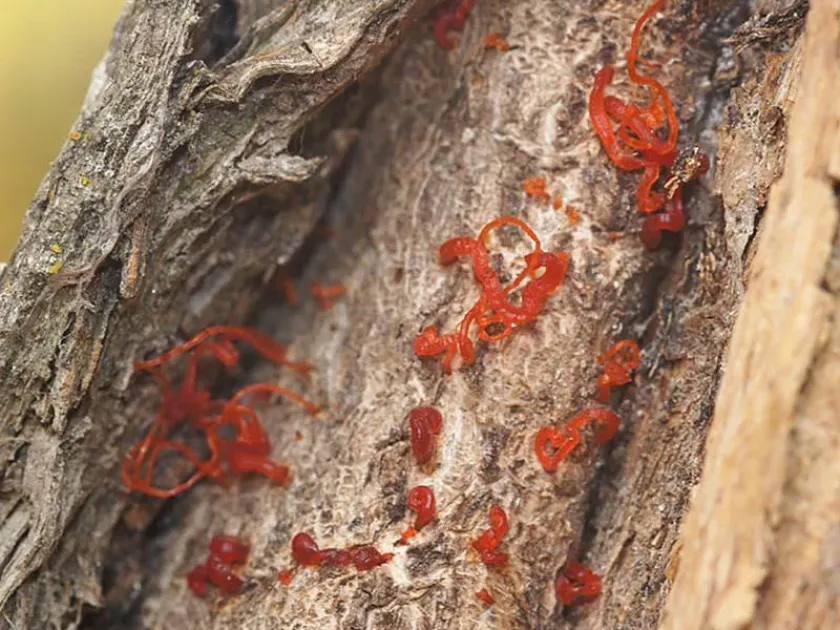
A hallmark sign of the infection is the presence of numerous small, pustule-like bumps on the dead bark surface. These are the stromata, which may release orange or yellowish tendrils of spores in wet weather.
Branches that have been girdled by the infection eventually wither and die. Leaves on these branches may show premature yellowing or wilting, serving as a warning sign of localized vascular obstruction.
Cracking and splitting of the bark in the affected areas are common occurrences. In some cases, the tissue under the bark turns gray or dark brown, indicating progressive tissue decay.
Because the disease often affects specific branches before moving to the main trunk, symptoms may appear patchy, making the tree look unhealthy and aesthetically unpleasing.
Pathogen
The causative agent of this disease is the fungus Valsa salicina (also known as Cytospora salicina), which belongs to the Ascomycota phylum. It functions as a parasitic fungus capable of invading the bark and cambium layers of willow trees.
The fungus produces stromatic fruit bodies that erupt through the bark, releasing conidia under humid conditions. These spores are primary agents of infection, facilitating the spread of the pathogen to neighboring branches and trees.
Valsa salicina is largely opportunistic, meaning it primarily infects trees that are stressed, injured, or suffering from improper growing conditions. Once inside, the mycelium spreads, disrupting the tree's vascular system.
The pathogen can overwinter within the infected bark, surviving in the form of perithecia or mycelial mats. This ensures that the fungus remains present in the environment, ready to infect new growth during the next growing season.
The biological nature of this fungus makes it highly adept at colonizing tissues through wounds, emphasizing the role of external damage in the development of the disease cycle.
Conditions for development
Environmental stress is the primary trigger for disease development. Factors such as drought, flooding, soil compaction, or nutrient deficiencies weaken the tree and reduce its resistance to Valsa salicina.
High levels of humidity and frequent rainfall are essential for the germination of spores. Moist conditions allow the pathogen to thrive and increase the rate at which spores spread through the canopy.
Mechanical injuries, including pruning cuts that haven't healed, frost cracks, and sunscald, serve as entry points for the fungus. Poorly planned or aggressive pruning can significantly exacerbate the problem.
Overcrowded plantings often suffer more due to poor air circulation, which prevents bark from drying quickly after rain. This creates a microclimate perfectly suited for the proliferation of fungal pathogens.
Temperature fluctuations, particularly late spring frosts, can damage the tree's bark, providing the necessary tissue death for the fungus to establish a foothold and initiate the infection cycle.
Why it matters
The main impact of Valsa canker is the loss of decorative value in willow trees. The dead branches lead to poor canopy architecture and may require extensive trimming, which can ruin the tree's appearance.
If the infection reaches the main trunk and girdles it, the entire tree may die. This is a severe loss for homeowners and landscapers who rely on these trees for shade or ornamental purposes.
Heavily infested trees act as reservoirs of inoculum, putting other nearby willows at risk. If left unchecked, the disease can spread throughout an entire plantation or garden setting.
Weakened trees are significantly more susceptible to secondary pests, such as wood-boring beetles. These insects often finish off a tree that has already been compromised by the fungal infection.
Managing the disease is costly and time-consuming, requiring consistent maintenance and potentially the total removal of severely infected specimens to save the remaining landscape components.
Protection
Sanitary pruning is the most effective management practice. All infected branches must be pruned back to healthy wood, ensuring tools are disinfected between cuts to prevent spreading the fungus.
Proper wound care is essential for prevention. Any large cuts or accidental breaks in the bark should be treated with appropriate fungicides or wound sealants to create a barrier against pathogen entry.
Applying copper-based fungicides during the dormant season (early spring or late autumn) can help reduce the spore load on the tree's bark, providing a strong prophylactic defense.
Maintaining tree vigor through regular watering, mulching, and proper fertilization is critical. A healthy, well-nourished tree can often withstand minor infections and heal its own wounds effectively.
Improving the site conditions, such as thinning out crowded branches to enhance air circulation and ensuring the tree is planted in soil with proper drainage, significantly lowers the risk of Valsa canker.
Discussion
No discussions yet — be the first.