
Valsa canker
Valsa
Description
Symptoms
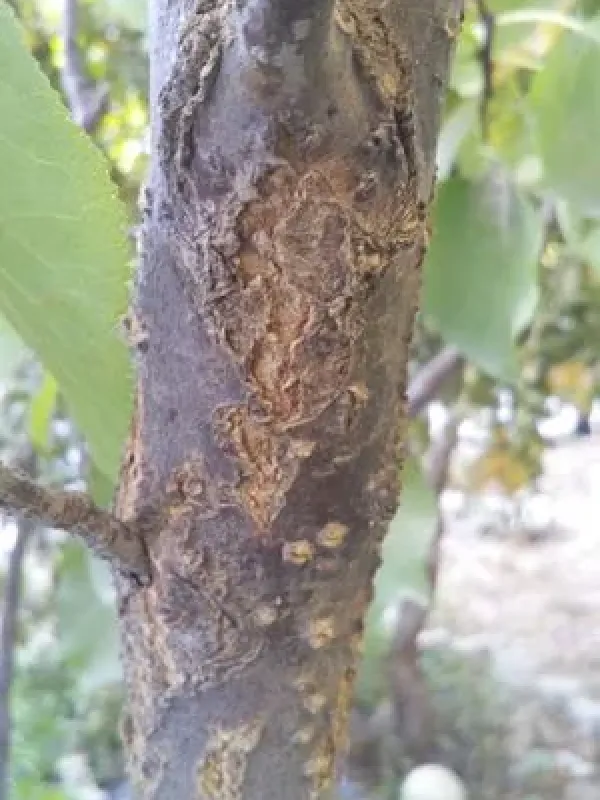
The most characteristic symptom is the development of sunken, discolored patches on the bark, which range from reddish-brown to dark brown as the tissue dies.
As the disease progresses, the bark becomes brittle and may show numerous tiny, pimple-like bumps. These are the fruiting bodies (pycnidia) of the fungus, often appearing during wet weather.
In advanced stages, the bark cracks and peels away, revealing the damaged wood underneath. If the canker wraps around a branch or stem, the entire part above the infection will wilt and die.
Leaves on infected branches often turn yellow and dry out during the growing season, serving as a secondary indicator that the branch's vascular connection has been severed.
The wood underneath the canker typically exhibits brown or reddish-brown discoloration, indicating the deep penetration of the fungal mycelium into the tree’s living tissues.
Pathogen
Valsa canker is a serious fungal disease caused by species of the Valsa genus (anamorph: Cytospora). These fungi act as opportunistic pathogens, primarily attacking trees that are already weakened by environmental or mechanical stressors.
The fungus enters the tree through wounds in the bark, such as frost cracks, pruning cuts, sunscald injuries, or damage caused by hail and insects. It colonizes the inner bark and cambium layer.
The pathogen utilizes a saprophytic lifestyle to break down dead tissue but becomes parasitic as it invades healthy cambium. It disrupts the vascular system, preventing the tree from transporting water and nutrients effectively.
Fungal structures known as pycnidia form within the dead bark. Under humid conditions, these structures release spores that are easily spread by splashing rain, wind, and insects to other trees or different parts of the same tree.
The disease affects a wide range of woody plants, including apple, pear, cherry, plum, and peach trees, as well as several ornamental species grown in gardens and nurseries.
Conditions for development
Trees subjected to environmental stress are highly susceptible. Factors like extreme winter cold (frost damage) and intense summer sun (sunscald) create the entry points needed for infection.
High humidity and rainfall are critical for the spread of Valsa canker, as the fungus requires moisture to produce and disperse its spores throughout the orchard.
Neglected orchards with poor sanitation are more prone to outbreaks. Pruning tools that are not disinfected can easily transfer the pathogen from an infected branch to a healthy one.
Improper fertilization or poor site selection—such as areas with poor drainage or soil compaction—limits the tree’s vitality and reduces its natural ability to form a callus barrier against invading fungi.
Overcrowded plantings increase humidity within the canopy and reduce air circulation, creating an environment that favors the rapid colonization of Valsa fungi.
Why it matters
Valsa canker significantly reduces the productivity of fruit trees. The death of major limbs limits the tree's bearing capacity and often necessitates heavy pruning.
In severe cases, the disease leads to the total loss of the tree, which can be devastating for commercial orchards and home growers alike, requiring costly removal and replacement.
The presence of cankers weakens the tree's overall vigor, making it more attractive to secondary pests, including bark beetles, which further damage the tree and aid in spreading the fungus.
Crop quality is frequently compromised as the tree struggles to maintain growth, leading to smaller, poorly developed fruit and an overall decline in tree longevity.
The persistent nature of the fungus means that once it is established in an orchard, it becomes a continuous management challenge requiring constant vigilance and labor-intensive sanitation efforts.
Protection
Sanitation is the most critical control method. All infected branches must be pruned back to healthy wood and immediately destroyed, preferably by burning, to eliminate the inoculum source.
Disinfecting pruning tools between cuts with alcohol or bleach solutions is essential to prevent spreading the disease from tree to tree during standard maintenance.
Preventative measures include applying white paint or protective wraps to trunks to prevent sunscald and frost damage, effectively closing the primary entry points for the fungus.
Fungicidal sprays containing copper, applied during the dormant season and early spring, can help suppress surface spore populations and prevent initial infection.
Promoting general tree health through proper irrigation, balanced nutrition, and avoiding site stressors helps the tree produce a healthy callus that can naturally wall off and stop minor infections.
Discussion
No discussions yet — be the first.