
Vacuolaria
Vacuolaria virescens
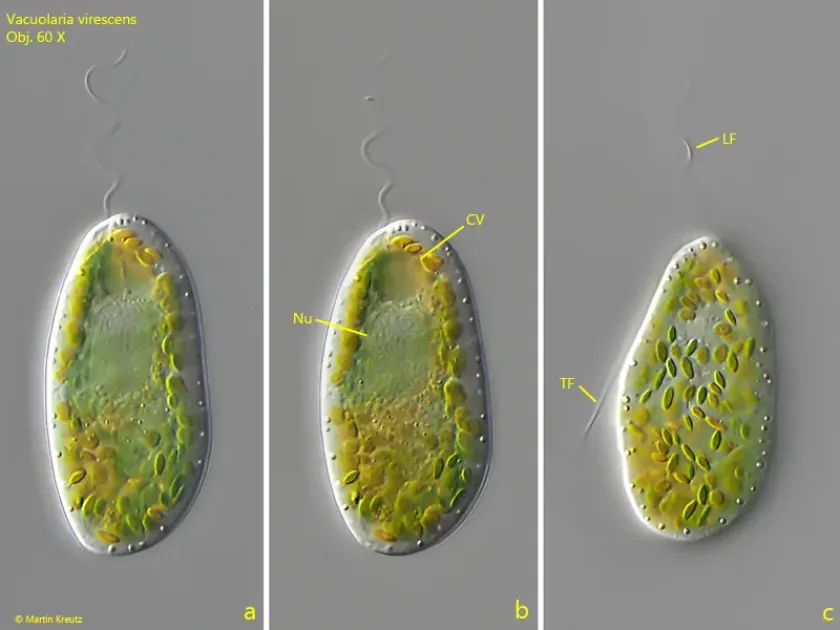
Description
Symptoms
The primary symptom of a Vacuolaria infestation is the appearance of a greenish or yellowish-green tint in the water. The water becomes cloudy due to the rapid multiplication of the microorganism's cells.
Thick mucus-like films or aggregates often form on the water surface, particularly near intake points. These accumulations are major indicators of a high concentration of the pathogen within the water source.
Crops irrigated with infested water exhibit signs of stunted growth and general physiological weakness. The roots often become covered in a slimy substance that prevents the absorption of water and essential nutrients.
Affected plants often display yellowing leaves and reduced vigor. While these symptoms might resemble nutrient deficiencies, physical inspection of the root zone typically reveals the presence of the pathogen-associated biofilm.
Microscopic analysis of water samples or root swabs reveals the presence of oval-shaped cells, often characterized by the distinct vacuoles that give this organism its name.
Pathogen
The causative agent of the disease is Vacuolaria virescens, a member of the ochrophyte division. This microorganism is a flagellate protist, characterized by its ability to move actively in aqueous environments.
Biologically, it is a single-celled organism primarily found in stagnant or slow-moving freshwater bodies. In an agronomic context, it acts as a waterborne pathogen that disrupts agricultural irrigation systems and negatively affects crop root health.
The pathogen possesses a complex life cycle, featuring motile vegetative stages and dormant cysts. These cysts allow the organism to survive harsh environmental conditions and persist in bottom sediments for extended periods.
Reproduction occurs mainly through cell division during periods of active growth. Optimal temperatures trigger rapid biomass accumulation, which can severely impact the quality of irrigation water used on large-scale farms.
As a photosynthetic organism, Vacuolaria virescens thrives in well-lit water sources. Its ability to adapt to high-nutrient environments makes it a significant concern in agro-ecosystems where run-off water is utilized for irrigation.
Conditions for development
Development is highly dependent on temperature, with the most active growth occurring between 18°C and 25°C. High levels of solar radiation further promote rapid biomass expansion in shallow water bodies.
Nutrient enrichment, specifically nitrogen and phosphorus runoff from fields, serves as a primary driver for blooms. Excessive fertilization of surrounding crops often leads to increased pathogen concentration in ponds and irrigation canals.
Stagnant water conditions are ideal for Vacuolaria virescens proliferation. Low flow rates prevent the dispersion of cells, allowing dense colonies to establish themselves in the irrigation infrastructure.
Lack of aeration in storage ponds facilitates the dominance of this organism over other microflora. Once the population peaks, it can spread throughout the entire irrigation network within a few days.
Mechanical transport through pumping systems is the main way the pathogen reaches agricultural fields. Dormant cysts trapped in pipes can reactivate as soon as they encounter favorable irrigation conditions.
Why it matters
The primary damage results from the interference with plant mineral nutrition. The slimy biofilm produced by the organism creates a barrier around roots, blocking oxygen uptake and leading to root rot.
The presence of the pathogen causes significant mechanical damage to irrigation systems. It clogs filters, drippers, and nozzles, which leads to increased maintenance costs and potential crop failure due to irregular watering.
Crop yield reduction is a common consequence due to the sustained physiological stress the plants endure. A weakened root system also makes crops significantly more susceptible to secondary soil-borne fungal or bacterial infections.
In greenhouse operations utilizing hydroponics, this organism can quickly overrun the nutrient solution, leading to the total failure of the feeding system and damaging the plant root environment.
Metabolic byproducts released by Vacuolaria can have toxic effects on soil microbiology, inhibiting the activity of beneficial bacteria and fungi that contribute to long-term soil fertility.
Protection
Regular monitoring of irrigation water quality is the most effective preventative measure. Periodic laboratory analysis helps detect the early stages of a population bloom before it impacts the crops.
Installing multi-stage filtration systems is essential to physically remove the pathogen cells from the water supply. Regular cleaning of these filters is mandatory to prevent them from becoming breeding grounds.
Minimizing nutrient runoff through improved fertilization practices and the creation of vegetative buffer zones around ponds can significantly reduce the risk of infestation.
UV sterilization systems installed at irrigation intake points are highly effective at neutralizing the cells and preventing them from reaching the fields. This is an environmentally friendly and reliable solution.
When necessary, the use of approved agricultural algaecides can help manage blooms. These must be applied according to strict guidelines to ensure they do not harm the target crops or the beneficial soil ecosystem.
Discussion
No discussions yet — be the first.