
Bamboo smut
Ustilago shiraiana
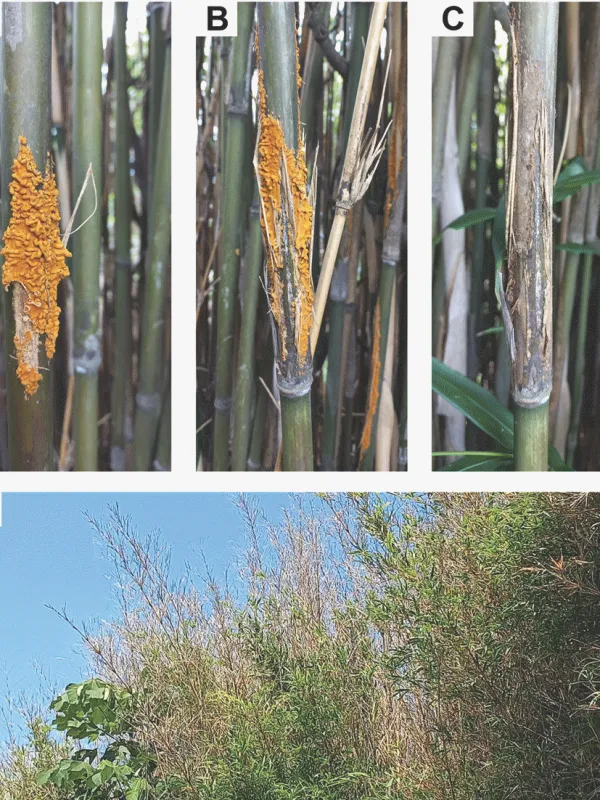
Description
Symptoms
The primary symptom of bamboo smut is the appearance of distinct swellings or blisters on the stems and branches of the bamboo plant. These growths occur due to the abnormal proliferation of plant tissues caused by the fungal infection.
As the pathogen matures, these blisters rupture, releasing a significant volume of powdery, dark brown or black spores. This spore mass is a classic indicator of smut infection, often coating the affected areas.
Infected shoots frequently undergo deformation, twisting, and weakening. Because the fungus disrupts the internal transport of nutrients, the branches distal to the infected area often show signs of wilting and dieback.
In cases of severe infestation, the plant may exhibit yellowing leaves and a general decline in growth. The loss of architectural integrity significantly diminishes the ornamental and structural value of the bamboo stand.
Once the blisters burst, they leave open wounds that become susceptible to secondary pathogens, such as decay fungi or opportunistic bacteria, further accelerating the degradation of the bamboo culm.
Pathogen
The disease is caused by Ustilago shiraiana, a specialized fungus belonging to the order Ustilaginales. It is a highly adapted pathogen that specifically targets bamboo species, relying on them for its reproductive cycle.
The fungus exists as mycelium within the plant's vascular and parenchyma tissues, gradually redirecting host resources to support its own spore production. The teliospores serve as the survival and dispersal units of the pathogen.
Spore dissemination is primarily mediated by wind, which carries the infectious dust to healthy bamboo stalks nearby. This efficient mode of transmission makes the fungus difficult to contain once it is established in an area.
The pathogen can persist in plant debris and the surrounding soil for extended periods. This reservoir of infection allows the fungus to reappear year after year if sanitization is not strictly performed.
The fungus thrives by synchronizing its development with the growth flushes of the bamboo. This provides a steady supply of fresh, nutrient-rich tissues necessary for the fungus to complete its life cycle successfully.
Conditions for development
Bamboo smut thrives in environments characterized by high humidity and moderate temperatures. Such conditions are optimal for the germination of spores and the subsequent infection of emerging bamboo shoots.
The most susceptible period for the plant is during active vegetative growth, particularly when shoots are young and soft. During this phase, the protective barriers of the plant are less developed, making penetration easier.
Overcrowded plantations with poor air circulation are highly prone to outbreaks. The stagnant, humid air trapped within dense foliage promotes the rapid spread of spores between individual plants.
Poor maintenance practices, such as failing to remove infected culms promptly, facilitate the buildup of a heavy spore load in the environment. This significantly increases the risk of annual reinfection.
The presence of moisture, such as rain or heavy dew, can aid in the mechanical transfer of spores across the surface of the plant, helping the fungus colonize new healthy areas of the same culm.
Why it matters
The economic impact of bamboo smut is significant in both landscape gardening and bamboo production. Affected culms lose their mechanical strength and visual appeal, rendering them useless for high-quality wood applications.
The disease depletes the energy reserves of the bamboo clump, leading to reduced vigor and lower production of new shoots in subsequent seasons. Persistent infection may lead to the total decline of a healthy stand.
- Loss of structural and aesthetic value.
- Deformation and brittleness of culms.
- Reduced growth rate and vigor.
- Increased cost of plantation maintenance.
- Potential loss of entire ornamental stands.
For nursery owners, the presence of the pathogen results in immediate losses due to the strict culling required to prevent further spread. All infected seedlings must be destroyed to protect remaining stock.
Without intervention, the cumulative effect of the disease is a slow degradation of the plantation's health, eventually compromising the survival of the entire clump as it struggles to recover from the fungal load.
Protection
The most effective management strategy is rigorous sanitation: all affected parts of the bamboo must be cut and removed immediately. It is essential to burn or dispose of these materials far from the planting site.
Improving air circulation through careful pruning and thinning of the bamboo stand is vital. By reducing humidity within the plant clump, you create a less hospitable environment for the fungal spores.
Prophylactic fungicide treatments, applied during the initial stages of shoot emergence in the spring, can provide a layer of protection against new infections, particularly in high-risk areas.
Only healthy, disease-free planting material should be used when establishing new bamboo groves. Strict quarantine of new plants and inspections are necessary to prevent introducing the fungus to unaffected locations.
Maintaining optimal soil fertility and health strengthens the overall resilience of the bamboo, allowing it to recover faster from stress and potentially resist minor infections more effectively.
Discussion
No discussions yet — be the first.