

Description
Symptoms
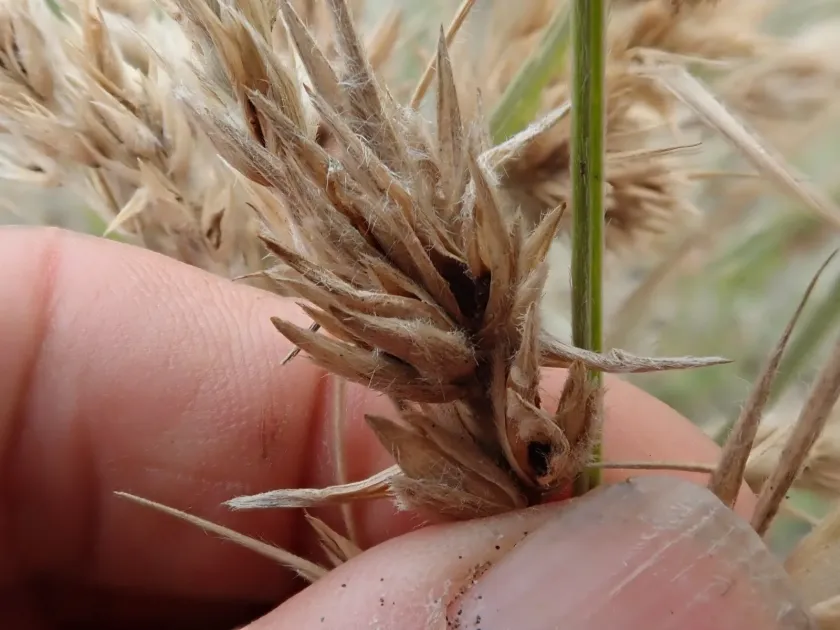
The primary symptom is the replacement of plant organs—such as the ear, panicle, or entire stem—with a black, dusty mass of spores. Visually, this appears as a charred, "smutted" part of the plant.
In the early stages, symptoms may be hidden; however, later stages manifest as the deformation of the spike, discoloration, and premature drying of the tissues.
In covered smut, the grain is transformed into a sac filled with spores, while the outer membrane remains intact. Loose smut completely destroys the spikelets, leaving only the rachis, which quickly becomes covered in black spore dust.
Infected plants often show stunted growth, increased tillering, or premature death. The severity of symptoms depends directly on the fungal species and the resistance of the crop variety.
A characteristic "herring" odor that occurs when the spore mass is disturbed is a key indicator of infection in grain storage, which is vital for sanitary inspection.
Pathogen
The causative agents of smut are basidiomycete fungi belonging to the family Ustilaginaceae. These microscopic parasites infect primarily cereal crops, developing within the tissues of the host plant throughout the growing season.
The life cycle of the fungus includes the formation of teliospores, commonly known as smut spores. These spores are essential for the survival of the pathogen in adverse conditions and the initial infection of crops.
Pathogens can survive in the soil, on the surface of seeds, or inside the grain as mycelium. The biological specialization of these fungi is so high that different species target strictly specific host plants.
Transmission occurs mainly via air, raindrops, or through contaminated soil during seed germination. Upon entering the plant, the mycelium grows actively, gradually replacing healthy plant tissues with a mass of fungal spores.
Throughout their life cycle, smut fungi actively consume the plant’s nutrients, depleting the host and disrupting photosynthesis and metabolic processes, which leads to profound morphological changes in the affected organs.
Conditions for development
The development of smut fungi is closely tied to weather conditions during the sowing and germination period. Moderately cool and moist soil is considered the optimal environment for infection.
For soil-borne infections, soil temperature is a critical factor. If environmental conditions delay seedling emergence, the fungus has more time to infect the young sprout before it hardens.
Humidity plays a decisive role in the sporulation process. Heavy dews and fog facilitate the widespread dispersal of spores and the infection of flowering spikes in species with airborne transmission.
Agrotechnical factors, such as seeding depth and soil pH, also influence the intensity of the disease. Planting too deep weakens the plant, providing the pathogen with a larger window for infection.
The accumulation of inoculum in the crop rotation, especially when lacking diversity, is the primary condition for epidemic outbreaks in agricultural regions.
Why it matters
Smut causes enormous economic losses to the agricultural sector, reducing total grain yields annually. Losses can reach 30–50% or more in cases of severe infestation.
The disease leads not only to quantitative losses but also to a sharp decline in grain quality. Infected grain loses its germination capacity, nutritional value, and becomes unsuitable for milling.
The presence of spore masses in grain mixtures creates unpleasant odors and dark discoloration, significantly reducing the market value of the entire product batch.
Infected plants become more susceptible to secondary infections as the pathogen destroys the host's immune system, lowering its resistance to other diseases and environmental stress.
The metabolic byproducts of certain smut fungi may contain toxic compounds that are dangerous for livestock, making the use of contaminated grain for feed highly risky.
Protection
The primary control method is thorough seed treatment before sowing. The use of systemic fungicides allows for the destruction of the infection both on the surface of the seeds and within the grain tissues.
Effective crop rotation is an essential preventive measure. Sensitive crops should not be sown on the same field for several consecutive years to avoid the buildup of spores in the soil.
Breeding and introducing smut-resistant cereal varieties is the most effective and environmentally sustainable way to manage the disease.
Sowing dates are also important: planting in optimally warmed soil accelerates seedling development, allowing plants to pass the vulnerable stage more quickly.
- Cleaning and grading seeds to remove spore contaminants.
- Using certified, high-quality seed material.
- Timely control of weeds that act as disease reservoirs.
- Application of balanced micronutrient fertilizers to boost plant immunity.
Content graph
Connections · Smut fungi
Most often together:
Marketplace
Products · 2

Community
Discussion
No discussions yet — be the first.