
Valerian rust
Uromyces valerianae
Description
Symptoms
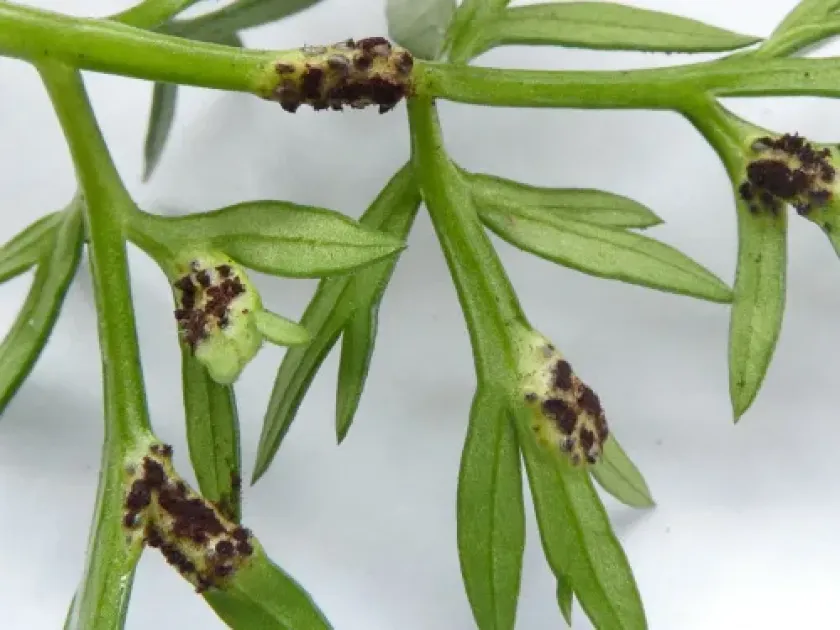
The initial symptoms appear as small, yellow-to-orange pustules on the undersides of the leaves. As the disease progresses, these pustules break through the leaf epidermis to release powdery spore masses.
Over time, these pustules may darken into a rusty brown color. They can spread to the petioles and stems, indicating systemic infection of the plant's structural tissues.
Heavily infected leaves show signs of chlorosis, yellowing, and eventual tissue necrosis. The premature death of the foliage significantly reduces the plant's ability to undergo photosynthesis.
On stems, the pustules can form elongated, raised streaks that disrupt the movement of water and nutrients. This mechanical damage leads to the overall wilting and stunting of the plant.
- Yellow or rusty-brown pustules on leaves.
- Powdery spore eruptions on plant surfaces.
- Premature yellowing and drying of foliage.
- Stunting of stems and overall plant growth.
- Tissue necrosis in severe infection cases.
Pathogen
The causal agent of this disease is the specialized basidiomycete fungus Uromyces valerianae (DC.) Fuckel. This obligate parasite specifically targets plants belonging to the Valerianaceae family.
The life cycle of the pathogen involves multiple spore stages, including urediniospores and teliospores. These spores are responsible for the rapid spread of the disease across fields during the active growing season.
The fungus overwinters primarily as teliospores, which remain viable on crop residues or infected crowns within the soil, ready to infect the next generation of plants when conditions become favorable.
Once the spores germinate, the fungus infects the host through stomata and develops an extensive mycelial network within the plant tissues. It extracts nutrients via specialized structures called haustoria.
The interaction between the host plant and Uromyces valerianae is highly specific. The pathogen thrives alongside the natural growth cycle of valerian, often peaking during the flowering stages of the plant.
Conditions for development
High relative humidity, typically exceeding 70-80%, is the primary environmental driver for the development of valerian rust. Frequent rain or heavy dew facilitates the germination of spores.
The optimal temperature for pathogen proliferation ranges from 15°C to 22°C. Within this range, the fungus can complete its reproductive cycle rapidly, leading to widespread field infection.
Poor aeration in dense crop stands creates a stagnant microclimate where humidity remains elevated. This environment is highly conducive to the rapid spread of the fungal mycelium.
Improper crop rotation practices significantly increase the inoculum density in the soil, as the pathogen survives on contaminated field debris from previous years.
Excessive nitrogen fertilization often leads to succulent growth, which is softer and more susceptible to penetration by the fungal germ tubes, thereby exacerbating the severity of the infection.
Why it matters
The primary economic impact of valerian rust is the significant reduction in root biomass, which is the main harvested part of the plant for medicinal use.
By damaging the leaves, the disease disrupts the plant's energy balance. This results in smaller, lower-quality roots that fail to meet pharmacopoeial standards for active ingredient concentrations.
Infected plants are generally weaker and have reduced vigor, making them more susceptible to cold damage and other environmental stressors during the winter months.
Secondary infections often take advantage of the necrotic tissue left by the rust, leading to root rot and further deterioration of the harvest quality and storage stability.
Overall, the disease causes considerable losses through reduced crop yields and the increased cost of implementing protective measures in fields where the pathogen is established.
Protection
The most effective strategy is a long-term crop rotation of at least 4-5 years, which helps to starve the pathogen of its host and reduces the overall inoculum level in the soil.
Sanitation is critical; removing and destroying crop residues after harvest prevents the pathogen from successfully overwintering and limits the source of spring infections.
Using disease-free, certified seeds and seedlings is essential to prevent the introduction of the fungus into new cultivation sites or clean fields.
When necessary, fungicides approved for medicinal herb cultivation can be applied. However, these must be used with caution to ensure residues remain within safe limits for human consumption.
Promoting good airflow by managing plant density and controlling weeds helps maintain a less humid microclimate, effectively slowing down the spread of the rust disease.
Discussion
No discussions yet — be the first.