
Carnation rust
Uromyces dianthi
Description
Symptoms
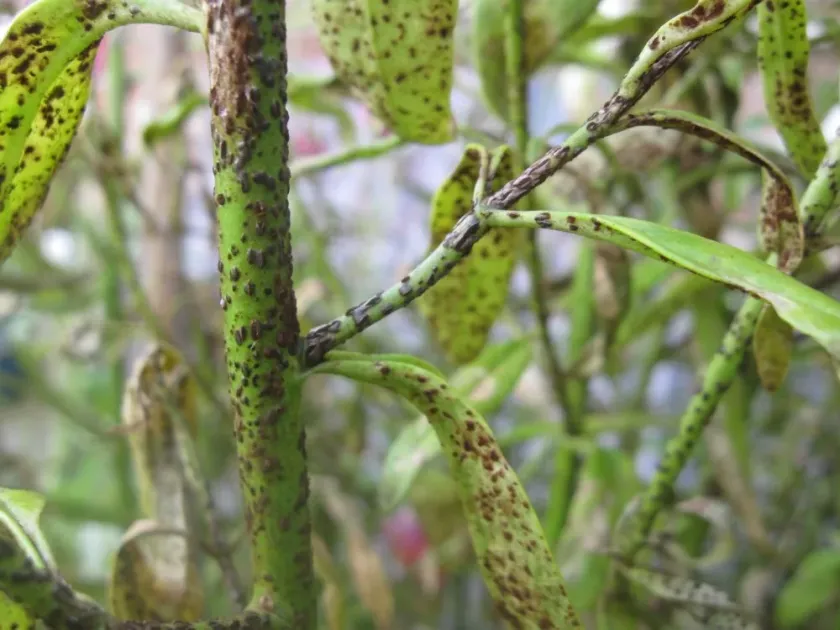
Symptoms initially appear as small, chlorotic flecks on the underside of leaves, which soon develop into raised, powdery, rusty-red pustules.
As the infection progresses, these pustules can merge, causing the leaf tissue to yellow, wither, and eventually die back completely.
Stem infections are also common, where pustules interfere with nutrient transport, leading to weak or deformed growth of the entire plant.
Affected plants often display reduced flower production, stunted stems, and poor overall vigor compared to healthy counterparts.
- powdery, rusty-brown spore masses on foliage;
- yellowing and premature drying of leaves;
- stunting and reduction in overall plant vigor;
- deformities in stems and potential flower bud abortion;
- general decline in ornamental quality of the crop.
Pathogen
The causal agent of this disease is the rust fungus Uromyces dianthi. It is an obligate parasite that specifically targets members of the Caryophyllaceae family, particularly carnations.
The fungus develops by forming pustules, known as uredinia, which break through the host's epidermis to release masses of rusty-brown spores.
The life cycle involves multiple spore stages, with urediniospores being the primary means of rapid secondary spread during the growing season.
The pathogen can survive in soil, crop residues, or infected plant tissues, often remaining latent until environmental conditions become favorable again.
Greenhouse environments provide a stable habitat for Uromyces dianthi, where it can complete its reproductive cycle in a very short timeframe.
Conditions for development
The development of carnation rust is strongly favored by high humidity levels and cool to moderate temperatures, typically between 15°C and 22°C.
Stagnant air and poor ventilation within greenhouses create a perfect microclimate for the germination of fungal spores on plant surfaces.
Prolonged leaf wetness, caused by overhead irrigation or condensation, is the primary trigger for the initial infection of healthy foliage.
Dense planting configurations restrict airflow, allowing moisture to persist on the leaves for longer periods, thus accelerating the spread of the disease.
Imbalanced fertilization, particularly high nitrogen levels, can encourage succulent growth that is more susceptible to fungal penetration.
Why it matters
Carnation rust significantly impacts the commercial value of floricultural crops by rendering infected plants unsuitable for high-quality market requirements.
The disease depletes the host's energy reserves, making plants highly vulnerable to secondary pathogens and reducing their overall lifespan.
In intensive production systems, a rust outbreak can lead to complete loss of marketable blooms if not managed with immediate intervention.
The pathogen is highly contagious within greenhouse settings, necessitating strict sanitation protocols to prevent widespread economic loss.
Managing the disease is costly, as it requires repeated applications of chemical fungicides and often necessitates the removal of infected plant stocks.
Protection
The primary control strategy involves starting with disease-free certified stock and practicing strict quarantine measures for any new plant material.
Maintaining optimal spacing and ensuring excellent ventilation in greenhouses is essential to keep foliage dry and reduce the risk of infection.
Regular monitoring and prompt removal of symptomatic plant parts significantly reduce the level of inoculum available for further spread.
Systemic fungicides, applied according to a preventative or early-curative schedule, are the most effective chemical tools for managing rust.
Rigorous sanitation, including the removal of all crop residues after harvest and thorough cleaning of surfaces, helps eliminate the pathogen from the growing area.
Discussion
No discussions yet — be the first.