
Anemone smut
Urocystis anemones
Description
Symptoms
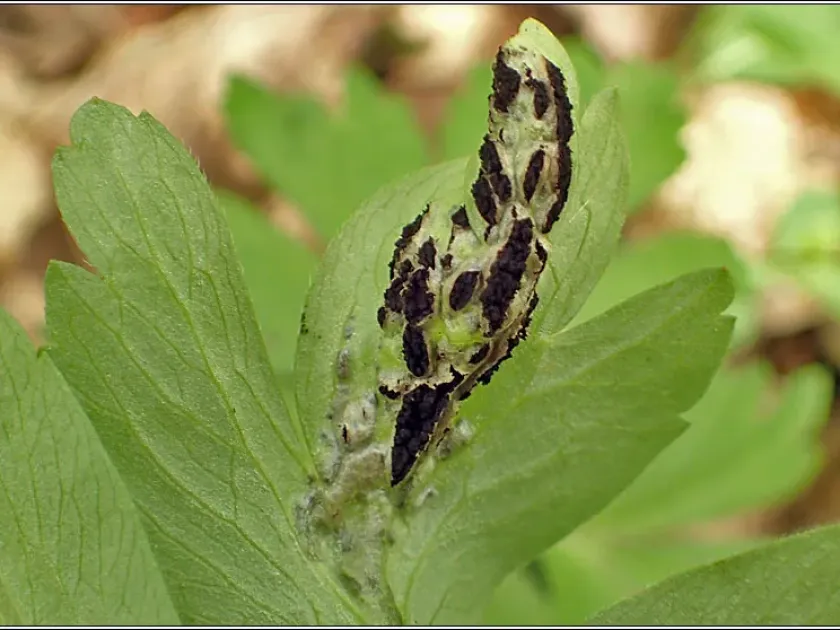
Visible symptoms manifest as swellings or gall-like growths on the stems, petioles, and occasionally on the foliage of the plant.
As the disease advances, these swellings rupture, revealing a powdery, dark-colored mass of spores characteristic of smut fungi.
Plants affected by the pathogen show signs of stunted growth and general malaise, with stems often appearing twisted or distorted.
The leaves may turn yellow, curl, and wither prematurely, significantly diminishing the aesthetic appeal and overall vitality of the plant.
- Gall-like swellings on plant tissues.
- Dark powdery spore masses.
- Stunted and distorted plant stems.
- Premature leaf yellowing and senescence.
Pathogen
The disease is caused by the fungus Urocystis anemones, which is a specialized pathogen targeting species within the Ranunculaceae family.
The fungus survives in the soil as spores, which can remain dormant and infectious for several years until favorable conditions arrive.
Primary infection occurs when fungal spores germinate and penetrate the young tissue of the anemone during the early stages of growth.
Once inside, the pathogen grows systematically, utilizing the plant's nutrients to sustain its development and reproductive processes.
The life cycle concludes with the mass production of spores, forming pustules that eventually erupt to spread the infection further.
Conditions for development
The development of anemone smut is heavily favored by cool, damp weather conditions, especially during the spring growth phase.
Poor ventilation within dense plantings creates high humidity levels on leaf surfaces, facilitating the germination and spread of spores.
Overcrowding plants prevents air circulation and promotes the rapid transfer of spores between healthy and infected neighbors.
Waterlogged or poorly drained soil provides an ideal environment for the persistence and active spread of the fungal pathogen.
Frequent overhead irrigation can wash spores into the soil or onto susceptible plant parts, triggering a new wave of infection.
Why it matters
The primary damage caused by anemone smut is the destruction of the ornamental value, making the plants unsuitable for garden displays.
Severe infestations prevent normal flowering and sap the plant of the energy required for winter dormancy and spring regrowth.
The presence of the pathogen in the soil renders the site unsuitable for planting anemones for several consecutive seasons.
In commercial settings, the disease causes significant economic loss due to the destruction of infected stock and mandatory quarantine measures.
Repeated infection weakens the plant's structural integrity, leading to its eventual death if left untreated or unmanaged.
Protection
Effective control begins with strict sanitation: removing and destroying all infected plants and debris to eliminate the spore source.
Practicing crop rotation is essential, ensuring that anemones are not replanted in the same location for at least four to five years.
Using certified, disease-free bulbs or corms is the most reliable way to prevent the introduction of the fungus into your garden.
Improving soil drainage and providing adequate spacing between plants reduces the humidity levels that the fungus requires to thrive.
Systemic fungicides may be applied as a preventive measure in the early spring, although cultural control remains the primary defense strategy.
Discussion
No discussions yet — be the first.