
Umbilicariaceae
Umbilicariaceae
Description
Symptoms
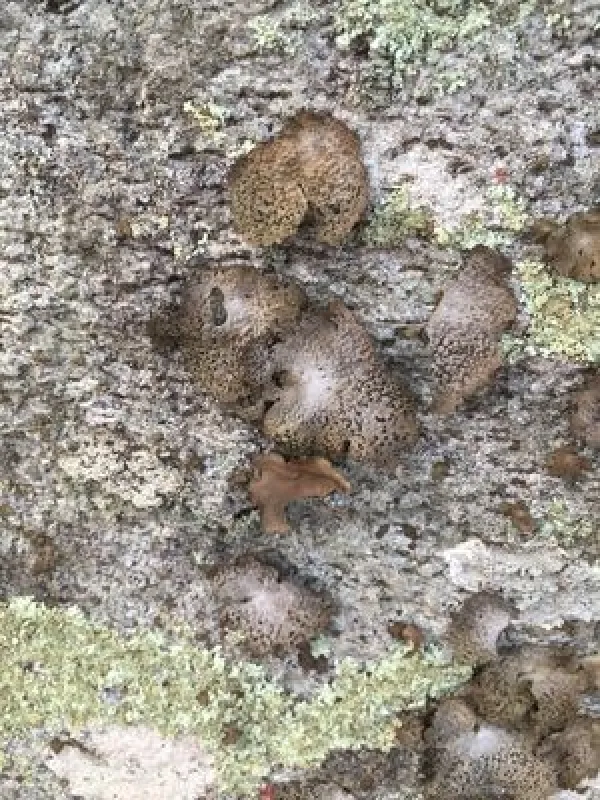
The thallus of the lichen appears as large, plate-like structures that can reach several centimeters in diameter.
The color spectrum ranges from grayish-white to dark brown or black, which aids in heat absorption in harsh climates.
Surface texture can vary from smooth and leathery to wrinkled or folded, depending on the specific genus and environmental stress.
A distinctive feature of this family is the presence of apothecia, which are fruiting bodies containing spores for reproduction.
In the field, they resemble scales or curled plates that adhere firmly to hard surfaces but can be detached easily.
Pathogen
The Umbilicariaceae family does not represent a plant disease, as it comprises a group of lichens, which are complex symbiotic organisms.
These organisms belong to the class Lecanoromycetes and are characterized by a leaf-like thallus attached to a substrate by a central umbilicus or holdfast.
From an agronomic perspective, they are classified as epiphytes or epiliths and do not cause infections in plant tissues.
The biological structure consists of a fungal partner (mycobiont) and photosynthetic algae or cyanobacteria living in a stable symbiosis.
They are primarily found on exposed rocks and sometimes on the bark of older trees in regions with high humidity and clean air.
Conditions for development
The development of these organisms is dictated by the presence of stable, illuminated substrates that are not subject to frequent disturbance.
High relative humidity is essential for growth, as lichens absorb moisture and nutrients directly from the air and rain.
They are highly resistant to extreme temperature fluctuations and can survive long periods of desiccation in a dormant state.
Atmospheric purity is a primary limiting factor, as these lichens are sensitive to pollutants like sulfur dioxide, serving as air quality indicators.
Growth rates are extremely slow due to their low metabolic activity and dependence on limited environmental resources.
Why it matters
Umbilicariaceae are not plant pathogens and do not pose a threat to crop health or overall yield.
Their presence on trees is generally a sign of slow bark turnover rather than a direct negative impact on the tree's health.
These lichens do not parasitize the plant's vascular system nor do they secrete toxins that interfere with plant growth or development.
In some orchard scenarios, heavy lichen coverage may act as a shelter for overwintering pests, although this is a secondary concern.
Consequently, there is no economic justification for applying treatments to control these organisms in commercial agriculture.
Protection
No formal protection measures are required against Umbilicariaceae as they are not harmful to agricultural production.
If aesthetic or management requirements necessitate their removal from fruit trees, mechanical brushing is the most effective method.
Applying a standard limewash to tree trunks in early spring is an effective preventative measure to discourage lichen colonization.
General horticultural practices, such as pruning and maintaining tree vigor, promote healthy bark development and limit lichen growth.
Fungicides designed for crop diseases are typically ineffective and unnecessary for the management of lichen communities.
Discussion
No discussions yet — be the first.