
Tulostoma niveum
Tulostoma niveum
Description
Symptoms
The main external sign of the fungus's presence is the emergence of specific fruiting bodies, which are often mistaken for root disease symptoms.
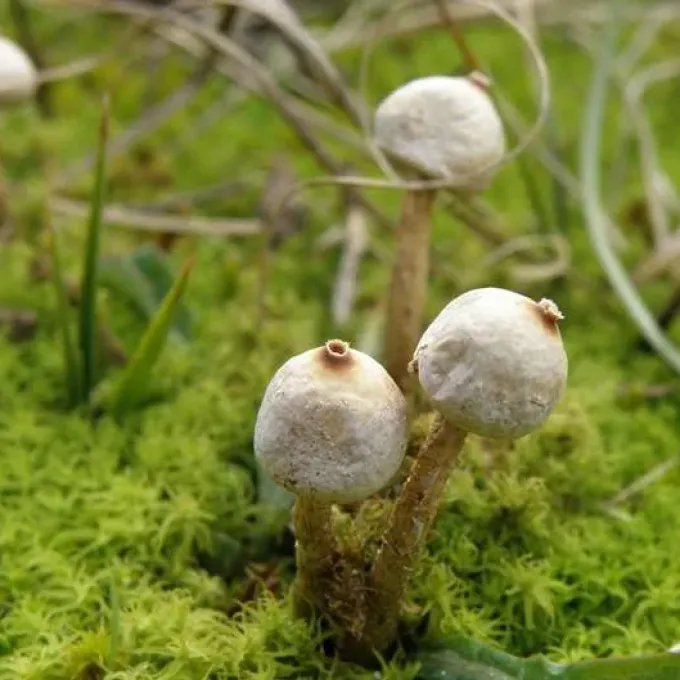
The fruiting body has a spherical shape (peridium), elevated above the soil surface on a stalk. The membrane color varies from white to cream, which is reflected in the specific epithet niveum.
Upon maturation, a small opening forms at the top of the head, through which dark spore dust is released upon mechanical impact.
White or grayish fungal mats consisting of hyphae may be observed on the surface of roots or the root collar during heavy infestations.
Unlike phytopathogenic rots, the plant tissues themselves do not always show necrosis in the early stages, although general growth suppression becomes noticeable during massive mycelial development.
Pathogen
Tulostoma niveum is a species of gasteromycete fungi from the Agaricaceae family. While not classified as a major pathogen causing widespread agricultural epidemics, it can behave as a saprotroph or facultative parasite under specific conditions.
The pathogen belongs to basidiomycetes. Unlike obligate parasites, Tulostoma leads a predominantly soil-based lifestyle, developing mycelium in substrates rich in organic residues.
The biology of the fungus is associated with the formation of fruiting bodies with a distinct shape: a stalk with a spherical head. Spore mass develops inside the head and spreads via wind after the membrane ruptures.
For agronomy, this species is of interest primarily as an indicator of soil health and microflora status in an agroecosystem rather than as a direct destructive agent of living crop tissues.
The fungus is capable of maintaining viability as spores in the soil for a prolonged period, waiting for favorable factors to initiate active vegetation.
Conditions for development
The development of this fungus is directly dependent on the presence of significant amounts of undecomposed organic matter and plant residues in the soil.
High soil moisture combined with moderate air temperatures is a key factor triggering the active formation of fruiting bodies on the substrate surface.
The fungus prefers sandy or loamy soils with a loose structure, where aeration allows hyphae to spread actively in the surface layer.
The microclimate within dense crop stands, where ventilation is poor, contributes to moisture retention, favoring the life cycle of Tulostoma.
The absence of proper crop rotation and the accumulation of plant residues in fields create ideal conditions for the colonization of these areas by this fungus species.
Why it matters
The damage caused by this fungus is primarily indirect, related to competition with crops for soil nutrients.
With massive mycelial growth, the fungus may suppress the development of beneficial soil microflora essential for the normal nutrition of agricultural crops.
In some cases, a decrease in seed germination or suppression of young seedlings is observed if the mycelium densely wraps around the seed bed.
Disruption of normal plant residue decomposition processes leads to the accumulation of fungal metabolic products, which may have phytotoxic effects.
The economic impact is usually minor, although in intensive farming conditions, the presence of the fungus necessitates a review of agrotechnical practices.
Protection
The primary control method is high-quality and timely soil cultivation aimed at accelerating the mineralization of organic residues.
Following scientifically sound crop rotation schedules allows for breaking the fungal life cycle and reducing the spore count in the soil horizon.
The use of agrotechnical measures that improve soil aeration and drainage significantly reduces the likelihood of Tulostoma fruiting body appearance.
The application of mineral fertilizers in optimal doses helps the plant become stronger and more resistant to the negative influence of soil fungi.
- Regular inter-row cultivation.
- Removal of post-harvest residues.
- Liming of acidic soils if necessary.
- Moisture level control during the germination period.
Discussion
No discussions yet — be the first.