
Tulostoma
Tulostoma
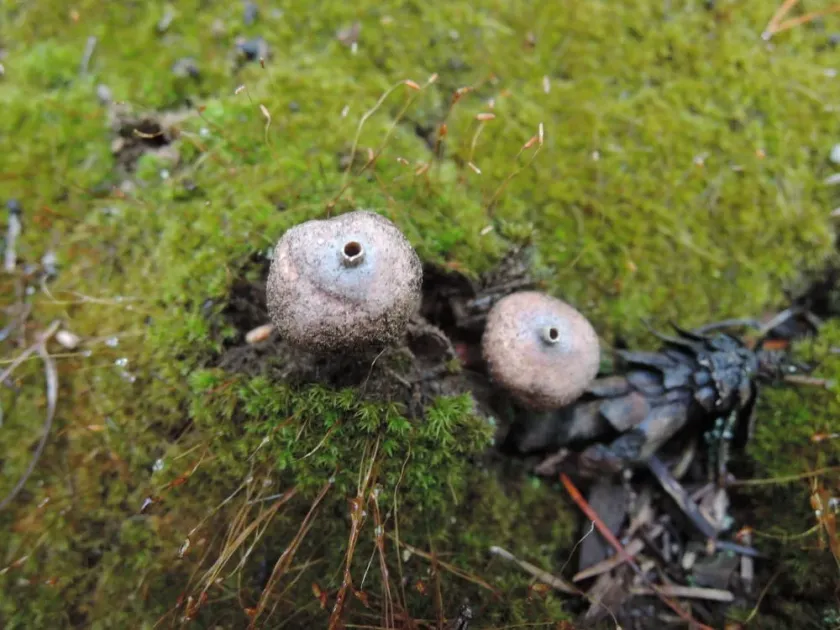
Description
Pathogen
Tulostoma is a genus of stalked puffball fungi belonging to the Agaricaceae family. It is crucial to clarify that Tulostoma is not a plant disease or an agricultural pathogen; it does not infect or cause damage to crops.
These fungi are classified as saprotrophs, meaning they feed exclusively on decaying organic matter within the soil. They play an ecological role in decomposition, contributing to nutrient cycling rather than harming living plant tissues.
The morphology of Tulostoma is distinct, featuring a spherical spore-bearing head mounted on a stem. The spores are typically released through a small apical opening after the protective peridium breaks down, allowing dispersal by wind or rain.
Tulostoma species are commonly found in arid or semi-arid environments, sandy soils, and open grasslands. Their presence is usually an indicator of specific edaphic conditions rather than a sign of poor plant health or soil-borne infection.
Because these fungi are harmless to plants, there are no specific control measures, fungicides, or phytosanitary practices required in agriculture. They are considered benign inhabitants of the ecosystem and do not pose any economic threat to farmers.
Discussion
No discussions yet — be the first.