
Tubeufia
Tubeufia
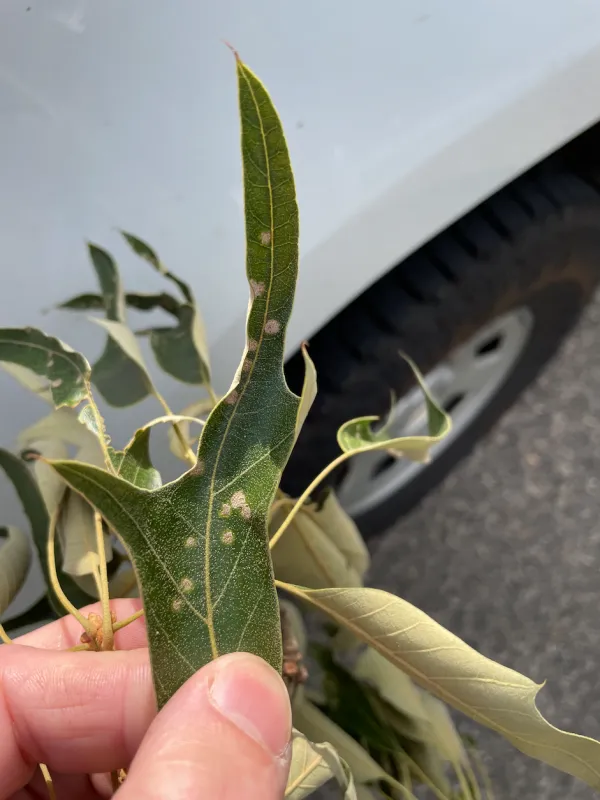
Description
Symptoms
Signs of Tubeufia infection often appear as a superficial coating, which can have various shades ranging from whitish to dark, depending on the maturation stage of the fungal fruiting bodies.
Localized zones of necrosis appear on the leaf and stem surfaces, which can expand over time, covering significant areas of the vegetative mass. Plant tissues lose turgor and gradually wither.
An important diagnostic feature is the presence of small, barely visible fruiting bodies (perithecia) on necrotic areas. They look like tiny dots, sometimes with characteristic fuzz, which can be distinguished using a magnifying glass.
The appearance of damaged plants resembles other fungal infections, such as sooty mold, but detailed analysis allows distinguishing them by the morphology of their spore-bearing structures.
As the disease progresses, premature leaf drop and deformation of young shoots are observed, which significantly reduces the overall productivity of the affected crop.
Pathogen
The disease is caused by fungi of the genus Tubeufia, belonging to the class Dothideomycetes. These are primarily saprotrophic or weakly parasitic microorganisms that are often found on dead plant debris, though under certain conditions, they can exhibit pathogenic properties.
The biology of the fungus includes the development of perithecia, which have a characteristic shape and color—often dark or light with hairs—allowing for identification during microscopic examination. Species of the genus Tubeufia are also known for their entomopathogenic properties, attacking other fungi or insects living on plants.
Dissemination of the pathogen occurs via ascospores, which are released into the environment and carried by wind or raindrops onto susceptible plant tissues. In the life cycle, conidial stages play a significant role, facilitating rapid infection accumulation under high humidity conditions.
The fungus is capable of surviving for long periods on plant debris, acting as a secondary parasite. This makes it a difficult object to control in agroecosystems where the accumulation of organic matter provides a stable environment for mycelial development.
The mycological classification of Tubeufia is still actively studied, as many species of this genus play a dual role in ecosystems, acting as both decomposers and potential threats to weakened cultivated plants.
Conditions for development
A key factor in the development of the disease is high air and soil humidity. Tubeufia fungi actively colonize weakened plants during periods of prolonged rain or in the absence of proper ventilation in dense plantings.
Temperature ranges within moderate values (from +15 to +25 degrees Celsius) are considered most favorable for active spore germination and mycelial formation on the host surface.
The presence of lesions on the plant epidermis, caused by insects, hail, or mechanical work, significantly facilitates the penetration of the infection into the tissues and subsequent necrosis.
Overcrowded plantings and the absence of thinning practices create a "microclimate" in which fungal spores spread freely between neighboring specimens.
Excessive application of nitrogen fertilizers, which triggers excessive growth of soft tissues, makes crops more vulnerable to the influence of this pathogen.
Why it matters
The main harm consists of the inhibition of physiological photosynthesis processes, leading to reduced biomass accumulation and impaired crop quality. The leaf apparatus loses its functionality much earlier than the natural expiration date.
In cases of severe infestation of perennial crops, Tubeufia contributes to premature aging and weakening of the plant's immune system, making it highly susceptible to other diseases and pests.
Economic risk increases in greenhouse conditions, where the rapid spread of spores in a confined space can lead to the loss of product marketability in a short period.
Infection of seeds can reduce germination energy and emergence, leading to thin crop stands and the need for expensive reseeding of fields.
In some cases, the presence of the fungus on fruits makes them unsuitable for long-term storage and transportation, causing rot during the post-harvest period.
Protection
Effective protection begins with thorough cleaning of fields from plant residues, which serve as the primary reservoir of infection during the off-season. Deep plowing of the soil promotes rapid decomposition of debris.
The use of systemic fungicides allows for halting mycelial development at early stages of infection. It is recommended to use copper-based products or specialized systemic components.
Maintaining optimal plant density and conducting regular thinning ensures the necessary air circulation, reducing humidity in the root zone.
Monitoring and controlling pests that damage the integrity of plant tissues is an important preventive measure, as any wound acts as an entry point for fungal spores.
- Use of healthy planting material;
- Adherence to crop rotation including non-susceptible varieties;
- Regular monitoring of crop health during periods of wet weather.
Discussion
No discussions yet — be the first.