
Tuberculina
Tuberculina
Description
Symptoms
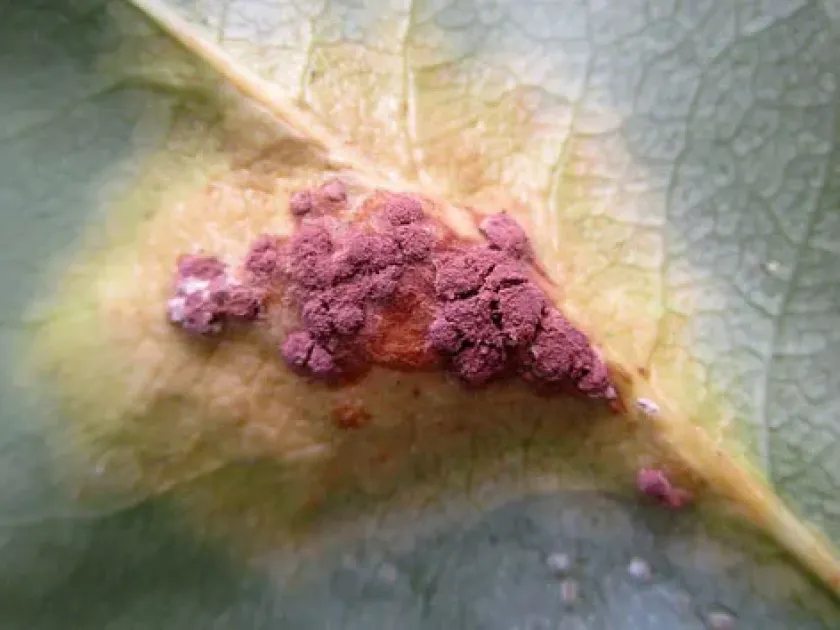
The most visible sign of Tuberculina presence is the development of distinct, cushion-like sporulating masses that typically exhibit a purple, reddish-brown, or dark violet color.
These fungal structures emerge directly from the pustules of rust fungi, effectively masking the host's surface and interfering with its ability to release spores.
As the hyperparasite matures, the appearance of the infected rust pustules changes, often becoming darker and more crust-like as the Tuberculina mycelium takes over.
These symptomatic growths are often found on stems, leaves, and other aerial plant parts that were previously colonized by rust pathogens.
Early-stage infection may look like a subtle discoloration of the rust pustules, which eventually develops into the characteristic dense, powdery spore clusters of the parasite.
Pathogen
The disease is caused by fungi belonging to the genus Tuberculina, with Tuberculina maxima being the most widely documented species in agricultural contexts.
It acts as a specialized hyperparasite, meaning it derives its nutrients directly from the living mycelium or spores of rust fungi (order Pucciniales).
The lifecycle of the fungus is strictly dependent on the availability of its rust host; without rust colonies, Tuberculina is unable to propagate effectively in the field.
Dissemination is primarily achieved through airborne conidia, although wind, splashing rain, and insect vectors also play significant roles in moving the fungus between host plants.
The fungus penetrates the rust pustule, colonizes the tissue, and replaces the reproductive structures of the rust pathogen, effectively neutralizing the host's ability to spread.
Conditions for development
Tuberculina thrives in environments with high humidity and moderate temperatures, conditions that are often identical to those required for rust disease progression.
Prolonged wet weather, including heavy rains and persistent dew or fog, significantly increases the rate of colonization and spore production for the hyperparasite.
Densely planted crops that lack proper aeration are particularly susceptible to rapid spread, as the trapped moisture provides an ideal microclimate for fungal development.
Infection is most common during the growing season when the host rust pathogen is actively producing pustules, providing sufficient food for the hyperparasite.
Temperatures ranging from 15°C to 25°C generally support the most vigorous growth of the parasite, facilitating its quick establishment on infected crop tissues.
Why it matters
In most agricultural situations, Tuberculina is viewed as a beneficial organism rather than a threat, as it serves as a natural biological control agent against crop-destroying rusts.
However, it can be considered harmful if it causes excessive tissue degradation or contributes to the weakening of already infected plants by promoting secondary decay.
The economic damage attributed to the rust pathogen far outweighs any negative impact caused by the presence of this hyperparasite on the host plant.
Nevertheless, farmers should monitor its population density; if the hyperparasite covers too much leaf area, it can technically interfere with normal photosynthetic processes.
Potential harm is largely indirect, often linked to the aesthetic degradation of high-value nursery or ornamental plants that have been colonized by both the rust and the parasite.
Protection
Intentional control of Tuberculina is rarely necessary because its role is inherently helpful in reducing the impact of more damaging rust diseases.
If its presence is undesirable on decorative plants, cultural practices such as improving plant spacing and ensuring better airflow are the most effective methods to limit spread.
Avoiding excessive irrigation that wets the foliage for extended periods will help to reduce the humidity levels that favor the growth of both the rust and its parasite.
Pruning and destroying severely infected plant parts at the end of the season can help in managing the inoculum levels for the following year.
Chemical intervention is generally discouraged, as broad-spectrum fungicides may kill this beneficial hyperparasite along with other desirable microbiota in the ecosystem.
Discussion
No discussions yet — be the first.