
Tubercularia dieback
Tubercularia nigricans
Description
Symptoms
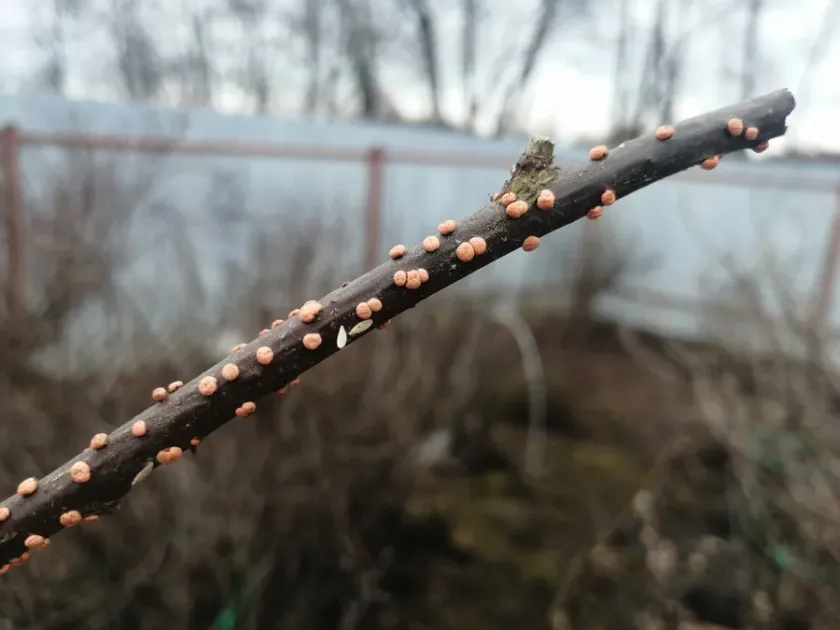
The most distinctive symptom is the development of numerous reddish or pinkish, cushion-like pustules breaking through the surface of the bark.
As the infection progresses, the bark in the affected areas becomes sunken, darkens, and eventually exhibits signs of necrotic tissue death.
Leaves on infected branches often wilt and turn brown suddenly, as the fungus disrupts the water-conducting pathways within the wood.
The underlying wood often shows distinct discoloration, and in advanced stages, the infected branches become brittle and break off easily.
Stems or trunks may eventually develop cankers, where the bark splits and the internal woody tissue is exposed to further environmental stress.
Pathogen
The disease is caused by the fungus Tubercularia nigricans, which is the asexual stage (anamorph) of the fungus Nectria cinnabarina.
The fungus survives as mycelium within the infected woody tissues, remaining dormant in the bark throughout the cold season.
During favorable weather, it produces large numbers of conidia which serve as the primary inoculum for new infections in spring and summer.
The fungus is a wound pathogen, meaning it typically enters the plant through openings caused by pruning, storms, or physiological damage.
Once inside, the mycelium spreads into the vascular tissues and the cambium, gradually killing the host cells and forming new fruiting bodies.
Conditions for development
High humidity and mild temperatures are the primary environmental factors that promote the sporulation and infection cycles of the fungus.
Plants that are poorly spaced or have restricted airflow are more prone to infection because the moisture remains on the bark for longer periods.
Trees subjected to environmental stress, such as drought, extreme temperature fluctuations, or mechanical injury, are highly susceptible.
Improper pruning techniques that leave large, untreated wounds provide an open gateway for the fungus to establish itself within the tree.
The presence of abundant dead wood or woody debris around the orchard floor acts as a significant reservoir for the pathogen.
Why it matters
Tubercularia dieback causes severe aesthetic and structural damage to landscape trees, leading to the loss of major branches or limbs.
In fruit-bearing species, the disease reduces overall productivity and can lead to total crop failure on heavily affected trees.
The pathogen is highly contagious within a plantation, often spreading from a single infected tree to the entire population if not managed correctly.
Continuous infection weakens the tree's immune system, making it increasingly vulnerable to secondary attacks by wood-boring insects and other fungi.
If left unaddressed, the gradual dieback eventually results in the complete death of the specimen, necessitating removal and replacement.
Protection
Sanitation is the most effective management strategy; all infected branches must be pruned well into healthy wood to eliminate the pathogen.
Pruned material should be removed from the site and burned or buried to prevent the spread of fungal spores via wind or water splash.
All pruning tools must be disinfected frequently with alcohol or bleach solutions to prevent the mechanical transmission of the disease.
Application of copper-based fungicides during the dormant season can help reduce the spore load and prevent new infections in the orchard.
Maintaining tree vigor through proper irrigation, mulching, and balanced fertilization increases the tree's natural resistance to fungal pathogens.
Discussion
No discussions yet — be the first.