
Oak leaf spot
Tubakia macnabbii
Description
Symptoms
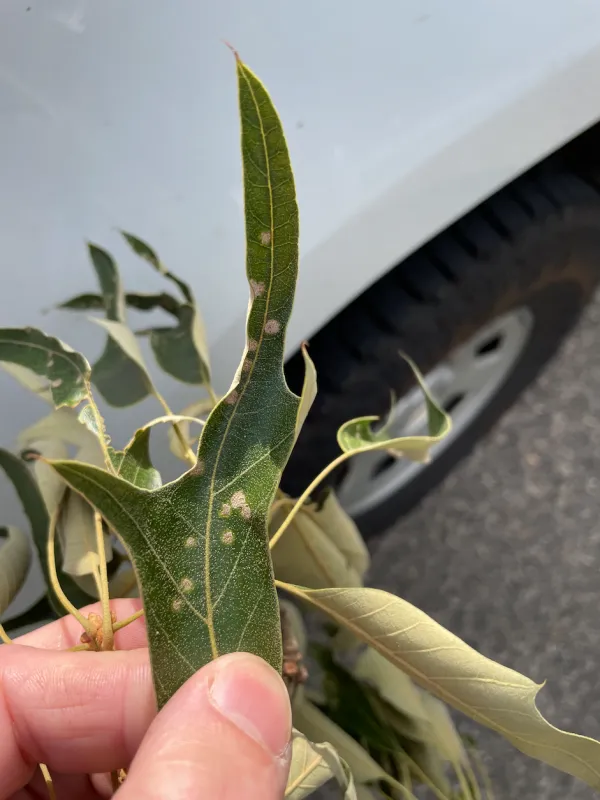
Symptoms typically manifest as irregular brown to dark lesions appearing on the leaf blade during the summer months.
These spots are often characterized by a distinct yellow or light-colored halo, which helps differentiate this disease from other leaf spots.
As the infection progresses, tiny black fungal fruiting bodies appear within the necrotic areas on the lower surface of the leaf.
Severe infestations often result in chlorosis, curling of the leaves, and premature defoliation before the end of the growing season.
- Brown or dark brown leaf spots.
- Yellow halos surrounding necrotic tissue.
- Small black acervuli on the underside of leaves.
Pathogen
The disease is caused by the fungus Tubakia macnabbii, a specialized pathogen that affects various species of oak trees.
This fungus is primarily responsible for foliage necrosis and can persist in leaf litter, serving as a source of recurring infection.
Tubakia macnabbii reproduces via conidia, which are disseminated by rain splash, wind currents, and mechanical means within the tree canopy.
Scientific studies classify this fungus as a facultative parasite, capable of surviving on dead organic matter before infecting new leaves.
Identification of the specific Tubakia species usually requires microscopic analysis of the fruiting structures present on the underside of the leaves.
Conditions for development
The development of oak leaf spot is heavily dependent on prolonged periods of high humidity and rainfall during the spring and early summer.
Poor air circulation within the tree crown creates a microclimate that allows fungal spores to germinate and colonize leaf tissues effectively.
Trees that are stressed due to drought, poor soil quality, or defoliation by insects are significantly more susceptible to infection.
The fungus overwinters in the layer of fallen leaves beneath the tree, which serves as the primary reservoir for infection in the spring.
Warm and moist weather conditions significantly accelerate the rate of disease progression throughout the canopy.
Why it matters
The primary impact of this disease is the reduction of the photosynthetic capacity of the oak tree due to damaged leaf tissue.
Repeated annual infections lead to tree decline, resulting in reduced branch growth and a general lack of vigor in infected specimens.
Weakened trees become more susceptible to secondary stressors, including wood-boring insects and other opportunistic fungal pathogens.
In nursery environments, Tubakia macnabbii can cause significant damage to young saplings, often necessitating extensive treatment.
The aesthetic decline of infected trees makes them unsuitable for ornamental planting, leading to a loss in commercial and landscape value.
Protection
Sanitation is the most critical control measure, involving the removal and destruction of all fallen leaves to reduce inoculum levels.
Pruning out dead or heavily infected branches can improve air movement within the crown and slow the spread of the fungus.
Fungicide applications, particularly those containing copper or systemic active ingredients, can be used to protect high-value trees.
Maintaining tree health through proper fertilization and watering helps trees resist and recover from fungal foliage diseases.
Promoting diverse and well-spaced forest stands helps prevent the rapid spread of airborne fungal pathogens between individual trees.
Discussion
No discussions yet — be the first.