
Trypetheliaceae lichens
Trypetheliaceae
Description
Symptoms
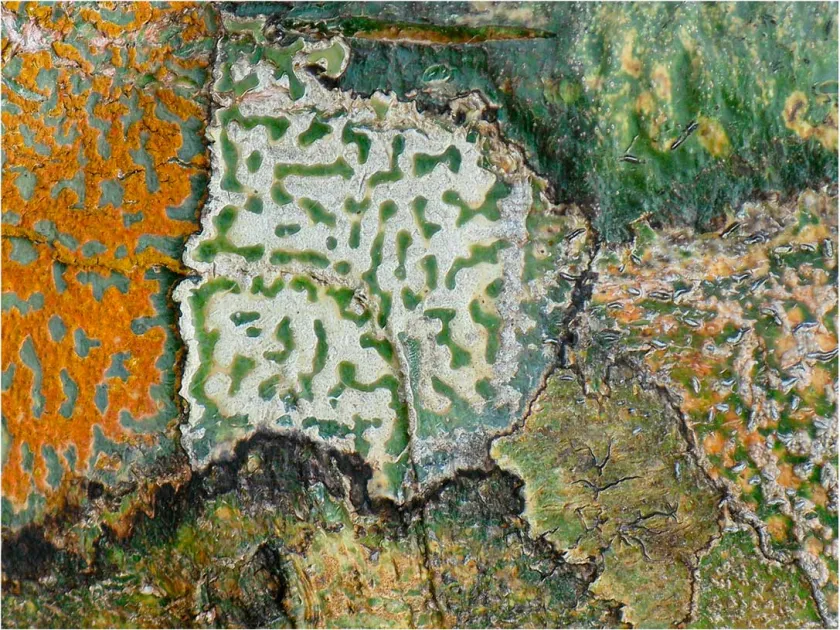
The primary symptom is the formation of crusty patches on the bark, which can range in color from yellow and orange to grey or brownish. The thallus is often tightly attached to the bark, appearing as a flattened, spreading growth.
A distinctive feature is the presence of small, dark, dot-like structures known as perithecia. These are the fruiting bodies of the lichen, either embedded in the thallus or slightly protruding, giving the bark a speckled appearance.
Lichen growth typically starts on the shaded side of the trunk where humidity is highest. Over time, the patches may coalesce, covering large areas of the trunk and primary scaffolds.
The bark beneath these colonies often becomes brittle and shows increased cracking. This textural change is a clear indicator that the lichen has been established for a significant period.
- Formation of colored crusty patches on the bark.
- Visible dark perithecia (tiny black dots).
- Increased surface roughness and cracking of the tree bark.
Pathogen
Trypetheliaceae is a family of crustose lichens that grow on the bark of trees and shrubs. These organisms are biological symbioses between a fungus and algae, and while they are not parasitic pathogens, they often indicate a decline in tree vitality.
In agronomy, these lichens are categorized as epiphytes. They do not feed on the tree's sap; however, their presence on trunks and branches significantly alters the micro-environment of the bark surface.
These organisms are highly adapted to humid conditions. Their crust-like thallus adheres firmly to the bark, making them persistent colonizers in orchards that lack proper ventilation or regular maintenance.
Reproduction occurs via spores that are dispersed by wind or water. When these spores land on damp, roughened bark of older or stressed trees, they germinate and form long-lasting colonies that slowly expand.
The botanical classification is complex, but for an agronomist, the focus is on the environmental conditions that allow these lichens to flourish and the secondary risks they pose to the host tree.
Conditions for development
Constant moisture is the main driver for lichen development. Orchards with high planting density and poorly pruned trees are particularly susceptible due to the lack of air circulation and sunlight.
Trees with aging, rough bark provide the ideal substrate for Trypetheliaceae. Deep fissures in the bark trap moisture and debris, creating a favorable niche for lichen establishment.
The absence of regular bark maintenance and thinning cuts allows the canopy to remain dense, creating the humid micro-climate that these epiphytes require to thrive and spread.
Poor orchard nutrition and physiological stress reduce the tree's natural ability to shed or renew its bark, making the trunk an easier target for colonization by lichen spores.
Environmental factors, such as prolonged rainy seasons or persistent fog, accelerate the growth of established lichen colonies, increasing their coverage area on the tree surface.
Why it matters
The most significant danger is that lichen patches act as a reservoir for harmful pests. The crusty structure provides overwintering sites for scale insects, mites, and various fungal pathogens that can damage the tree.
Dense lichen coverage restricts the gas exchange of the bark, which can lead to early senescence of outer bark tissues and may negatively impact the tree's overall vigor.
The presence of these lichens makes the bark more prone to cracking and physical damage. This structural weakness provides entry points for wood-rotting fungi and canker-causing bacteria.
While not a primary disease, heavy lichen infestation is a clinical sign of a stressed or stagnant tree, often correlating with lower yields and decreased fruit quality in commercial orchards.
The physical barrier of the lichen layer can also interfere with the tree's natural healing processes and make monitoring for other early signs of disease more difficult for the grower.
Protection
Mechanical cleaning is the first line of defense. Using specialized scrapers or stiff-bristled brushes to remove lichen patches during the dormant season effectively limits their spread without damaging the tree.
Preventive spraying with copper-based or iron sulfate fungicides is standard practice. These treatments are effective at suppressing the fungal component of the lichen and sanitizing the bark surface.
Proper pruning is essential. By opening the canopy to allow air and light to penetrate, you reduce the humidity levels that are critical for the survival and expansion of lichen populations.
Trunk whitewashing with garden paint or lime solutions mixed with disinfectants helps coat the bark, closing micro-fissures and creating an environment hostile to lichen spore germination.
Maintaining optimal tree vigor through balanced fertilization and correct watering stimulates growth and faster bark renewal, which naturally discourages the long-term establishment of lichen colonies.
Discussion
No discussions yet — be the first.