
Tryblidiopsis pinastri
Tryblidiopsis pinastri
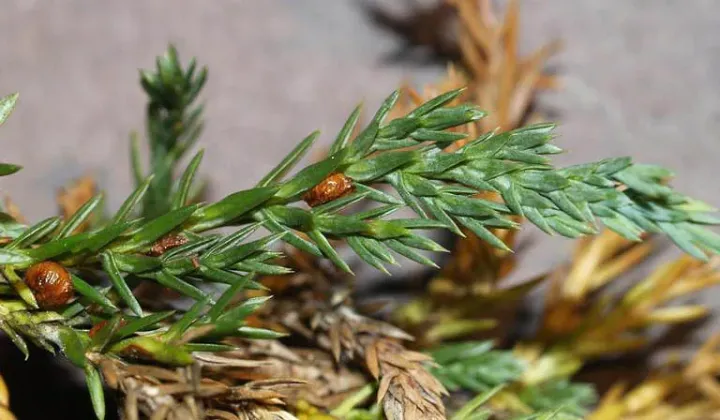
Description
Symptoms
The most visible symptom is the appearance of necrotic areas on the branches. The bark becomes dry, brittle, and eventually cracks or peels away.
Needles on the affected branches lose their vibrant green color, turning yellow and then brown before eventually falling off prematurely.
During moist conditions, small black apothecia emerge from the dead bark, serving as a clear indicator of the fungal presence on the branch.
As the infection progresses, branches may dry out completely from the tip downwards, resulting in a sparse and unhealthy crown appearance.
The disease often manifests on the lower branches first, where the microclimate provides longer periods of moisture conducive to fungal growth.
Pathogen
The causative agent of this disease is the fungus Tryblidiopsis pinastri, which belongs to the class of ascomycetes. This pathogen primarily targets the bark and cambium of young conifer branches.
The fungus develops within the bark tissues, leading to the gradual necrosis of the living layers. During spring, it produces fruiting bodies known as apothecia.
These apothecia appear as dark, small, rounded structures on the surface of the infected bark, from which spores are released into the environment.
The lifecycle of the pathogen is closely associated with host stress. It often infects trees through small wounds or cracks in the bark that occur during winter or spring.
Dispersal is primarily facilitated by wind currents and water splashes, which carry the fungal spores to susceptible host trees in the vicinity.
Conditions for development
Tryblidiopsis pinastri thrives in high-humidity environments. Extended periods of rain or fog significantly increase the likelihood of spore germination and infection.
Dense planting schemes that restrict air circulation prevent trees from drying quickly after rainfall, creating perfect conditions for the pathogen to establish.
Trees that are weakened by environmental stressors, such as drought, nutrient deficiency, or poor soil quality, are significantly more susceptible to colonization.
Springtime weather patterns, characterized by moderate temperatures and frequent moisture, are the most critical times for the spread and development of the fungus.
Inappropriate nursery management, such as overcrowding or improper irrigation, can facilitate rapid outbreaks in young plantations.
Why it matters
The disease causes significant damage by killing off individual branches, which reduces the tree's photosynthetic capacity and overall vigor.
Infected trees become attractive hosts for secondary pests, including bark beetles and other wood-boring insects, which can further jeopardize tree survival.
Structural damage to the bark and loss of branches can severely impact the decorative value of ornamental pines and landscaping specimens.
Young trees, especially those in nurseries or newly established stands, are at high risk of mortality if the infection is not detected and treated early.
Continuous infection cycles lead to chronic decline, making the tree unable to respond effectively to other biotic or abiotic challenges.
Protection
Sanitary pruning is the most effective way to manage the disease. All infected branches must be removed, cutting back into healthy wood, and immediately destroyed.
Disinfecting pruning tools between trees using an appropriate disinfectant is crucial to prevent the mechanical transmission of spores.
Improving air circulation through proper spacing and crown thinning helps maintain drier conditions around branches, which inhibits fungal development.
Applying copper-based fungicides during early spring can help suppress spore production and protect susceptible bark from new infections.
Maintaining high tree vitality through balanced fertilization and proper irrigation helps strengthen the tree's natural defense mechanisms against the fungus.
Discussion
No discussions yet — be the first.