
Trochila ilicina
Trochila ilicina
Description
Symptoms
The primary symptom consists of small, circular or elliptical spots on the leaf surface. Initially, these appear pale green or yellowish, gradually darkening over time.
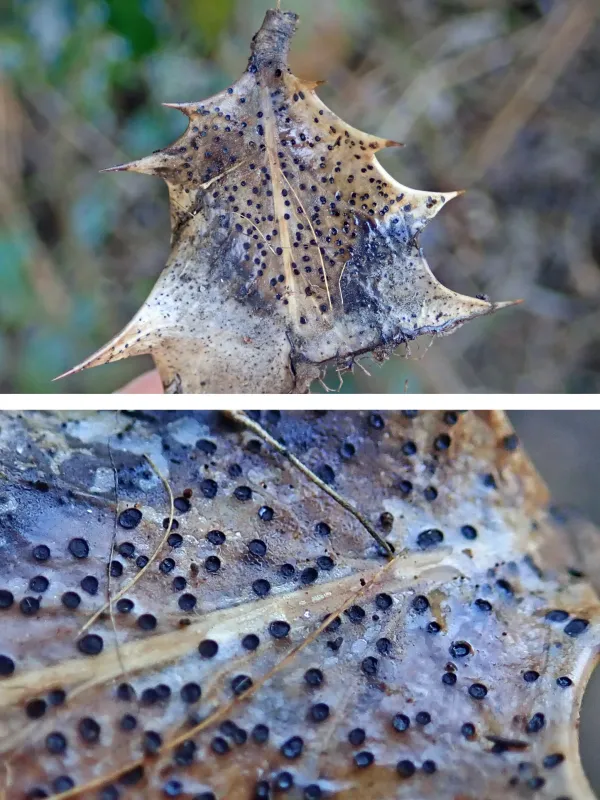
As the infection progresses, small black or dark brown spots appear in the center of the lesions. These are the fungal apothecia, which break through the leaf epidermis to release spores.
Infected leaves often turn yellow and fall off prematurely, significantly reducing the ornamental value of the holly shrub. The symptoms are particularly noticeable on old leaves located in the lower parts of the canopy.
Under high humidity, these spots may merge, resulting in large necrotic areas on the leaf. This can lead to heavy defoliation if the infection pressure remains high throughout the season.
Unlike other common leaf spots, the apothecia of Trochila ilicina often display a structured, linear arrangement along the leaf veins, which serves as a key diagnostic indicator for the disease.
Pathogen
The causative agent of this disease is the ascomycete fungus Trochila ilicina, belonging to the order Helotiales. This pathogen specifically targets evergreen holly species, most notably the common holly (Ilex aquifolium).
The fungus completes its life cycle primarily on fallen leaves, where it develops reproductive structures known as apothecia. Within these structures, ascospores mature and are released into the environment under favorable conditions to infect new leaves.
This fungus acts as an obligate saprotroph or a weak parasite that has successfully adapted to cool and humid climates. It can survive in decomposing plant debris for extended periods.
The mycelium of Trochila ilicina gradually penetrates the leaf tissue, decomposing the cell walls of the host plant. This process leads to localized tissue death and the formation of characteristic leaf spots.
The biology of this fungus is closely synchronized with the growth cycles of holly, making it a common pathogen in ornamental gardens across regions with damp winters and cool springs.
Conditions for development
The main factor promoting the development and spread of this disease is high ambient humidity combined with moderate temperatures. The fungus is most active during periods of persistent spring rain.
Dense holly canopies that restrict airflow create the perfect microclimate for spore germination. Moisture remaining on leaves for extended periods is critical for successful infection.
Fallen leaves serve as the primary reservoir for the fungus. If not promptly removed, spores can be easily spread by wind or water splashes to healthy leaves on the lower branches.
Plants weakened by poor growing conditions, such as excessive shade or waterlogged soil, are much more susceptible to infection due to their reduced natural resistance.
The temperature optimum for this fungus is between 10 and 18 degrees Celsius, making it a significant concern during the transition seasons when other pathogens are less active.
Why it matters
The main impact is the significant loss of the plant's aesthetic appeal. Since holly is valued for its evergreen foliage, the presence of black spots makes the shrub undesirable in landscapes.
Premature leaf drop weakens the shrub's overall health and vigor. Over time, this can stunt shoot growth and reduce the plant's capacity for flowering and berry production.
Heavy infestations make the shrub more vulnerable to secondary pests and other pathogens. In crowded plantings, the disease can spread rapidly between individual plants.
Maintenance costs for affected plants increase due to the need for frequent sanitation, regular debris removal, and potential chemical intervention by professionals.
In nursery settings, this disease can lead to the rejection of large numbers of plants, as the cosmetic damage renders the stock unsuitable for commercial retail sale.
Protection
The most effective preventive measure is the thorough removal and disposal of all fallen leaves during autumn and spring. This eliminates the fungal substrate necessary for overwintering.
Regular pruning of the canopy is recommended to improve air circulation. Better airflow ensures that leaves dry out quickly after rain, which significantly hampers fungal spore germination.
If a severe outbreak occurs, the use of broad-spectrum fungicides, particularly those containing copper or triazole-based systemic compounds, can be applied during active growth stages.
Practicing good horticultural hygiene is essential: avoid overhead irrigation and ensure proper spacing between plants to reduce humidity and disease spread.
When purchasing new holly shrubs, carefully inspect the lower leaves for any signs of spotting. Any symptomatic plants should be quarantined and treated immediately before being planted in the landscape.
Discussion
No discussions yet — be the first.