
Ashen knight
Tricholoma virgatum
Description
Symptoms
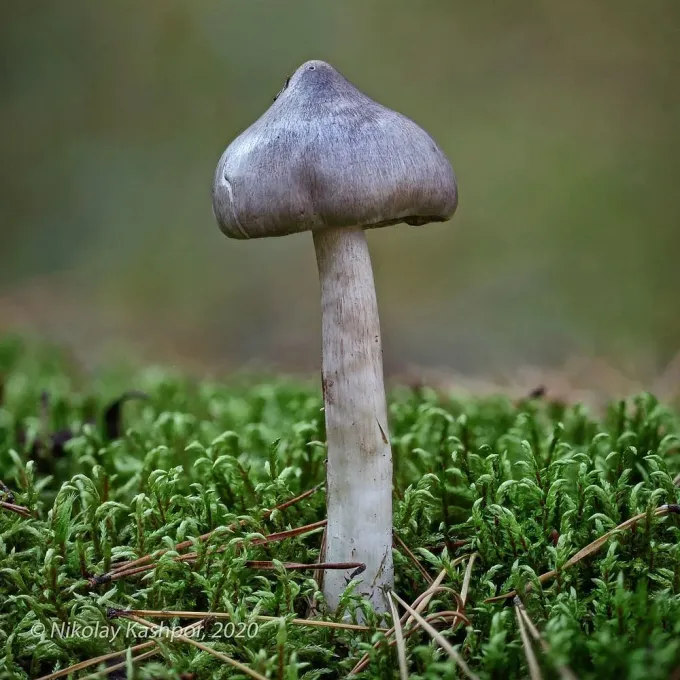
The mushroom is characterized by a conical or bell-shaped cap, often silver-grey in color with distinctive dark, radiating fibrils.
The stem is typically firm, cylindrical, and white or greyish, lacking any ring, skirt, or volva at the base.
The gills are spaced apart and broad, often exhibiting a greyish tint or darker edges which serve as a key diagnostic feature.
The flesh is dense and white, showing minimal color change when cut, but it carries a very pungent, bitter, and peppery taste.
Identification is confirmed by its specific greyish-streaked cap and the immediate, biting sensation when a small piece is tasted.
Pathogen
The Ashen knight (Latin: Tricholoma virgatum) is a gilled mushroom belonging to the Tricholomataceae family.
This fungus is not an agricultural pathogen but acts as a mycorrhizal partner, forming symbiotic relationships with coniferous tree species.
Its mycelium extends into the soil, connecting to tree roots to facilitate a mutual exchange of nutrients and water.
The fungus produces fruiting bodies during the late summer and autumn seasons, which is the primary period for spore dispersal.
Due to its intense peppery taste and presence of toxic compounds, it is classified as inedible and poses no utility for agriculture.
Conditions for development
Tricholoma virgatum thrives in acidic soil environments, particularly within pine or spruce forest systems.
High soil moisture and a thick layer of leaf litter are essential for the survival and development of the fungal mycelium.
It prefers shaded and undisturbed forest floors where the microclimate remains stable and cool throughout the autumn.
The presence of mature coniferous trees is a limiting factor for its growth, as the fungus relies on host trees for carbon sources.
Extended periods of moderate humidity and temperatures around 10–15 degrees Celsius stimulate the growth of fruiting bodies.
Why it matters
As a forest-dwelling fungus, the Ashen knight does not pose a direct threat to commercial agricultural crops.
In forest nurseries, high density of this fungus might compete with more beneficial mycorrhizal fungi, potentially affecting seedling vigor.
It serves no nutritional value for wildlife or humans, and its toxicity makes it a hazard if consumed by mistake.
Excessive occurrence in specific areas can indicate a high soil acidity level, which may inhibit the growth of certain broadleaf tree species.
While not damaging, its presence is often viewed as an indicator of specific ecological conditions rather than an active disease vector.
Protection
No systematic control measures are applied to this fungus as it is an integral part of the natural forest ecosystem.
If its presence is undesirable in forestry settings, soil liming is an effective method to shift pH levels and suppress its growth.
Mechanical removal of fruiting bodies is recommended in recreational areas to ensure safety and prevent potential accidental ingestion.
Proper forest management, including drainage and thinning, helps maintain a balanced microenvironment that regulates fungal populations.
Regular surveys of soil health can help foresters manage the fungal community and maintain forest biodiversity effectively.
Discussion
No discussions yet — be the first.