
Joachim's Tricholoma
Tricholoma joachimii
Description
Symptoms
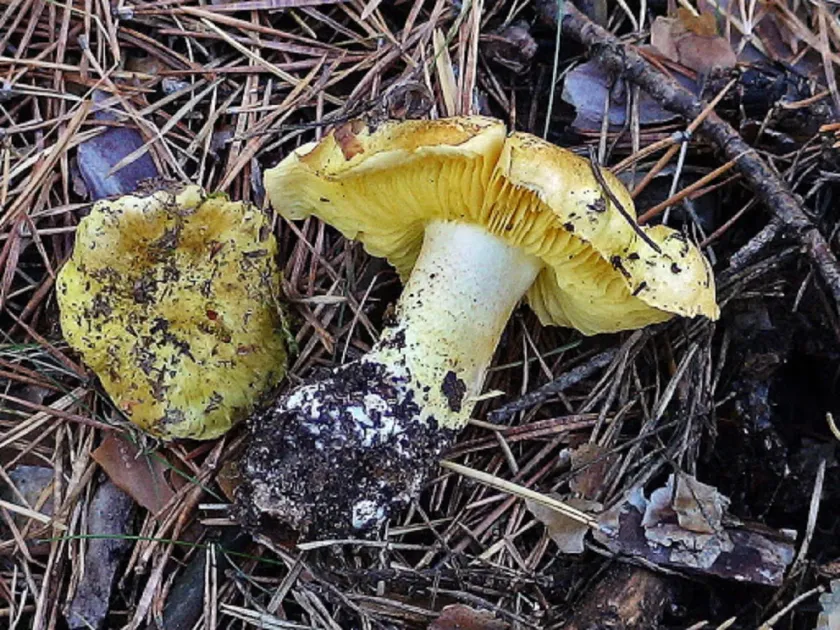
The fruit bodies of Tricholoma joachimii exhibit several distinct morphological characteristics that allow for proper identification in the wild.
The cap typically displays a rich ochre-yellow or golden-brown color, and the surface is often covered with small fibrous scales or intricate patterns.
The hymenophore consists of gills which, in mature specimens, often develop a yellowish tint with characteristic rusty spots, a common feature in this genus.
The stem is robust and cylindrical, sometimes showing a powdery coating (pruina) in the upper section, with a fibrous texture towards the base.
The flesh of the fungus has a specific, often described as farinaceous (floury) odor, which serves as a reliable organoleptic indicator for identification.
Pathogen
Joachim's Tricholoma (Tricholoma joachimii) is not a plant disease or a phytopathogen. It is a fungal species belonging to the Tricholomataceae family that plays a vital role as a symbiont in forest ecosystems.
This organism does not infect agricultural crops, cause tissue decay, or induce any necrotic symptoms, and thus it is not classified as a pathogen of any kind.
It maintains a mutualistic relationship with the root systems of trees, forming ectomycorrhiza, which helps plants absorb moisture and essential mineral nutrients.
The life cycle of this fungus is strictly tied to the presence of specific host trees, mainly coniferous species, within which its mycelium develops in the soil.
In the field of mycology, this fungus is recognized as a key element of forest biodiversity that contributes to the overall health of woodland habitats.
Conditions for development
The optimal conditions for the growth of this fungus depend on the availability of a suitable forest environment with compatible woody partners.
The species thrives in acidic or neutral soils within pine or mixed forests, where a stable level of soil moisture is maintained.
The peak season for the appearance of fruit bodies occurs during the autumn months when temperatures drop, providing the necessary stimulus for development.
Maintaining the integrity of the forest floor, specifically the litter layer, is critical because the active mycelium resides within this substrate.
Human activities, such as excessive soil compaction or environmental pollution, can have a detrimental effect on the spread of this mycorrhizal species.
Why it matters
This fungus poses no threat to agricultural production, gardening, or ornamental plants in home landscapes.
It possesses no pathogenic properties that could lead to yield losses or the death of cultivated plants, regardless of the species.
No economic damage resulting from the presence of this fungus has ever been recorded; on the contrary, its role in forest ecology is highly beneficial.
Potential harm to humans is limited solely to the risks associated with misidentifying and consuming toxic mushrooms that may resemble Joachim's Tricholoma.
In the agricultural sector, the species is considered entirely benign and does not require attention from phytosanitary or pest control services.
Protection
Control or protective measures against Tricholoma joachimii are not implemented, as it is not a harmful object for the agro-industrial sector.
Prophylactic measures for the eradication of this fungus are unnecessary because it does not damage crops and does not spread to arable lands.
Population management is governed by natural environmental dynamics within forest stands, making human intervention completely unnecessary.
To prevent accidental mushroom poisoning, it is recommended to study mushroom guides and consult with mycologists before harvesting any wild fungi.
Preserving the natural habitats of this fungus contributes to maintaining the overall ecological balance of the region.
Discussion
No discussions yet — be the first.