
Batsch's knight
Tricholoma batschii
Description
Symptoms
The mushroom exhibits specific morphological traits that make it recognizable to forest researchers and mycologists.
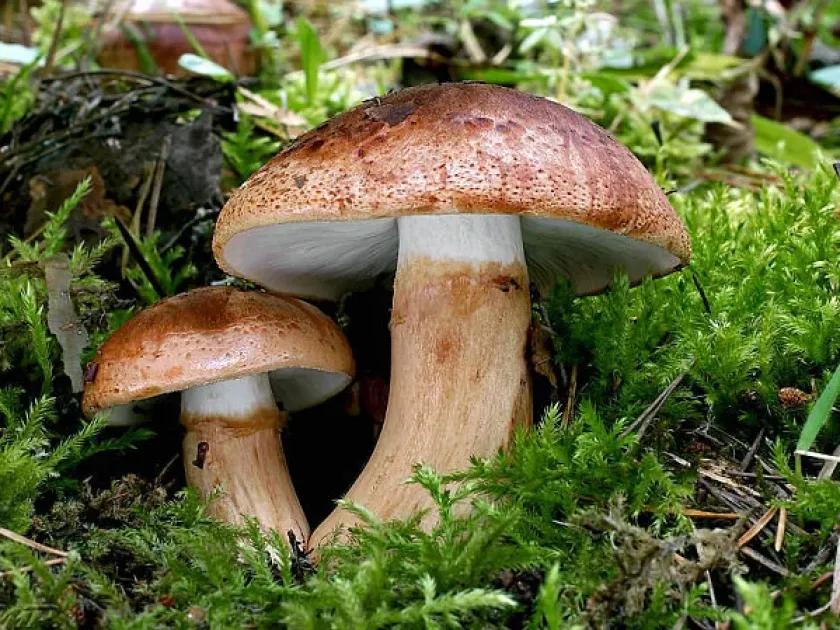
The cap is 5–12 cm in diameter, displaying a deep reddish-brown color, often with a paler margin which serves as a key identification sign.
The gills are initially white, but as the mushroom matures, they develop distinct brown spots, which is a characteristic feature of the species.
The stipe is robust and features a clear ring zone, with the area below the ring matching the reddish-brown color of the cap.
The flesh has a mealy odor and shows very little color change when cut, distinguishing it from potentially poisonous look-alikes.
Pathogen
Tricholoma batschii, commonly known as Batsch's knight, is not a plant pathogen and does not cause diseases in agricultural crops.
It is a fungus belonging to the Tricholomataceae family, playing a significant ecological role through the formation of mycorrhizal relationships with coniferous trees.
Biologically, it is a saprotroph and mycorrhizal symbiont, which means it aids trees in nutrient uptake and decomposes forest organic matter.
Labeling this species as a plant disease is taxonomically and agronomically incorrect, as it does not infect plant tissues or produce phytotoxins.
The organism is a natural component of the forest floor ecosystem and supports healthy tree growth rather than hindering it.
Conditions for development
Batsch's knight is primarily found in pine forests, where it lives in close association with the root systems of Pinus sylvestris.
It favors sandy or acidic soils, which provide the necessary conditions for its mycelium to spread effectively within the soil horizons.
The primary fruiting period occurs during the autumn season, triggered by increased humidity and moderate temperatures common in late summer and fall.
Spore dispersal relies on wind currents, allowing the fungus to colonize suitable habitats where its host trees are present.
The fungus is highly dependent on the presence of coniferous hosts to maintain its mycorrhizal life cycle and produce fruiting bodies.
Why it matters
There is no evidence of Tricholoma batschii causing damage to plants, vegetables, or fruit crops.
It does not possess the mechanisms required to infect living plants, meaning it is not an agricultural threat.
The only negative aspect associated with this fungus is its potential toxicity if consumed by humans without proper preparation or identification.
Efforts to eradicate the fungus in natural habitats are unnecessary and counterproductive to forest health.
Over-application of chemicals in forests to control such harmless fungi can destroy beneficial soil microbial diversity.
Protection
No protection measures are required for plants, as the species is not pathogenic.
In forestry management, it is important to recognize the fungus as a non-threatening part of the biodiversity rather than a pest.
Preventive measures for human health focus on foraging safety and professional identification of wild mushroom species.
There is no need for fungicide application, as the species does not impact the yield or health of economic crops.
Ecological monitoring is the only recommended practice to understand the prevalence and health of mycorrhizal populations in local forests.
Discussion
No discussions yet — be the first.